
Tectonic Integration: How Latin American Plates Interact
The tectonic plates beneath Latin America and the Caribbean form an interconnected system, where their movements significantly influence regional geological processes. Understanding individual plates helps, but recognizing their interactions shows how plate tectonics unifies Latin American geography.
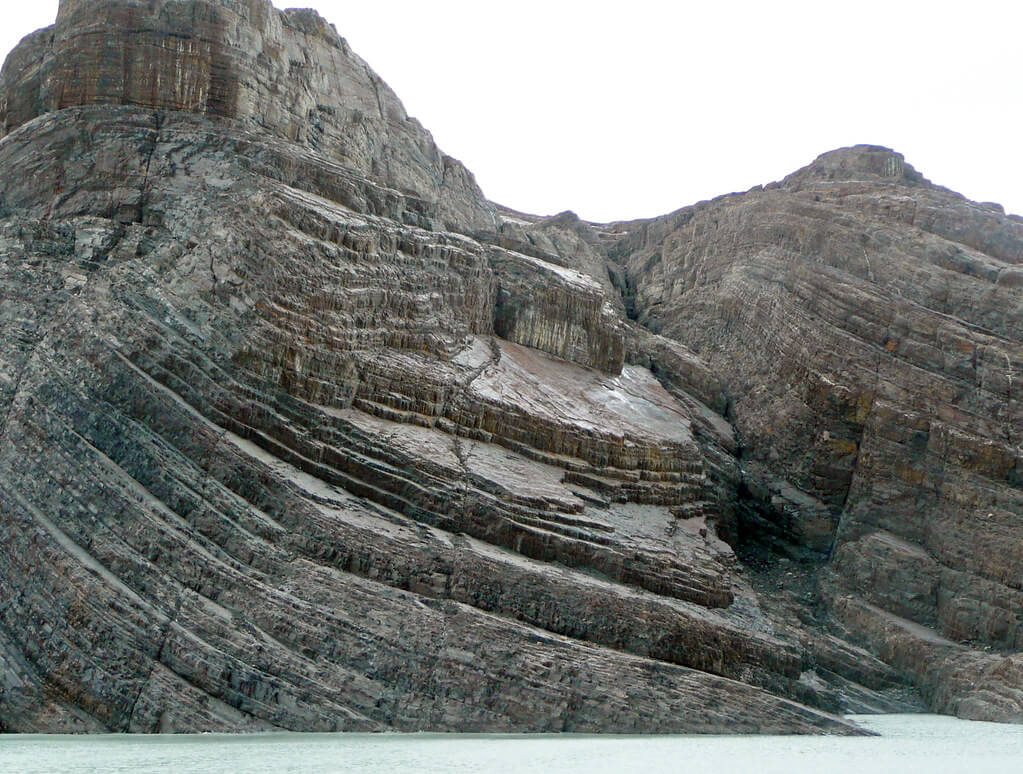
Tectonic Synthesis: Understanding Inter-Plate Relationships in the Americas
The tectonic plates underlying Latin America and the Caribbean operate as an integrated system where the motion and interaction of each plate influences geological processes throughout the region. Understanding these plates individually provides crucial insights, but recognizing their interconnected relationships reveals how plate tectonics creates the geological unity that defines Latin American geography, from the Andes Mountains to Caribbean volcanism.
The Subduction Systems: Driving Regional Geology
Three major subduction systems dominate Latin American tectonics, each created by oceanic plates descending beneath continental or other oceanic plates. The Nazca Plate's eastward subduction beneath the South American Plate is responsible for creating the Andes Mountains and driving most of South America's seismic and volcanic activity. This process occurs at rates of 59-90 millimeters (2.3-3.5 inches) per year along the Peru-Chile Trench, making it one of Earth's fastest convergent margins.
The Cocos Plate's northeastward subduction beneath the Caribbean Plate and North American Plate generates the Central America Volcanic Arc at rates of 70-90 millimeters (2.8-3.5 inches) per year. This system is geologically connected to Andean processes through the complex interactions that occur where the Cocos, Nazca, and South American plates converge near the Ecuador-Colombia border.
The South Sandwich subduction zone, although much smaller, complements the regional subduction picture by illustrating how back-arc processes can generate new oceanic plates. The South Sandwich Plate formed through spreading behind the volcanic arc, showing how subduction systems can generate complex secondary plate boundaries.
Transform Systems: Accommodating Lateral Motion
Extensive transform fault systems accommodate lateral motion between plates throughout Latin America and the Caribbean. The Caribbean Plate's northern boundary forms a 3,000-kilometer (1,860-mile) transform system that stretches from Central America to the Lesser Antilles, illustrating how oceanic plates can slide past continental margins.
The Pacific Plate's interactions with the North American and Cocos plates generate transform boundaries that extend from California to Central America. The San Andreas Fault system represents the most famous example, but similar processes operate along the entire Pacific margin of the Americas.
These transform systems often transition into or interact with subduction zones, creating complex triple junctions where three plates meet. The Chile Triple Junction exemplifies this complexity, where the Nazca, South American, and Antarctic plates interact through a combination of subduction, transform, and spreading processes.
Spreading Centers: Creating New Oceanic Crust
Mid-oceanic ridges around Latin America continuously create new oceanic crust that eventually participates in regional subduction systems. The East Pacific Rise generates new Pacific, Nazca, and Cocos plate material at rates up to 150 millimeters (5.9 inches) per year, representing some of Earth's fastest seafloor spreading.
The Mid-Atlantic Ridge creates new material for the South American and North American plates at a rate of 25-30 millimeters (1.0-1.2 inches) per year. This spreading drives the westward motion of the American continents and maintains the subduction systems along the Pacific margins.
Back-arc spreading behind the South Sandwich Islands generates new oceanic crust in the Scotia Sea, illustrating how subduction processes can create secondary spreading centers. This process illustrates the complex feedback between different types of plate boundaries within regional tectonic systems.
Hotspot Systems: Intraplate Processes
Several hotspot systems operate within or near the Latin American plates, creating volcanic features that provide crucial insights into mantle dynamics and plate motions. The Galápagos hotspot currently lies near the junction of the Nazca, Cocos, and Pacific plates, creating the Galápagos Islands and influencing regional tectonics through the buoyant Carnegie Ridge.
The hotspot's interaction with the spreading ridge system demonstrates how mantle plumes can influence plate boundary processes. The Carnegie Ridge's eastward extent toward South America may impact the flat-slab subduction observed beneath Ecuador and northern Peru.
Other regional hotspots include the Juan Fernández hotspot, located west of Chile, and various hotspots that have created seamount chains throughout the Pacific. These features provide evidence for past plate motions and demonstrate how intraplate volcanism complements boundary processes in shaping regional geology.
Regional Stress Fields and Deformation Patterns
The interaction of multiple plates creates complex regional stress fields that influence geological processes far from plate boundaries. The rapid subduction of the Nazca Plate generates compressive stresses that extend deep into the South American continent, influencing geological processes in the Amazon Basin and Brazilian Highlands.
Oblique convergence between plates creates transpressional and transtensional zones that accommodate complex three-dimensional deformation. The Caribbean Plate's eastward motion relative to North and South America creates such zones throughout Central America and the northern Caribbean.
These regional stress fields influence the reactivation of ancient geological structures, demonstrating how modern plate tectonics interacts with inherited crustal heterogeneities. The Transbrasiliano Lineament and other ancient structures show episodic reactivation related to current plate motions.
Temporal Evolution: Changing Plate Configurations
The current configuration of Latin American plates represents only the latest stage in a complex evolutionary history involving changing plate boundaries, migrating triple junctions, and variable plate motions. The breakup of Pangaea initiated many of the current processes, but ongoing adjustments continue to create changes in plate boundary locations and characteristics.
The progressive collision and accretion of oceanic terranes to continental margins demonstrates how plate tectonics continuously modifies continental geology. The Caribbean Plate's complex origin and subsequent eastward migration exemplify how plates can form, migrate, and integrate into new tectonic configurations.
Future plate motions will continue modifying Latin American geology through ongoing subduction, collision, and rifting processes. Understanding current plate interactions provides insights into likely future geological evolution and associated natural hazards.
Geological Resources: Plate Tectonic Controls
The distribution of geological resources throughout Latin America directly reflects plate tectonic processes and their evolutionary history. Subduction-related volcanism and hydrothermal activity created the major copper deposits of Chile and Peru, while back-arc processes generated important gold deposits throughout the Andes.
Transform fault systems and associated pull-apart basins host significant petroleum resources, including deposits in California's Central Valley and various Caribbean basins. The complex interactions between plates create diverse geological environments that concentrate different types of resources.
Understanding plate tectonic controls on resource distribution provides crucial insights for exploration and development strategies. The integration of tectonic knowledge with resource geology continues to drive advances in both scientific understanding and economic development.
Natural Hazards: Integrated Risk Assessment
The interconnected nature of Latin American plate systems creates complex natural hazard patterns that require integrated assessment approaches. Earthquakes generated by one plate boundary can trigger activity along other plate boundaries, as demonstrated by stress transfer mechanisms operating throughout the region.
Volcanic hazards associated with different subduction systems exhibit varying characteristics, but they share similar underlying processes. Understanding these commonalities while recognizing local variations provides crucial insights for hazard mitigation strategies throughout the region.
Tsunami hazards generated by Pacific margin earthquakes affect coastlines throughout Latin America, demonstrating how plate boundary processes create hazards that transcend national boundaries. Regional cooperation in monitoring and warning systems reflects the integrated nature of these geological risks.
Climate and Environmental Integration
Plate tectonic processes influence regional climate patterns through topographic effects, modifications to ocean circulation, and changes in atmospheric composition. The Andes Mountains, formed by the subduction of the Nazca Plate, significantly influence the South American climate by blocking the transport of moisture from the Pacific Ocean.
Caribbean plate tectonics influences regional hurricane patterns through its effects on sea surface temperatures and ocean circulation. The complex topography created by volcanic arcs and transform valleys creates diverse microclimates that support exceptional biological diversity.
Volcanic emissions from multiple regional volcanic systems can combine to influence atmospheric composition and climate patterns. Understanding these interactions becomes increasingly important as climate change accelerates modifications to Earth system processes.
Biological Evolution and Tectonics
The geological diversity created by multiple interacting plate systems provides the environmental diversity that drives biological evolution throughout Latin America. Rapid mountain building creates elevation gradients that foster speciation, while volcanic islands provide isolated evolutionary laboratories.
The timing of geological processes influences biological evolution through mechanisms such as vicariance, where geological barriers separate populations and promote divergence. The formation of the Central American land bridge through plate tectonic processes had a profound influence on biological exchange between North and South America.
Endemic species throughout Latin America often reflect specific geological environments created by particular plate tectonic processes. Understanding these connections provides insights into both geological history and biological evolution patterns.
Future Research Directions
Advancing technology continues to reveal new aspects of Latin American plate interactions, from space-based geodesy, which measures plate motions in real-time, to deep ocean exploration that documents seafloor processes. These technological advances enable an increasingly sophisticated understanding of how plate systems operate as integrated entities.
Climate change effects on geological processes, particularly through ice sheet interactions with tectonics, represent emerging research frontiers. Understanding these interactions becomes crucial for predicting future changes in both geological and climate systems.
The integration of geological, biological, and climate data through Earth system science approaches promises new insights into how plate tectonics influences the full range of Earth system processes. This integration represents the future of understanding how the solid Earth influences and responds to changes in other components of the Earth system.
The nine tectonic plates underlying Latin America and the Caribbean demonstrate that plate tectonics operates as a truly integrated global system where local processes influence regional and global patterns. Understanding these connections provides crucial insights for addressing geological hazards, developing natural resources, and comprehending how Earth system processes interact across multiple spatial and temporal scales. The ongoing evolution of this tectonic system ensures that Latin America will remain one of Earth's most geologically dynamic regions, necessitating ongoing research and monitoring to understand and prepare for future changes.
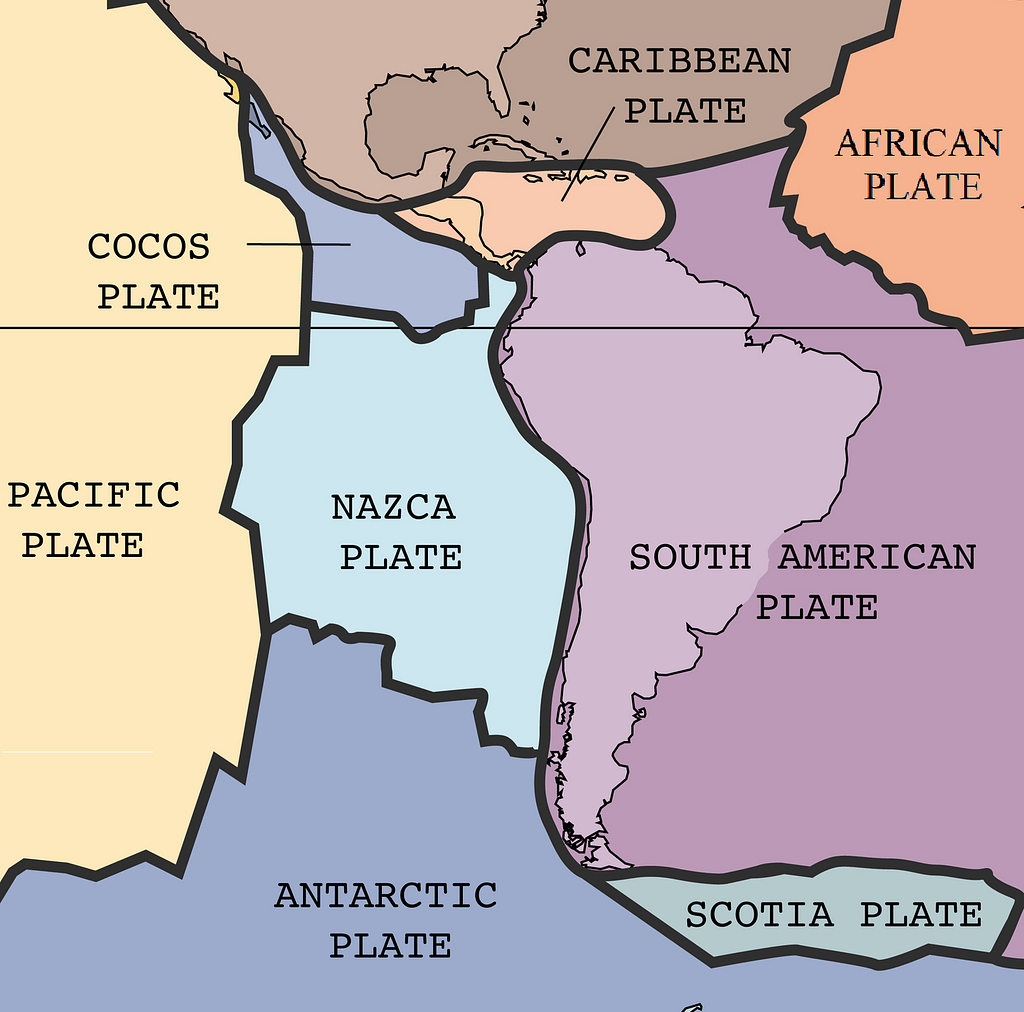
Tectonic plates illustration: Americas