
The Cocos Plate: Central America's Subduction Driver
The Cocos Plate in the eastern Pacific drives Earth's active volcanoes via rapid subduction beneath Central America. This small oceanic plate shows how minor tectonic elements can greatly impact regional geology, creating spectacular volcanic landscapes and seismic hazards.
Oceanic Engine: How the Cocos Plate Shapes Middle America
The Cocos Plate, covering approximately 2.86 million square kilometers (1.10 million square miles) of the eastern Pacific Ocean, drives one of Earth's most active volcanic systems through rapid subduction beneath Central America. This small oceanic plate, named after Costa Rica's Cocos Island, illustrates how relatively minor tectonic elements can have a profound influence on regional geology, creating spectacular volcanic landscapes and significant seismic hazards.
Formation and Tectonic Evolution
The Cocos Plate formed approximately 23 million years ago from the breakup of the ancient Farallon Plate, simultaneously with the creation of the Nazca Plate to the south. This fragmentation occurred as the East Pacific Rise approached the western margin of the Americas, fundamentally altering the eastern Pacific's tectonic configuration.
The plate consists entirely of oceanic crust with ages ranging from near-zero at the East Pacific Rise to approximately 25 million years at its eastern margin. The progressive age increase reflects continuous seafloor spreading at the plate's western boundary and simultaneous destruction through subduction at its eastern edge.
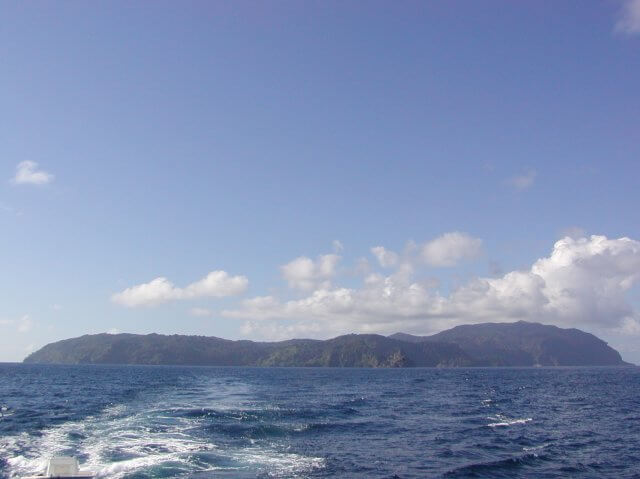
Cocos Island, the plate's only significant emerged feature, represents oceanic volcanism associated with the Galápagos hotspot track. This island, located 494 kilometers (307 miles) off Costa Rica's coast, consists of basaltic rocks formed approximately 2 million years ago and supports unique ecosystems, including endemic species such as the Cocos cuckoo (Coccyzus ferrugineus).
Plate Boundaries and Kinematics
The Cocos Plate exhibits diverse boundary relationships with five neighboring tectonic entities. Its western boundary follows the East Pacific Rise, where active seafloor spreading occurs at rates of 110-150 millimeters (4.3-5.9 inches) per year. This rapid spreading creates some of the youngest oceanic crust on Earth and maintains the plate's continuous eastward motion.
The eastern boundary forms the Middle America Trench, extending approximately 2,750 kilometers (1,710 miles) from southern Mexico to northern Panama. Here, the Cocos Plate subducts beneath the Caribbean Plate and North American Plate at convergence rates of 70-90 millimeters (2.8-3.5 inches) per year, among the fastest subduction rates globally.
To the north, the Cocos Plate meets the Pacific Plate along the Rivera Transform Fault, while the southern boundary with the Nazca Plate follows the Galápagos Ridge system. A complex boundary with the small Rivera Plate occurs along Mexico's western coast, where the Cocos Plate transitions into the Rivera Plate through a diffuse boundary zone.
The plate's overall motion is northeastward at approximately 85 millimeters (3.3 inches) per year relative to the Caribbean Plate, driving the subduction process that creates Central America's dramatic geological features.
Middle America Trench: Subduction Dynamics
The Middle America Trench represents one of the world's most active convergent margins, where young, hot oceanic lithosphere rapidly subducts beneath the Central American arc. The trench reaches maximum depths of 6,662 meters (21,857 feet) off the coast of Guatemala and maintains steep gradients throughout its length.
Subduction geometry varies significantly along the trench, reflecting differences in plate age, convergence rate, and local structural complications. Off Mexico, the subducting slab dips at moderate angles of 15-25 degrees before steepening with depth. Further south, off the coasts of Costa Rica and Panama, subduction angles increase to 60-80 degrees, creating distinct patterns of volcanism and seismic activity.
The young age of the subducting lithosphere (0-25 million years) creates unique subduction characteristics. Young oceanic crust remains hot and buoyant, leading to shallow subduction angles and intense thermal interactions with the overriding plate. This process generates high heat flow, extensive volcanism, and complex metamorphic reactions within the subduction zone.
Oceanic plateaus and aseismic ridges on the Cocos Plate create additional complexity when they encounter the trench. The Cocos Ridge, the hotspot track from the Galápagos, currently subducts beneath Costa Rica, causing regional uplift and modifying volcanic activity patterns.
Central America Volcanic Arc: Fire and Creation
The Cocos Plate subduction drives the Central America Volcanic Arc, one of Earth's most active volcanic systems, which contains over 60 major volcanic centers. The arc extends approximately 1,500 kilometers (932 miles) from southern Mexico to northern Panama, featuring a diverse range of volcanic types and activity levels.
The arc exhibits distinct segments corresponding to different subduction characteristics. The Guatemalan segment includes stratovolcanoes such as Fuego, one of Central America's most active volcanoes with frequent Strombolian and Vulcanian eruptions. The Salvadoran segment features major calderas, including Ilopango, which produced a massive eruption approximately 1,500 years ago.
Nicaragua's segment contains numerous active volcanoes, including Masaya, which maintains a persistent lava lake, and Momotombo, famous for its perfect cone shape. Costa Rica's volcanoes include Arenal, formerly one of the world's most continuously active volcanoes until 2010, and Poás, known for its acidic crater lake.
The volcanic arc exhibits typical subduction zone characteristics, characterized by predominantly andesitic to dacitic compositions. However, local variations reflect differences in subduction parameters, crustal thickness, and magma source regions. Back-arc volcanism in Nicaragua and Costa Rica produces more mafic compositions, indicating complex mantle melting processes.
Seismic Activity and Natural Hazards
The rapid convergence between the Cocos and Caribbean/North American plates generates intense seismic activity throughout Central America. The subduction zone regularly produces earthquakes exceeding magnitude 7.0, including several events that have caused significant damage and casualties.
The 2001 El Salvador earthquakes (M 7.7 and M 6.6) demonstrate the seismic hazards associated with Cocos Plate subduction. These events killed over 1,100 people and caused widespread damage, highlighting the vulnerability of Central American populations to earthquake hazards.
Costa Rica experiences frequent seismic activity associated with both subduction zone processes and local faulting. The 1991 Limón earthquake (M 7.7) caused significant damage along the Caribbean coast and triggered landslides throughout the region.
Tsunami hazards also accompany large subduction zone earthquakes. The 1992 Nicaragua tsunami, generated by a magnitude 7.7 earthquake, reached heights of 10 meters (33 feet) along some coastal areas and killed 170 people. The event demonstrated how relatively moderate earthquakes can generate disproportionately large tsunamis due to specific rupture characteristics.
Transform Faults and Strike-Slip Systems
Several major transform faults accommodate the complex motion between the Cocos Plate and its neighbors. The Panama Fracture Zone extends eastward from the East Pacific Rise, creating a significant structural boundary that influences regional tectonics.
The Central American coast is characterized by numerous strike-slip faults that accommodate oblique convergence and local deformation. Costa Rica's central valley contains several active faults, including the Aguacaliente Fault, which poses seismic hazards to the capital city of San José.
These transform systems demonstrate how plate boundaries evolve and adapt to changing kinematic conditions. The progressive northward migration of Central America relative to South America creates increasingly complex fault patterns and distributed deformation zones.
Geological Resources and Economic Impact
Cocos Plate subduction creates significant mineral resources throughout Central America. Volcanic processes concentrate valuable metals, including gold, silver, and copper, in epithermal and porphyry deposits. Guatemala and Nicaragua contain major gold deposits associated with volcanic activity, while Costa Rica hosts significant copper mineralization.
Geothermal energy represents another important resource created by subduction-related processes. Costa Rica generates approximately 15% of its electricity from geothermal sources, primarily in volcanic areas created by the subduction of the Cocos Plate. Guatemala, El Salvador, and Nicaragua also develop geothermal resources for electricity generation.
However, the same processes that create resources also generate natural hazards that impact economic development. Volcanic eruptions regularly disrupt agriculture and tourism, while earthquakes damage infrastructure and create long-term economic costs.
Environmental and Ecological Consequences
The rapid geological processes driven by Cocos Plate subduction create diverse environmental conditions that support exceptional biodiversity. Volcanic soils provide fertile agricultural areas, particularly in Guatemala, El Salvador, and Costa Rica, where coffee cultivation thrives on volcanic slopes.
The extreme topographic relief created by volcanic activity generates diverse microclimates and habitat types within short distances. Costa Rica's extraordinary biodiversity is partly a reflection of the environmental diversity created by recent volcanic activity and ongoing tectonic processes.
Endemic species, such as Quercus costaricensis (Costa Rican oak), occur in high-elevation volcanic environments created by subduction-related processes. These unique ecosystems demonstrate how geological processes influence biological evolution and distribution patterns.
Regional Climate and Atmospheric Interactions
Volcanic activity associated with Cocos Plate subduction occasionally influences the regional and global climate. Major explosive eruptions can inject significant quantities of ash and gases into the atmosphere, affecting weather patterns and agricultural productivity.
The 1835 eruption of Cospigüina volcano in Nicaragua produced ash falls as far as Colombia and Jamaica, demonstrating the regional impact of major volcanic events. More recently, Costa Rica's Irazú volcano disrupted air travel and agriculture during its 1963-1965 eruption period.
The Cocos Plate exemplifies how small oceanic plates can drive major geological processes through rapid subduction dynamics. Its continuing eastward motion ensures ongoing volcanic activity, seismic hazards, and landscape evolution throughout Central America, making it one of the most geologically dynamic regions in the Americas.
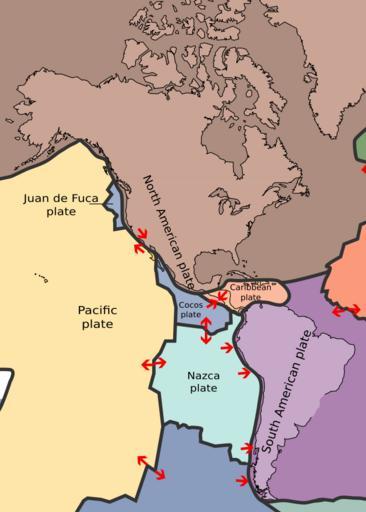
Map illustrating the Cocos plate location relative to the other plates of the Americas.