
El Chaltén, Mount Fitz Roy, Cerro Torre, and Lago del Desierto: At the Edge of the World
Argentine Patagonia's untamed beauty begins in El Chaltén, a small village in Los Glaciares National Park. This gateway leads to iconic peaks, including Cerro Torre and Cerro Fitz Roy, as well as Lago del Desierto, a tranquil lake surrounded by stunning landscapes.
Patagonia's Granite Frontier: El Chaltén, Fitz Roy, and the Landscapes That Define a Region
There are places on Earth that seem to exist at the outer limits of what landscapes are permitted to be. The corner of Argentine Patagonia that surrounds the village of El Chaltén is one of them. Here, within Los Glaciares National Park, granite towers rise so abruptly from the surrounding steppe that they appear almost implausible — vertical walls of rock climbing thousands of metres into a sky that is almost never still. Below them, glacial lakes mirror the peaks when the wind relents, and trails wind through forests of southern beech toward viewpoints that have drawn climbers, trekkers, and wanderers from across the world.
El Chaltén is the human anchor of this landscape — a small mountain village that has grown from a handful of buildings into the trekking capital of Argentina. Around it, four subjects demand attention: Mount Fitz Roy, arguably the most recognisable silhouette in Patagonia; Cerro Torre, a needle of rock and ice that ranks among the most technically demanding climbs on Earth; and Lago del Desierto, a glacially fed lake of serene beauty to the north, with a history that reflects the contested nature of this remote borderland.
El Chaltén: A Village Built for the Mountains
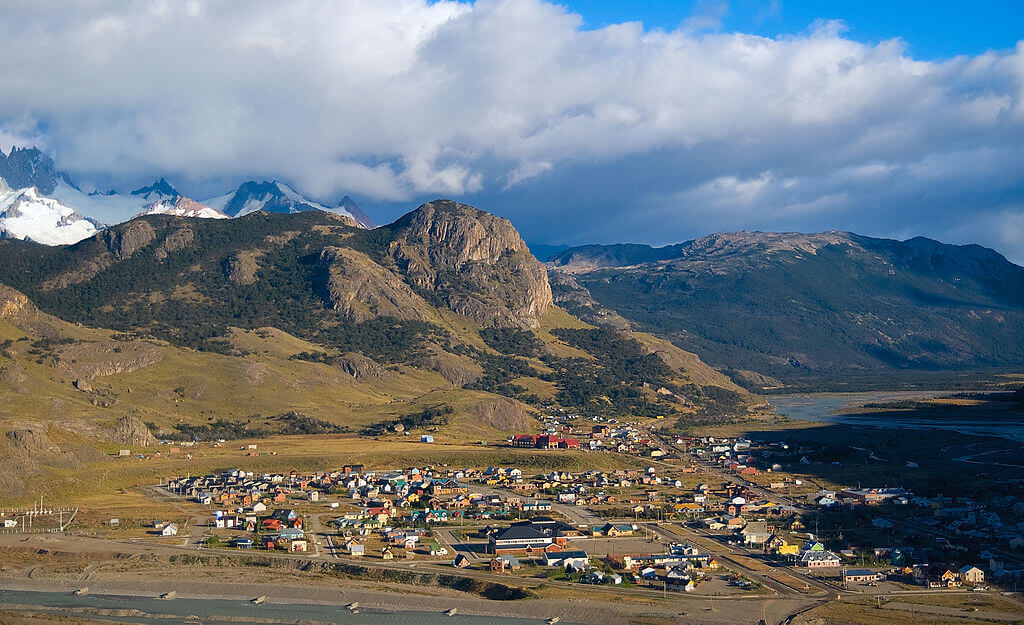
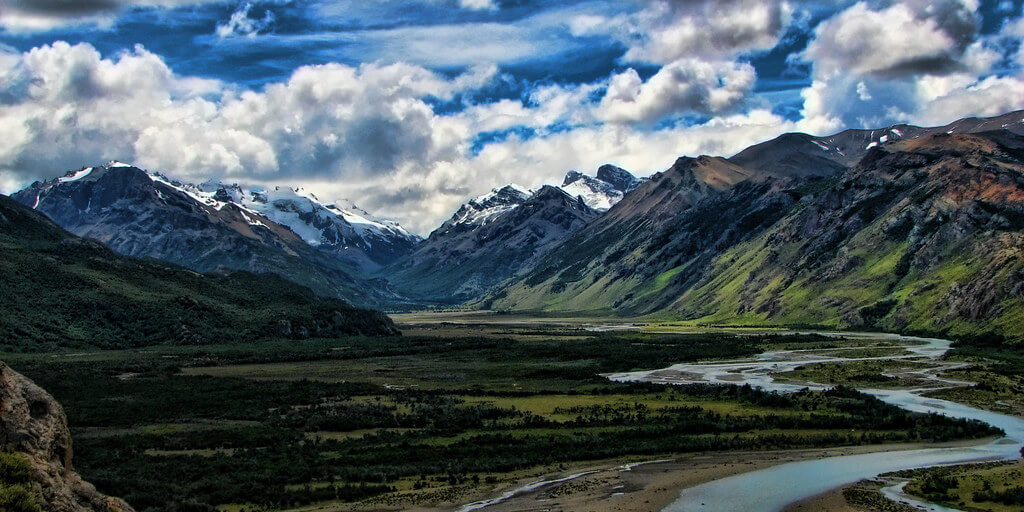
El Chaltén sits at roughly 400 metres (1,300 feet) above sea level in the valley of the Río de las Vueltas, in the far north of Santa Cruz Province. It was founded in 1985 — relatively recently by any measure — during a period of border tensions with Chile, when the Argentine government sought to establish a permanent civilian presence in the area. The name comes from the Tehuelche word for Mount Fitz Roy itself, meaning "smoking mountain," a reference to the clouds that perpetually wreathe its summit.
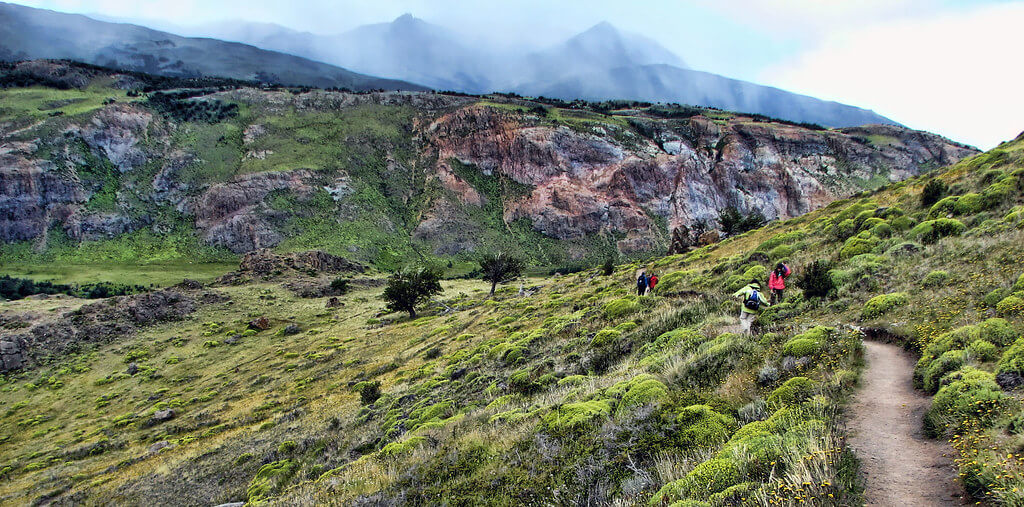
The village has grown to a year-round population of around 1,500 people, a number that swells dramatically during the trekking season from October through April. What distinguishes El Chaltén from other gateways to wilderness is the immediacy of the access it provides: the trail network begins at the village edge, with no roads, transfers, or additional logistics required to reach the base of some of the most spectacular mountain terrain in South America. Trails are well-marked and free to use, maintained by the national park administration, and suited to a wide range of experience levels.
The village is positioned at the edge of the Southern Patagonian Ice Field, the largest continuous ice mass outside Antarctica and Greenland. This proximity gives El Chaltén its character — the light changes rapidly, storms arrive without warning, and the peaks that frame the valley can shift from brilliant clarity to complete obscurity within minutes. This volatility is not incidental to the experience. It is the experience.
Mount Fitz Roy: The Smoking Mountain
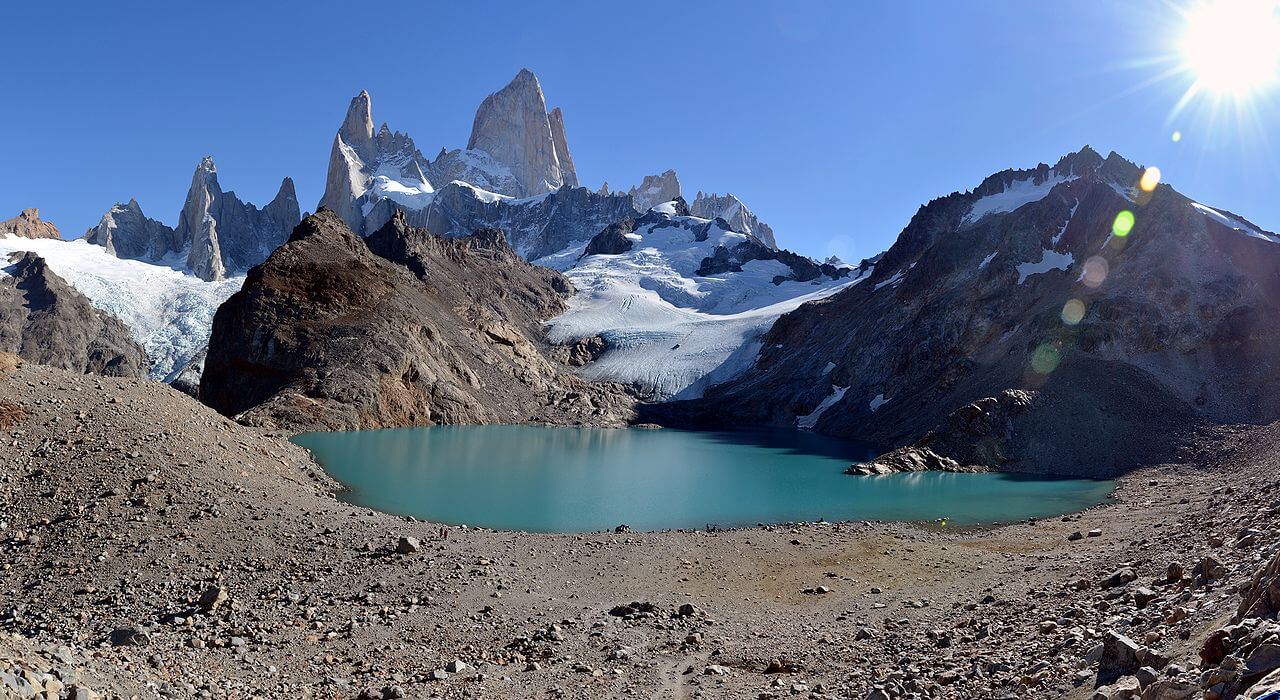
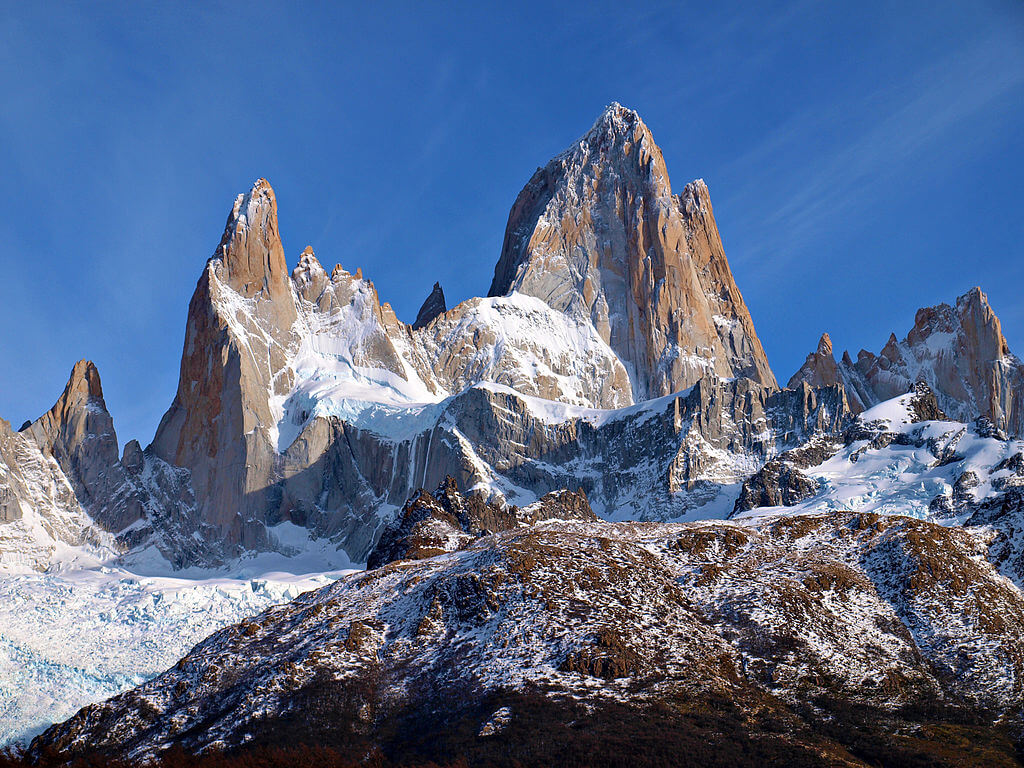
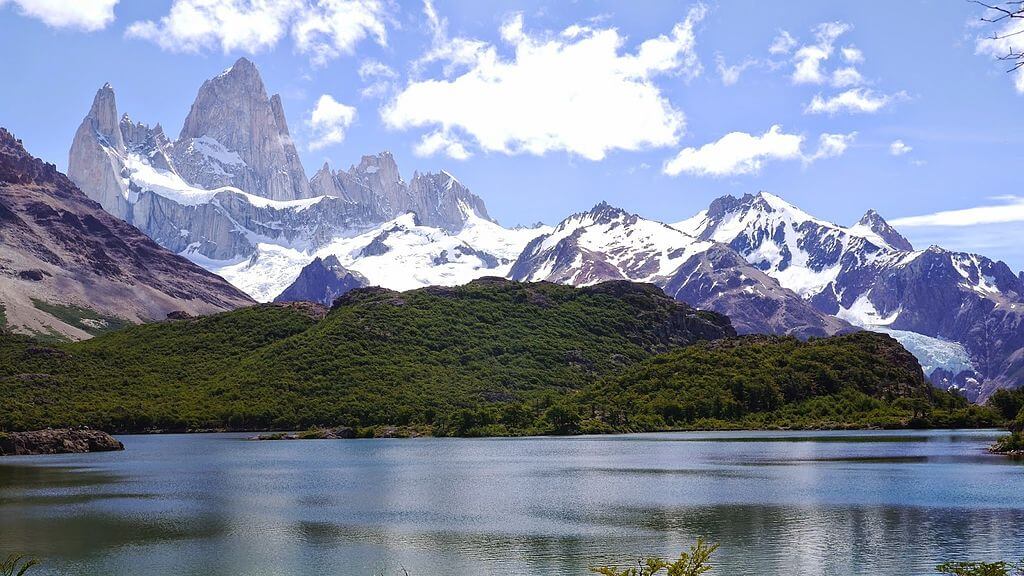
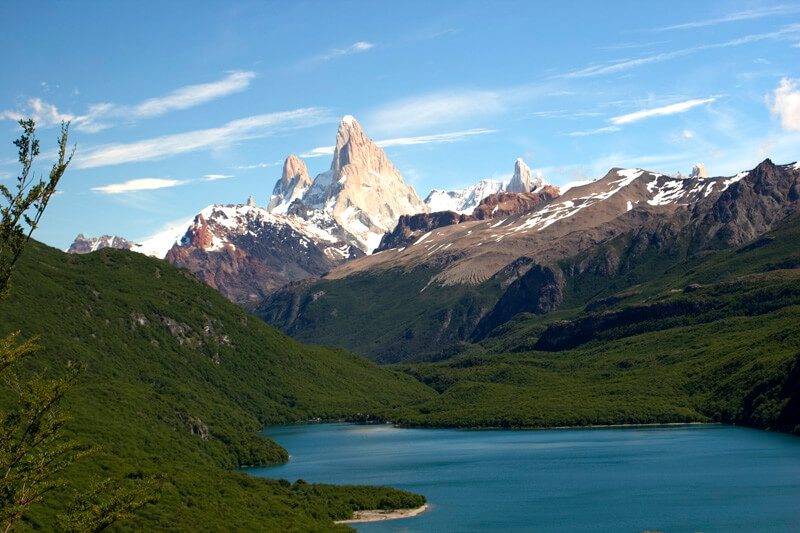
At 3,375 metres (11,073 feet), Mount Fitz Roy is not especially tall by Andean standards. What sets it apart is its form. Rising almost sheer from the Patagonian plateau, its granite walls offer no gradual approach — the mountain erupts from the landscape with an abruptness that gives it the visual authority of a peak twice its height. Its summit is among the most photographed in the world, particularly from Laguna de Los Tres, a glacial lake perched at 3,000 metres (9,843 feet) whose turquoise waters reflect the massif in conditions of rare calm.
The mountain straddles the border between Argentina and Chile. The two countries have agreed that their international boundary passes over Fitz Roy's main summit, though a stretch of border to the south, extending toward Cerro Murallón, remains formally undefined. The mountain is the symbol of Santa Cruz Province and appears on its coat of arms.
The Spanish explorer Antonio de Viedma first documented the peak in 1783. It received its current name in 1877 from the Argentine geographer Francisco Moreno, who named it in honour of Captain Robert FitzRoy of HMS Beagle — the vessel aboard which Charles Darwin made the observations that would eventually lead to his theory of evolution. The Tehuelche, who inhabited this region long before European contact, knew it as Chaltén, and their name has endured in the village that sits at its feet.
The climate around Fitz Roy reflects the broader brutality of Patagonian conditions. Even in summer, daytime temperatures rarely exceed 18°C (64°F), and nights can drop below 5°C (41°F). Winds are a defining feature of the landscape — sustained gales and sudden violent gusts are routine, and the summit is among the windiest places on Earth. Frost is possible at any time of year. Winter brings average daytime temperatures of around 3°C (37°F), falling to -4°C (25°F) at night, with lows that can drop considerably further during cold snaps. It is a climate that demands respect and rewards preparation.
For climbers, Fitz Roy is regarded as one of the great technical challenges of Patagonian mountaineering. Its sheer granite faces attracted some of the most celebrated ascents in climbing history, including the first successful summit by the French alpinists Lionel Terray and Guido Magnone in 1952. The mountain continues to draw elite alpinists seeking routes on its multiple faces and ridges.
Cerro Torre: A Tower at the Limit
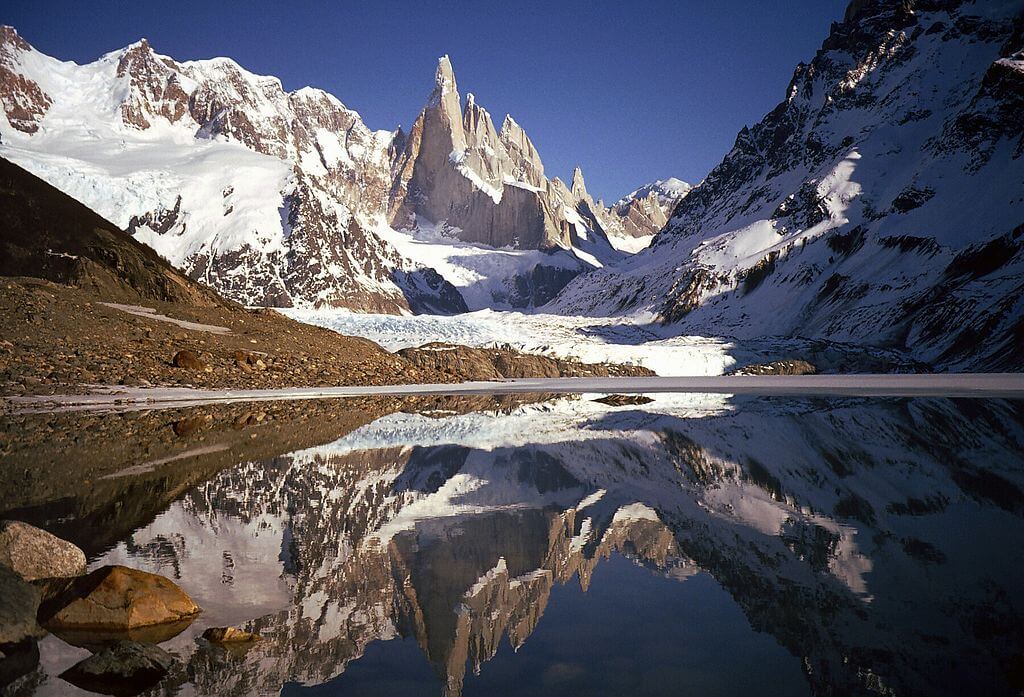
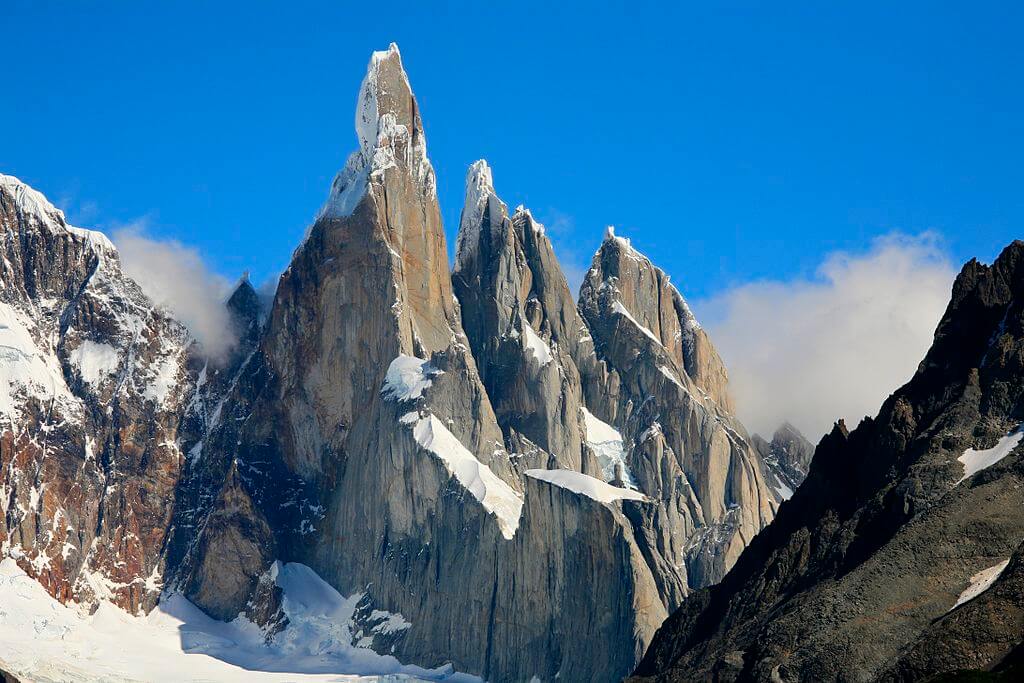
If Fitz Roy is the emblematic mountain of the region, Cerro Torre is its most extreme expression. Standing 3,128 metres (10,262 feet) high, some 12 kilometres (7.5 miles) west of Fitz Roy, Cerro Torre is a near-vertical tower of granite and ice that rises from the Southern Patagonian Ice Field into air that rarely ceases to move. Its summit is frequently capped with a mushroom of compacted rime ice — a formation created by the relentless westerly winds that drive moisture-laden air against the peak — which adds both to its visual drama and to the near-impossible difficulty of reaching the top.
Cerro Torre anchors a chain of four peaks that includes Torre Egger, Punta Herron, and Cerro Standhardt. All four are among the most technically demanding climbs on Earth. The rock is prone to sudden deterioration in bad weather, and conditions that appear stable can shift within hours into something life-threatening. This combination of technical difficulty and meteorological unpredictability has made the Cerro Torre group a proving ground for the world's best alpinists for more than half a century.
The mountain's climbing history is inseparable from controversy. The Italian climber Cesare Maestri claimed a first ascent in 1959 with Toni Egger, but the account was disputed — Egger died on the descent, and no evidence of the summit was ever produced. Maestri returned in 1970 with a petrol-powered compressor drill and bolted a route up the southeast ridge, an ascent that generated fierce debate about the ethics of such methods on a peak of this character. The bolts remain a source of ongoing discussion among the climbing community. The first undisputed ascent of Cerro Torre came in 1974, via the west face.
For non-climbers, Laguna Torre — reached by a 9-kilometre (5.5-mile) trail from El Chaltén — provides a close and compelling view of the peak, particularly in morning light when the tower is at its most dramatically lit. The walk itself passes through lenga beech forest and open pampa, offering perspectives on the surrounding landscape that justify the trip on its own, independent of the mountain it approaches.
Lago del Desierto: Stillness at the End of the Road
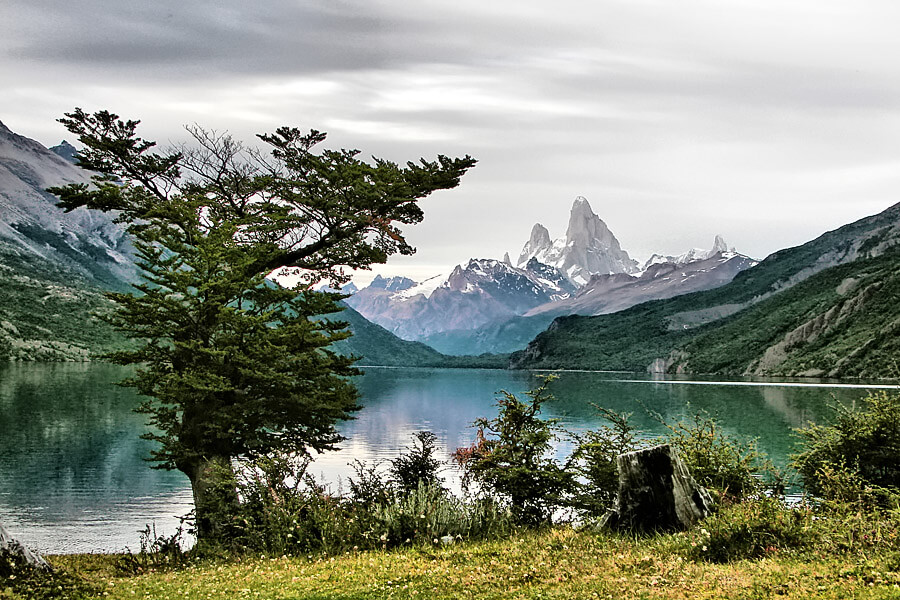
Some 37 kilometres (23 miles) north of El Chaltén, reached by unpaved road through the Río de las Vueltas valley, Lago del Desierto occupies a long glacial trough between the Martínez de Rozas range to the east and the glaciers of the Southern Patagonian Ice Field to the west. It is a lake of considerable beauty — deep and still, backed by forested slopes and framed by peaks, with Mount Fitz Roy visible in the distance on clear days. The name, meaning "Lake of the Desert," reflects not the terrain around it but the isolation that defined this corner of Patagonia before roads made it accessible.
The lake drains southward via the Vueltas River into Lago Viedma, and eventually to the Atlantic. It is fed primarily by glacial meltwater, giving it the deep blue-green colour characteristic of glacially sourced lakes across the region.
Lago del Desierto carries historical weight beyond its scenery. The lake and surrounding territory were the subject of a long-running border dispute between Argentina and Chile, one of several unresolved boundary questions left by the ambiguous language of the 1881 boundary treaty between the two countries. The dispute occasionally produced serious incidents — most notably in 1965, when an Argentine gendarme was killed in a confrontation — and remained unresolved for decades. International arbitration in 1994 awarded the territory to Argentina, closing a dispute that had at times threatened to escalate far beyond its remote setting.
Today, the lake is a destination in its own right. A trail runs along its eastern shore, boat services cross its length, and from the northern end a path continues toward the Chilean border and the Río Tranquilo valley beyond — a crossing used by trekkers linking the Argentine and Chilean sections of Patagonia's long-distance trail networks. The contrast between the lake's calm surface and the turbulent history of its ownership is one of the quieter ironies that Patagonian landscapes tend to accumulate.
Trekking: The Heart of El Chaltén
El Chaltén has been called the trekking capital of Argentina, and the designation is earned. The village sits at the confluence of trail networks that provide access to the region's principal landscapes across a range of distances and difficulty levels, all beginning within walking distance of the park entrance.
The trail to Laguna de Los Tres is the most celebrated. The round trip covers approximately 22 kilometres (13.7 miles) with around 800 metres (2,625 feet) of elevation gain, reaching a viewpoint above the lake that places walkers at eye level with the lower flanks of Fitz Roy's granite walls. The final ascent is steep and exposed, but the reward — a panorama that encompasses the massif, surrounding glaciers, and the plains below — is among the finest in Patagonian trekking. The trail to Laguna Torre is shorter and flatter, covering roughly 18 kilometres (11 miles) round-trip, and offers a different angle on the Cerro Torre group across a wide glacial plain.
For those with more time, the multi-day Huemul Circuit and the traverse to Paso del Viento provide access to more remote terrain, including viewpoints over the Southern Patagonian Ice Field itself. The park also harbours the huemul, the endangered Andean deer for which one circuit is named, as well as condors, foxes, guanacos, and the abundant birdlife of Patagonian forests and steppe.
The trekking season runs from October through April, with January and February offering the longest daylight hours and, statistically, the most settled weather — though "settled" in Patagonian terms still means preparing for wind and rain at any moment. The shoulder months of October and March attract fewer visitors and occasionally offer better light for photography, at the cost of less predictable conditions.
A Landscape Worth the Journey
El Chaltén and the peaks and lakes that surround it occupy a particular position in the geography of wild places — remote enough to require genuine commitment to reach, accessible enough that the effort is within reach of most reasonably fit travellers. The landscape offers neither comfort nor convenience. What it offers instead is scale, drama, and a quality of light and weather that concentrates experience in a way that more accommodating places cannot.
The granite towers of Fitz Roy and Cerro Torre, the still waters of Lago del Desierto, the wind-bent forests of the valley, the condors riding thermals above the ridge lines — these are not sights to be checked off a list. They are a landscape to be inhabited, however briefly, on its own terms. That is what draws people to this corner of Patagonia, and what brings many of them back.