Landforms of Brazil

Serra do Espinhaço: Brazil’s Mountain of Riches and Biodiversity

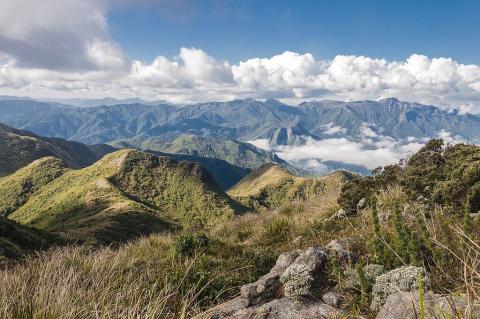
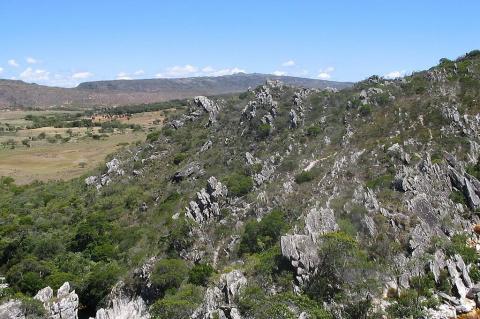
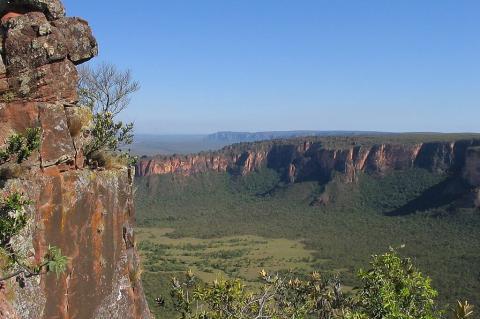
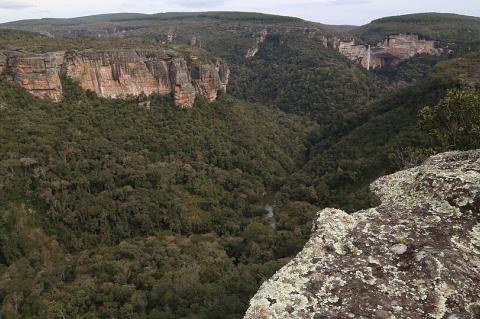
The Serra do Espinhaço is a mountain range that stands as a natural marvel in Brazil, stretching through Minas Gerais and Bahia. Known for its rich mineral deposits and unique ecosystems, the Serra do Espinhaço plays a vital role in the country's environmental and cultural fabric. Known for its rich mineral deposits and unique ecosystems, the range's significance is underscored by its designation as a Biosphere Reserve, which highlights its importance in preserving Brazil's natural heritage.

Serra do Mar: Brazil's Emerald Escarpment

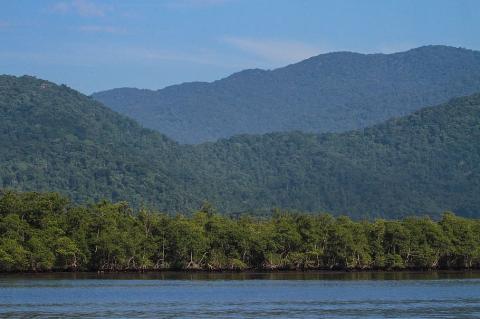
Along Brazil's southeastern Atlantic coast, where the azure ocean meets the verdant mountains, rises one of South America's most spectacular geological formations. The Serra do Mar stretches for approximately 1,500 kilometers (930 miles), forming a dramatic backdrop that has shaped both the landscape and the destiny of Brazil. From the misty highlands of Espírito Santo in the north to the rugged coastlines of Santa Catarina in the south, this ancient mountain system forms an almost continuous barrier between Brazil's interior plateau and the Atlantic Ocean.

Serra dos Órgãos: An Ecological Jewel of Brazil's Atlantic Forest

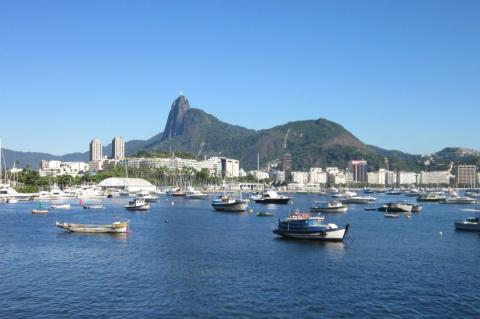
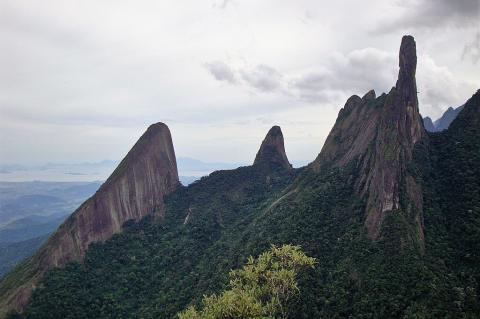
Rising majestically from Rio de Janeiro's coastal plains, the Serra dos Órgãos offers one of Brazil's most spectacular mountain landscapes. Named for its granite spires resembling cathedral organ pipes, this range is part of the Serra do Mar system, creating a dramatic backdrop that has fascinated visitors and scientists for centuries. From the bustling metropolis of Rio de Janeiro, these peaks appear as mystical silhouettes against the sky, their jagged profiles like ancient monuments to Brazil's geological forces.

The Borborema Plateau: Where Arid Landscapes and Diverse Ecosystems Converge

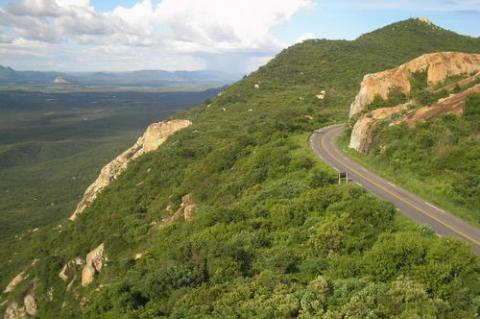
The Borborema Plateau, also known as the Serra da Borborema or Borborema Mountains, rises majestically in Brazil's northeastern region. This expansive and rugged plateau spans across the states of Alagoas, Pernambuco, Paraíba, and Rio Grande do Norte, forming the northeasternmost part of the Brazilian Highlands. It acts as a natural barrier against the moisture-laden winds coming from the Atlantic Ocean.

The Brazilian Highlands: Geological Foundation of a Continental Giant

The Brazilian Highlands (Planalto Brasileiro) constitute South America's most extensive plateau system, covering approximately 4.5 million square kilometers (1.74 million square miles) and serving as Brazil's geological backbone. This ancient landform influences continental weather patterns, harbors critical biodiversity hotspots, supports over 190 million inhabitants, and provides the geological foundation for Brazil's emergence as a global agricultural and mining powerhouse.

The Guaraní Aquifer System: South America's Hidden Ocean and the Future of Freshwater Security

Deep beneath four South American nations lies the Guaraní Aquifer System (GAS), one of Earth's most remarkable geological treasures. Spanning 1.2 million square kilometers of Argentina, Brazil, Paraguay, and Uruguay, it creates an underground hydrological empire rivaling the Mediterranean Sea. Named after the Indigenous Guaraní people, this aquifer system represents far more than a simple water source—it embodies the interconnected destiny of four nations and serves as a critical bulwark against regional water insecurity in an era of climate uncertainty.

The Guiana Shield: A Billion-Year Legacy of Stone and Life

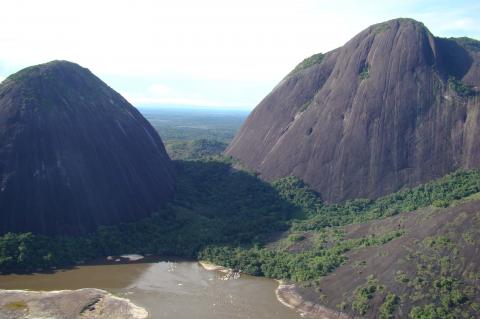
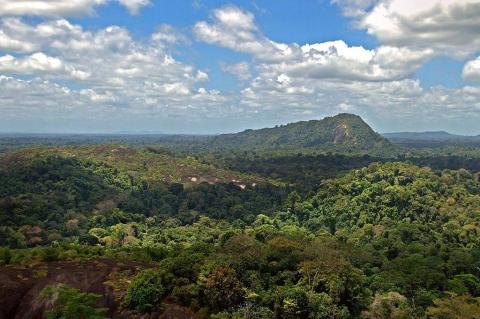
Draped across the northeastern corner of South America, the Guiana Shield stands as a profound testament to the Earth's deep history, a geological and ecological symphony played out over eons. Forged in the fiery depths of the Precambrian eon, dating back an astonishing 1.7 billion years, this ancient geological formation forms a stable craton, a foundational block of the South American Plate, shaping the very bedrock and landscapes of Guyana, Suriname, French Guiana, Venezuela, Colombia, and Brazil.

The Iguazú River: A Natural Wonder of South America

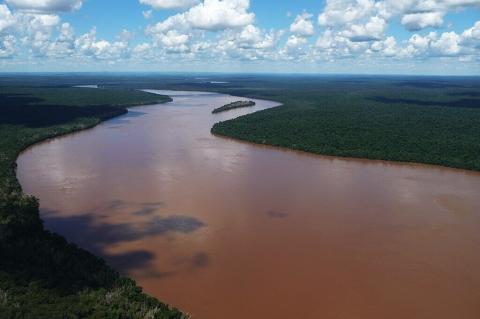
The Iguazú River, one of South America's most remarkable waterways, is a vital natural feature that traverses the landscapes of Brazil and Argentina. Renowned for its breathtaking Iguazú Falls, the river is a critical component of the region's hydrological system, supporting diverse ecosystems and serving as an essential resource for local communities. Originating in the Serra do Mar coastal range, the river winds through lush forests and rugged terrain before culminating in a dramatic series of cascades.

The Paraguay River: Lifeline of South America

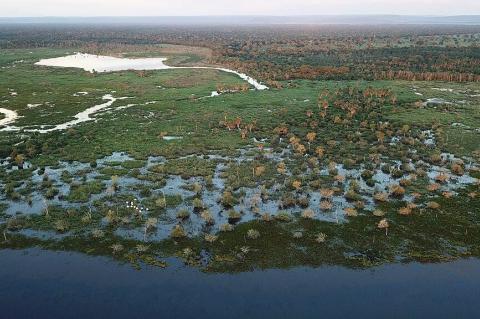
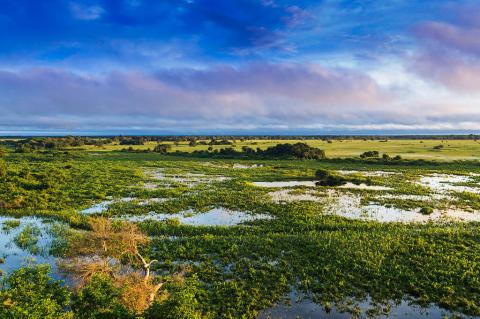
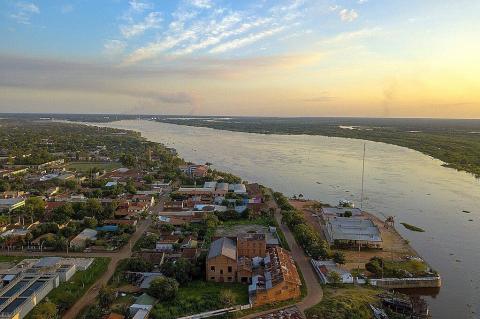
The Paraguay River, South America's fifth-largest river, is vital for the continent's southern regions. From its source in Brazil to its confluence with the Paraná River in Argentina, the river flows through Brazil, Paraguay, and Argentina. The river not only serves as a critical geographical feature but also demarcates national borders and influences the livelihoods of millions, making it one of the most significant waterways on the continent. It is crucial in maintaining biodiversity, especially in the Pantanal, one of the world's most ecologically diverse wetlands.

The Paraná River: Lifeblood of South America

The Paraná River is an extraordinary natural feature, the second-longest river in South America after the Amazon. It traverses Brazil, Paraguay, and Argentina. Originating in southern Brazil, the Paraná River flows generally southward until it merges with the Uruguay River to form the Río de la Plata at the border of Argentina and Uruguay. This extensive river system and its encompassing basin play crucial roles in the region's environmental, economic, and cultural landscapes.