
Belo Horizonte: Brazil's First Planned Modern City
Rising from a plateau surrounded by the Curral del Rey Mountains, Belo Horizonte stands as a testament to Brazil's vision of modernity at the dawn of the republican era. This planned city, inaugurated in 1897 as the capital of Minas Gerais, represents a decisive break from the colonial past.
Belo Horizonte: From Republican Vision to Modern Metropolis
Rising from a plateau surrounded by the Curral del Rey Mountains, Belo Horizonte stands as a testament to Brazil's vision of modernity at the dawn of the republican era. This planned city, inaugurated in 1897 as the capital of Minas Gerais, represents a decisive break from the colonial past—a forward-looking metropolis designed with wide avenues, geometric precision, and aspirations to become a center of commerce and culture. Today, with a metropolitan population exceeding 6.3 million residents, Belo Horizonte ranks as Brazil's third-largest urban area and serves as a vital hub for industry, technology, and the arts in southeastern Brazil.
Geographic Setting and Climate
Belo Horizonte is strategically located in southeastern Brazil, on the western slope of the Espinhaço Mountains at an elevation of approximately 830 to 850 meters (2,723 to 2,789 feet) above sea level. The city sits on an expansive plateau encircled by mountains that create the "beautiful horizon" referenced in its name—a visually striking ridge that frames views from nearly every vantage point within the urban core.
The region lies at the edge of Brazil's sertão, or dry interior, where the lush Atlantic coastal zone transitions to the more arid central highlands. This positioning, approximately 330 kilometers (205 miles) northwest of Rio de Janeiro and 590 kilometers (367 miles) northeast of São Paulo, places Belo Horizonte at a crucial junction in Brazil's transportation and economic networks.
The climate is classified as tropical savanna (Aw under the Köppen system), characterized by distinct wet and dry seasons and moderated by the city's altitude. Average annual temperature hovers around 21°C (70°F), ranging from approximately 13°C to 29°C (55°F to 84°F) throughout the year. The city experiences its hottest months during the Southern Hemisphere's summer, when February averages near 29°C (84°F), while the coolest period occurs during the austral winter months of June and July, when nighttime temperatures can occasionally drop to 10°C (50°F) or lower.
Precipitation patterns follow the hemisphere's seasonal rhythm. The wet season extends from November through March, with December and January each receiving approximately 300 millimeters (11.8 inches) of rainfall. These months bring frequent afternoon thunderstorms and high humidity levels reaching 75-80%. Conversely, the dry season spans May through September, during which monthly rainfall drops dramatically—July, the driest month, averages only 14 millimeters (0.6 inches). Annual precipitation totals approximately 1,491 millimeters (58.7 inches) distributed across roughly 116 rainy days. Despite its tropical latitude, the elevation keeps Belo Horizonte relatively comfortable year-round, avoiding the extreme heat of lower-lying Brazilian cities.
Historical Development
From Curral del Rey to Cidade de Minas
The site that would become Belo Horizonte began as a modest farming settlement established in 1701 by explorer João Leite da Silva Ortiz, who named his property Curral del Rey (King's Corral). The farm's success attracted other settlers, and the location proved advantageous—it lay along the main migration route between the São Francisco River and southern Brazil. By the late 18th century, Curral del Rey had evolved into a small village of approximately 8,000 inhabitants, surrounded by agricultural estates and serving as a waystation for travelers.
The transformation from rural hamlet to state capital emerged from political necessity and republican ideals. When Brazil transitioned from empire to republic in 1889, political leaders in Minas Gerais determined that the colonial capital of Ouro Preto—nestled in a narrow valley 80 kilometers (50 miles) to the southeast—could no longer accommodate the state's administrative needs or embody its modern aspirations. Ouro Preto, with its winding streets, baroque churches, and association with imperial rule and the gold rush era, symbolized a past that republican reformers sought to transcend.
In 1893, Governor Afonso Pena selected Curral del Rey as the site for the new capital based on its favorable topography, climate, and central location within the state. The decision sparked contentious debate, but ultimately, the vision of creating a modern planned city prevailed.
Aarão Reis and the Urban Grid
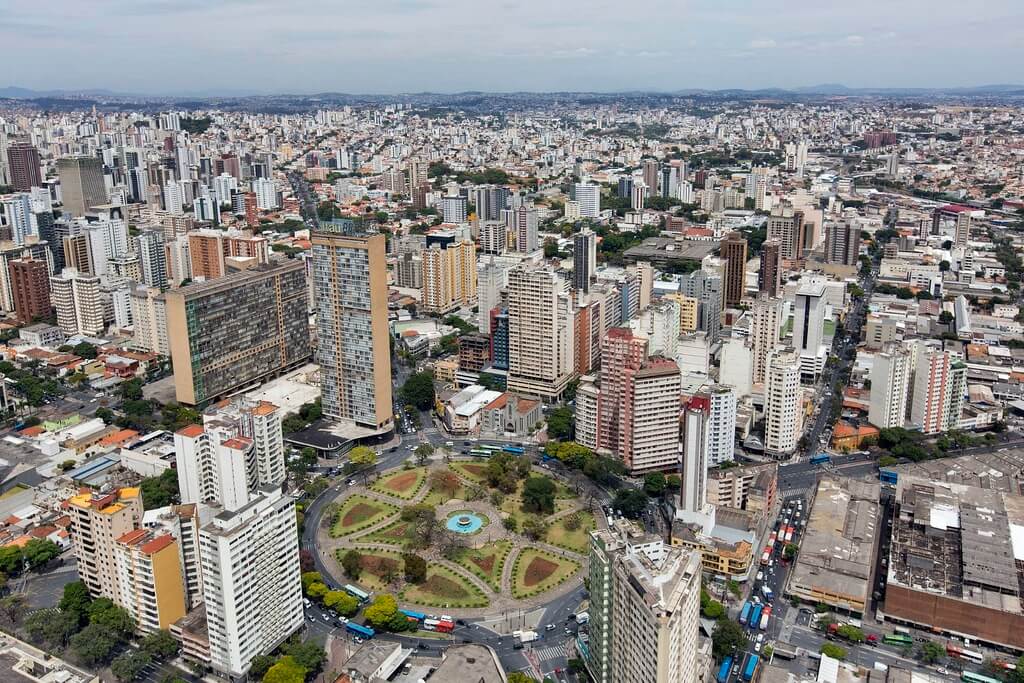
Urban planner Aarão Reis, an engineer from Pará, was commissioned to design Brazil's second planned city (after Teresina). Drawing inspiration from Washington, D.C., La Plata in Argentina, and Parisian urban planning principles, Reis conceived a rational grid system for the downtown core. His design featured perpendicular and diagonal avenues radiating from central points, creating a symmetrical street network that facilitated both circulation and monumental vistas.
Reis named the major avenues after Brazilian states and streets after Indigenous peoples, embedding national identity into the city's very fabric. The original urban plan designated an area of approximately 21 square kilometers (8 square miles) within the Avenida do Contorno—a ring road that still defines the historical center. This core zone was reserved exclusively for government functionaries and upper-class residents, reflecting the planners' vision of an orderly, modern capital segregated from working-class neighborhoods that developed beyond the perimeter.
Construction proceeded at a breakneck pace. The Brazilian government established a tight deadline for completion, and the city was inaugurated on December 12, 1897, under the name Cidade de Minas (City of Mines)—a reference to the state's mineral wealth. At the inauguration, many buildings remained unfinished, and the infrastructure was incomplete. To encourage growth, authorities offered free lots and construction subsidies to prospective residents. The name officially changed to Belo Horizonte in 1906, acknowledging the city's distinctive character, shaped by its scenic mountain backdrop.
20th Century Growth and Transformation
The early 20th century witnessed rapid industrial expansion as Belo Horizonte evolved from an administrative center to a manufacturing powerhouse. The city's proximity to Minas Gerais' rich mineral deposits—particularly iron ore—fueled the development of steel mills and metallurgical industries. Traditional sectors, including textiles, furniture, and food processing, established bases in the growing city, while the service economy expanded to support the burgeoning population.
Demographic growth quickly exceeded planners' expectations. The population, initially restricted to the central zone, spilled beyond the Avenida do Contorno as workers and migrants sought housing and employment. By 1940, Belo Horizonte had become a significant urban center, attracting the attention of architects and planners interested in modernist design.
The Pampulha Modern Ensemble
Vision of Juscelino Kubitschek and Oscar Niemeyer
In 1940, a pivotal collaboration between Mayor Juscelino Kubitschek (who would later serve as Brazil's president from 1956 to 1961) and 33-year-old architect Oscar Niemeyer produced one of the 20th century's most significant modernist architectural projects. Kubitschek envisioned developing a suburban garden city neighborhood around the newly constructed artificial lake at Pampulha, approximately 8 kilometers (5 miles) north of the city center. He commissioned Niemeyer to design a cultural and leisure complex that would serve as a weekend retreat and recreational destination for residents of Belo Horizonte.
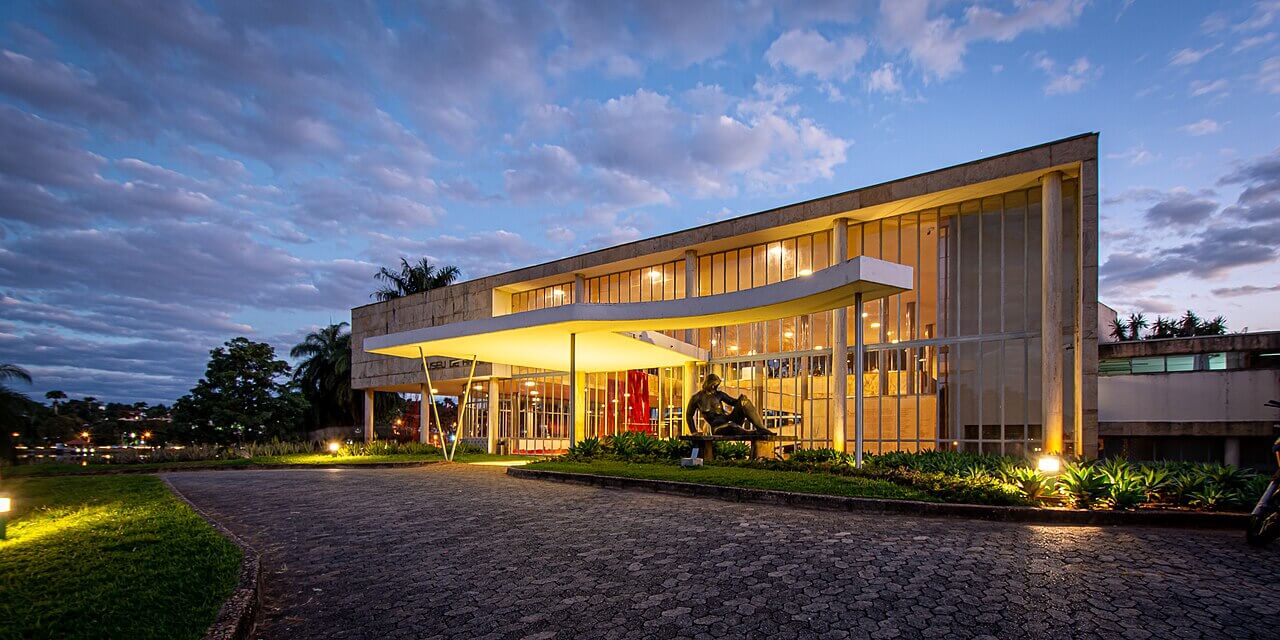
The Pampulha Modern Ensemble comprised four main buildings: a casino (now the Pampulha Art Museum), a ballroom (Casa do Baile), the Golf Yacht Club, and the Church of São Francisco de Assis. Niemeyer collaborated with landscape architect Roberto Burle Marx, structural engineer Joaquim Cardozo, and visual artists including Cândido Portinari and Paulo Werneck to create a harmonious integration of architecture, landscape, sculpture, and painting.
Architectural Innovation
The Pampulha project marked Niemeyer's breakthrough as an architect of international significance and established principles that would define his subsequent career. He exploited the plastic potential of reinforced concrete to create bold, curvilinear forms that departed from the rigid geometries of European modernism. Rather than the straight lines and right angles favored by Le Corbusier and the International Style, Niemeyer embraced organic curves inspired by Brazil's natural landscape—the rolling hills, flowing water, and sensuous forms of the Brazilian terrain.
The Church of São Francisco de Assis exemplifies this approach. Completed in 1943, the chapel consists of four undulating concrete parabolic vaults that create a wavelike profile. The structure simultaneously serves as both enclosure and support, eliminating the need for traditional masonry walls. Exterior walls feature blue-and-white ceramic tile mosaics by Portinari, while the interior contains his Stations of the Cross panels—figurative works that scandalized conservative religious authorities. The Archbishop of Belo Horizonte initially refused to consecrate the building, deeming its unconventional design "unfit for religious purposes." The church stood unused for 14 years until it was finally consecrated in 1959.
The former casino, inaugurated in 1943, showcases Niemeyer's mastery of sinuous forms and elegant proportions. After gambling was outlawed in Brazil in 1946, the building sat vacant until reopening as the Pampulha Art Museum in 1957. The serpentine façade, cantilevered elements, and integration with Burle Marx's landscaping demonstrate the collaborative, multidisciplinary approach that characterized the entire ensemble.
Casa do Baile, the ballroom building, occupies a small island connected to the shore by an eleven-meter (36-foot) bridge. Its circular form and freeform curves create an intimate relationship with the surrounding lake and landscape. Like the casino, it ceased operations in the late 1940s and now functions as a cultural center focusing on urbanism, architecture, and design.
UNESCO Recognition
In July 2016, UNESCO designated the Pampulha Modern Ensemble as a World Heritage Site, recognizing it as a pioneering example of modern architecture that reflects the influence of Brazil's climate, landscape, and cultural traditions on modernist principles. The UNESCO citation emphasizes how the project demonstrates a particular stage in South American architectural history that responded to broader socio-economic changes, including demands for greater public participation in cultural life following the economic crises of the 1930s.
The ensemble's significance extends beyond Brazil. Niemeyer's work at Pampulha influenced modernist architecture worldwide and directly led to his most famous commission—the design of Brasília, Brazil's purpose-built capital, inaugurated in 1960. The Pampulha project established design principles and collaborative relationships that would shape Brazilian architecture for decades.
Contemporary Belo Horizonte
Population and Metropolitan Growth
The city proper contains approximately 2.5 million residents, while the Greater Belo Horizonte metropolitan area encompasses 34 municipalities and exceeds 6.3 million inhabitants, making it Brazil's third-largest metropolitan region after São Paulo and Rio de Janeiro. This represents extraordinary growth from the 411,868 residents recorded in 1950. The metro area continues expanding, though at more modest rates—approximately 0.8% annually in recent years.
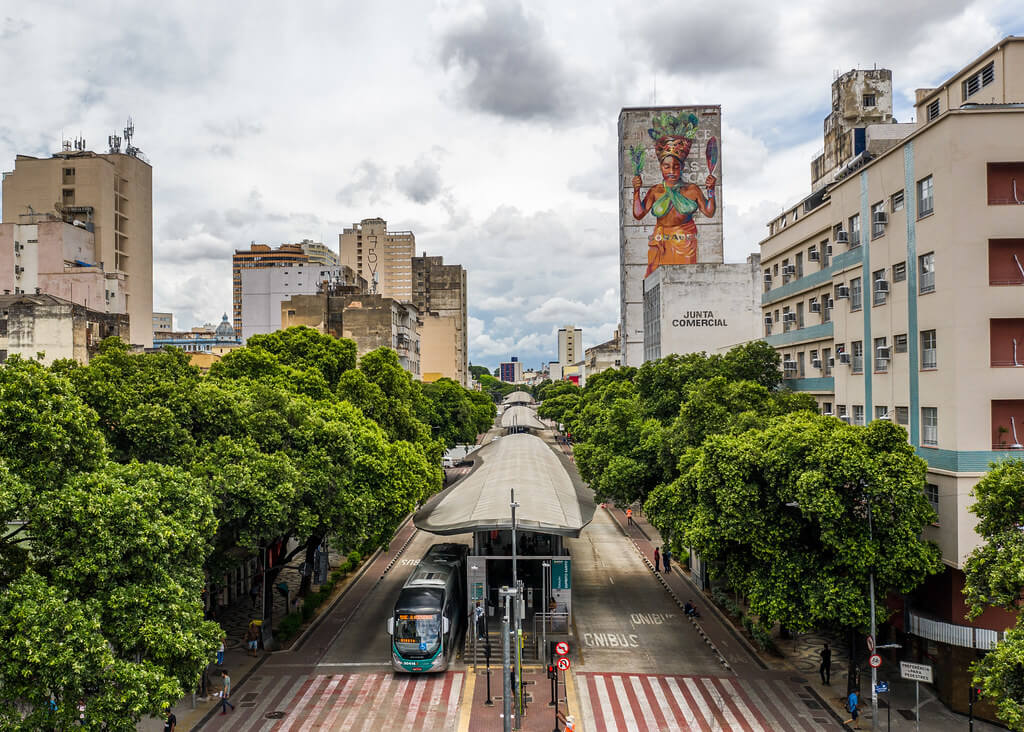
The city has sprawled far beyond Aarão Reis' original planned zone, extending across neighboring municipalities and creating complex urban patterns. Tree-lined avenues still radiate from the historic center, but the city now faces challenges common to rapidly growing Brazilian metropolises, including traffic congestion, informal settlements, and infrastructure strain. Commuters in peak hours can spend significant time in traffic, though the MOVE bus rapid transit system, implemented in recent years, has reduced average commute times in corridors it serves.
Economic Development
Belo Horizonte functions as a strategic economic leader in Brazil. The city's GDP exceeds $60 billion (in metropolitan terms), driven by a diversified economy that has evolved considerably since its industrial heyday. While traditional sectors, including steel production, metallurgy, and automobile manufacturing, remain important—with companies like FIAT, Gerdau, and other major manufacturers maintaining significant operations—the service sector now accounts for approximately 85% of economic activity.
The city has emerged as a major center for technology and innovation. The São Pedro Valley district, dubbed "Brazil's Silicon Valley," is home to numerous tech startups and digital companies. Google maintains one of only six Google Campuses worldwide in Belo Horizonte, providing co-working spaces and resources for entrepreneurs and tech innovators. The technology sector has grown at remarkable rates, with IT employment increasing more than 15% annually in recent years. Companies including Samba Tech, Take Blip, Thoughtworks, and Localiza (a car rental giant) have established significant presences.
Biotechnology represents another growth sector, with the metropolitan area housing approximately 16% of Brazil's biotech companies and generating annual sales exceeding R$550 million. Research partnerships among universities, Petrobras (the national oil company), and government agencies support ongoing development in biodiesel and related fields.
Mining continues to play a crucial role in the regional economy. Minas Gerais' vast mineral wealth, particularly iron ore deposits, supports major extraction and processing operations. The state remains one of the world's most important sources of iron ore, and Belo Horizonte serves as the administrative and logistics center for much of this activity.
Educational and Cultural Institutions
Belo Horizonte has established itself as a major educational hub. The Federal University of Minas Gerais (UFMG), founded in 1927, ranks among Brazil's most prestigious public universities and contributes significantly to research and innovation across multiple disciplines. The Catholic University of Minas Gerais (PUC Minas), established in 1958, provides additional higher education capacity. These institutions, along with numerous technical colleges and secondary schools, produce skilled graduates who feed the city's technology and professional services sectors.
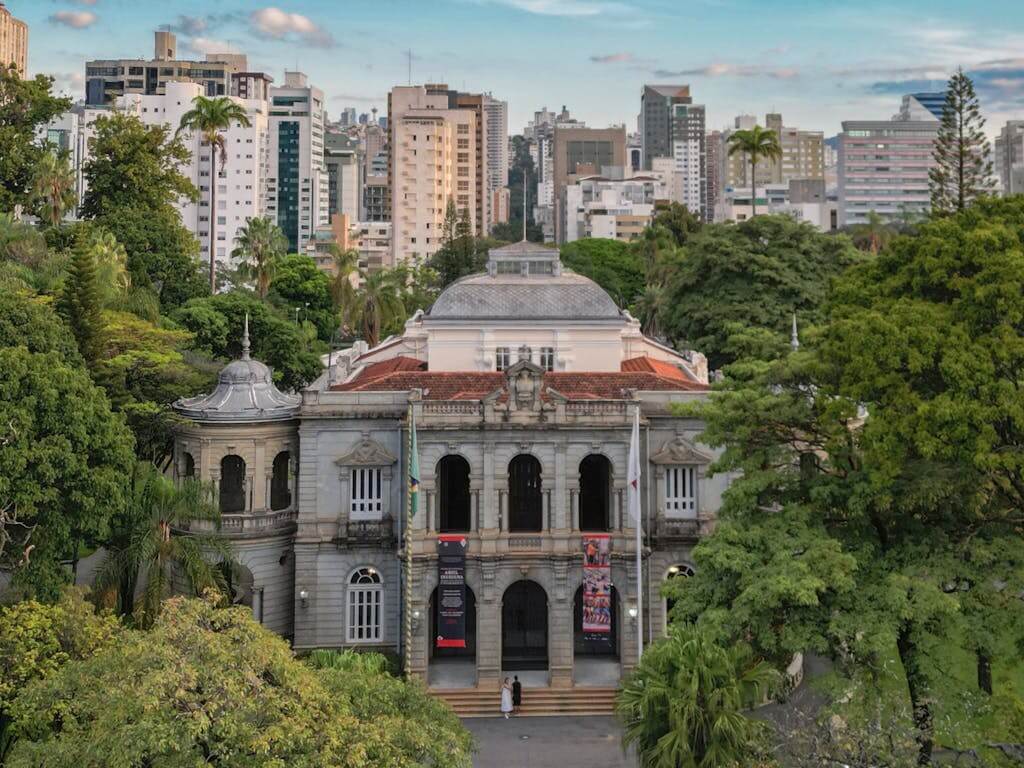
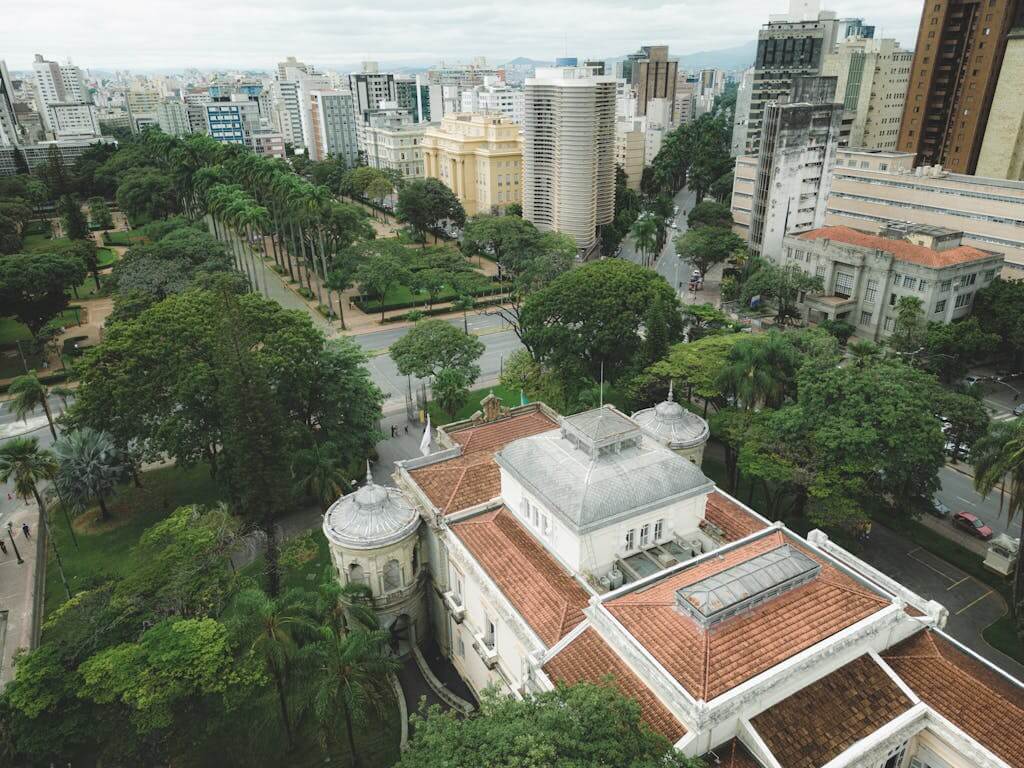
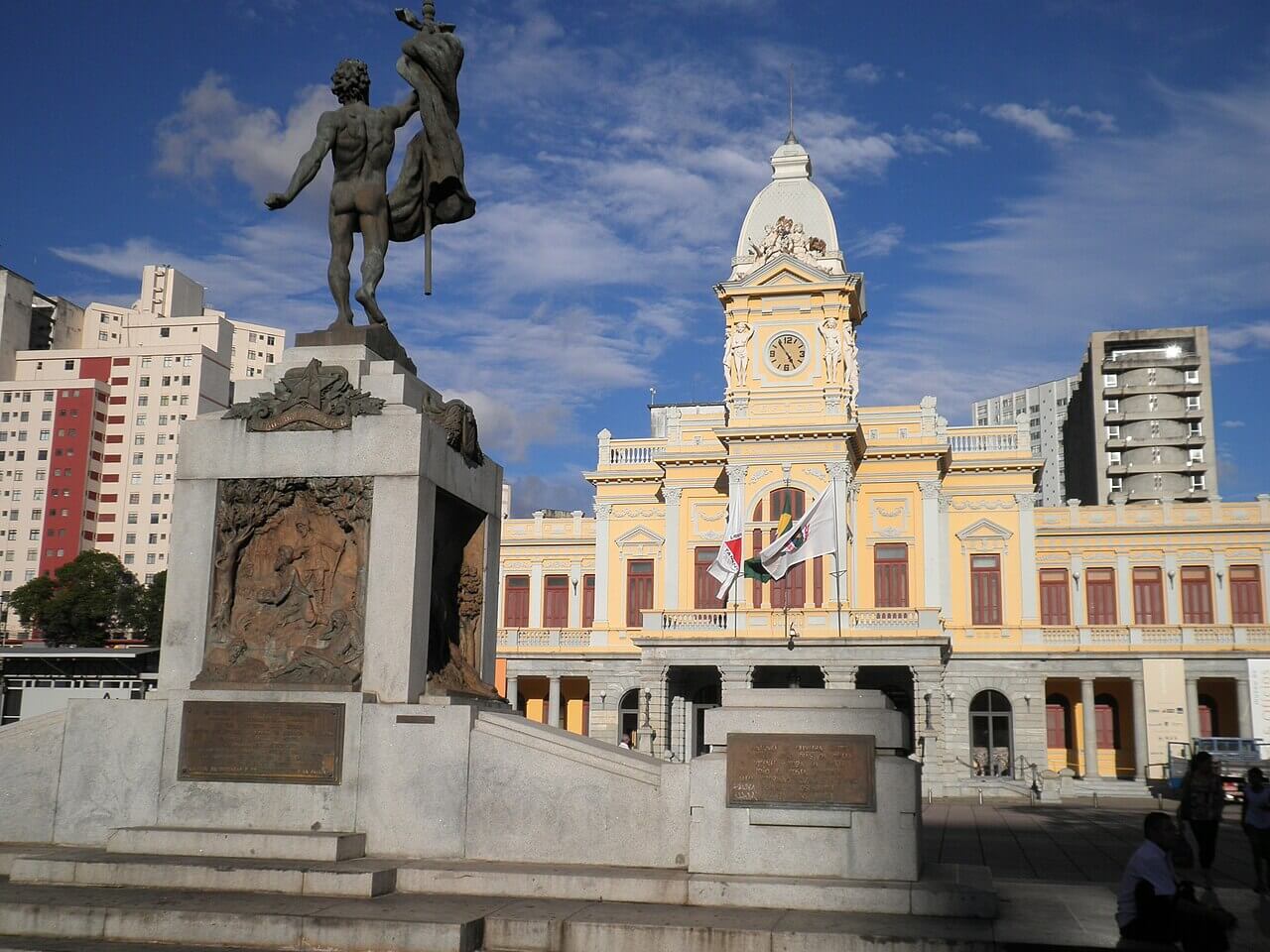
The Circuito Cultural Praça da Liberdade, located in the central region, constitutes the largest cultural circuit in Brazil. This complex includes eleven museums and cultural spaces surrounding the historic Liberty Square, among them the Minas Gerais Museum, the Mines and Metal Museum, the UFMG Knowledge Space, and the Memorial Minas Gerais Vale. These institutions preserve and display the state's rich cultural and industrial heritage while providing venues for contemporary exhibitions and educational programming.
Beyond the Pampulha ensemble, Belo Horizonte is recognized for its contributions to music, literature, and the arts. The city has produced influential musicians across multiple genres, from the pioneering metal bands Sepultura and Sarcófago to the Christian music group Diante do Trono. The contemporary bar and restaurant scene has earned Belo Horizonte the designation as a UNESCO Creative City in Gastronomy (2019), acknowledging its culinary traditions and commitment to sustainable food practices.
Transportation and Connectivity
Transportation infrastructure connects Belo Horizonte to the rest of Brazil through multiple modes. The city operates a single-line metro system, supplemented by an extensive bus network and MOVE bus rapid transit corridors featuring dedicated lanes and high-capacity vehicles. Despite these systems, traffic congestion persists during peak hours.
Tancredo Neves International Airport at Confins, located 38 kilometers (24 miles) north of the city center, handles domestic and international flights. Opened in 1984, this facility has undergone expansion to meet growing demand. The Pampulha/Carlos Drummond de Andrade Airport, located 8 kilometers (5 miles) from the city center, primarily serves domestic routes and private aviation.
Major highways radiate from Belo Horizonte in all directions. BR-040 connects the city to Rio de Janeiro and Brasília, while other routes link to São Paulo, the coastal city of Vitória, and destinations throughout Minas Gerais. This road network supports the city's role as a distribution center for the rich agricultural and mining regions surrounding it.
Regional Context and Heritage
Belo Horizonte serves as the gateway to Minas Gerais' historic gold mining towns. Ouro Preto lies 80 kilometers (50 miles) southeast, Mariana approximately 100 kilometers (62 miles), and Congonhas 90 kilometers (56 miles) to the south. These baroque jewels, frozen in the 18th century, provide a stark contrast to Belo Horizonte's planned modernity. Together, they tell the complex story of Minas Gerais—from colonial extraction and artistic achievement to republican transformation, and now to contemporary industrial and technological development.
The Serra do Espinhaço, the ancient mountain range that cradles Belo Horizonte, extends north and south, defining much of the state's geography and containing its mineral wealth. This rugged terrain, designated a UNESCO Biosphere Reserve, supports unique ecosystems and offers dramatic landscapes visible from the city's elevated vantage points.
Belo Horizonte represents a distinctive chapter in Brazilian urbanism—a city born not from colonial settlement or organic growth but from deliberate planning and republican ideals. The geometric grid, the modernist masterpieces at Pampulha, and the transformation from an administrative center to a diversified metropolis reflect Brazil's ongoing negotiation between planning and spontaneity, tradition and innovation, and local identity and global integration. As the city continues evolving in the 21st century, it carries forward the ambitious vision that transformed a rural hamlet into one of South America's major urban centers. This beautiful horizon remains perpetually in view yet always just beyond reach.