
Sítio Roberto Burle Marx: Tropical Modernism in Rio de Janeiro
In Rio's Barra de Guaratiba, a cultural landscape blends art, botany, and landscape architecture. The Sítio Roberto Burle Marx estate reflects Marx's revolutionary tropical modernism. As his home, studio, and laboratory, its gardens embody his influential landscape design principles.

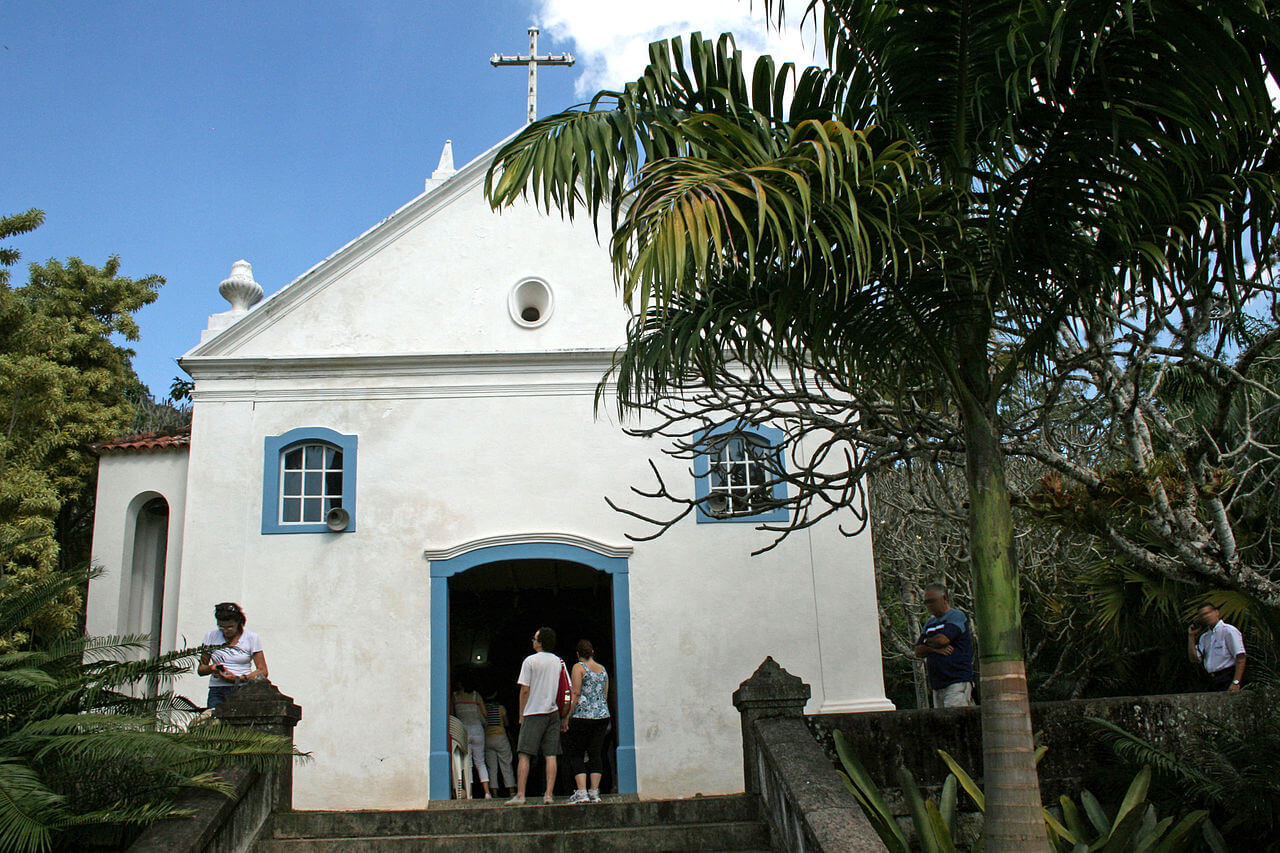
Sítio Roberto Burle Marx: Living Laboratory of Tropical Modernism
In the Barra de Guaratiba neighborhood of western Rio de Janeiro, approximately 60 kilometers (37 miles) from the city center, an extraordinary cultural landscape unfolds where art, botany, and landscape architecture converge. The Sítio Roberto Burle Marx—a 407,000-square-meter (100.6-acre) estate nestled between mangrove swamps and Atlantic Forest—represents the culmination of one man's revolutionary vision to transform landscape design through tropical modernism. Home, studio, and laboratory to Roberto Burle Marx (1909-1994) from 1973 until his death, this living masterpiece houses over 3,500 species of tropical and subtropical plants arranged in gardens that embody the principles that made Burle Marx one of the 20th century's most influential landscape architects. In July 2021, UNESCO recognized the Sítio as a World Heritage Site, designating it the first modern tropical garden to receive this distinction and the 23rd property in Brazil to be listed on the prestigious list.
Roberto Burle Marx: Artist, Botanist, Visionary
Roberto Burle Marx was born on August 4, 1909, in São Paulo to Wilhelm Marx, a German businessman, and Cecília Burle, a Brazilian pianist of French descent. His family relocated to Rio de Janeiro when he was four years old, where he grew up surrounded by the city's dramatic natural beauty. Despite this backdrop, Rio's gardens at the time reflected European tastes, planted predominantly with imported species arranged in formal, geometric patterns.
In 1928, at age nineteen, Burle Marx traveled to Berlin to study painting. While visiting the Dahlem Botanical Garden, he encountered Brazilian plants displayed in the greenhouses—tropical species he had never noticed in his own country's cultivated landscapes. This revelation sparked an epiphany: the extraordinary beauty and diversity of Brazil's native flora had been overlooked in Brazilian garden design, displaced by European imports.
Returning to Rio in 1930, Burle Marx enrolled at the National School of Fine Arts, studying painting under instructors including Cândido Portinari. He befriended architect Lúcio Costa, who in 1932 commissioned Burle Marx to design his first landscape for the Schwartz House. This groundbreaking project rejected European conventions in favor of bold, abstract compositions featuring Brazilian native plants, establishing principles he would refine over the next six decades.
Throughout his career, Burle Marx collaborated with Brazil's leading modernist architects on projects that gained international recognition. His 1938 rooftop garden for the Ministry of Education and Health building in Rio and his 1942 gardens for Oscar Niemeyer's Pampulha Modern Ensemble in Belo Horizonte demonstrated how landscape architecture could complement modern buildings while asserting a distinctly Brazilian aesthetic. Additional landmark projects included Flamengo Park in Rio (1961) and the iconic wave-patterned promenade at Copacabana Beach (1970).
Burle Marx approached landscape design as a painter, treating plant materials as his palette. His gardens featured bold color contrasts, sculptural plant forms, and abstract compositions that transformed living vegetation into dynamic works of art. Yet his aesthetic innovations were inseparable from his botanical knowledge and environmental advocacy. He organized botanical expeditions into remote regions, where he discovered approximately 50 new plant species, many of which now bear his name.
The Sítio: From Banana Plantation to Living Masterpiece
In 1949, Burle Marx and his brother Guilherme Siegfried Marx purchased a former banana plantation in Barra de Guaratiba. Burle Marx sought land outside real estate speculation, with diverse soils and topography, abundant water, and intact native vegetation. Over subsequent years, the brothers expanded the estate to its current 407,000 square meters (100.6 acres). Burle Marx began transforming the site into a "landscape laboratory"—a place where he could cultivate and experiment with native Brazilian plants, test design concepts, create art in multiple media, and build a reference collection of tropical flora. In 1973, at age 64, he moved permanently to the Sítio, which became his home, studio, and creative sanctuary for the final 21 years of his life.
The Gardens and Plant Collection
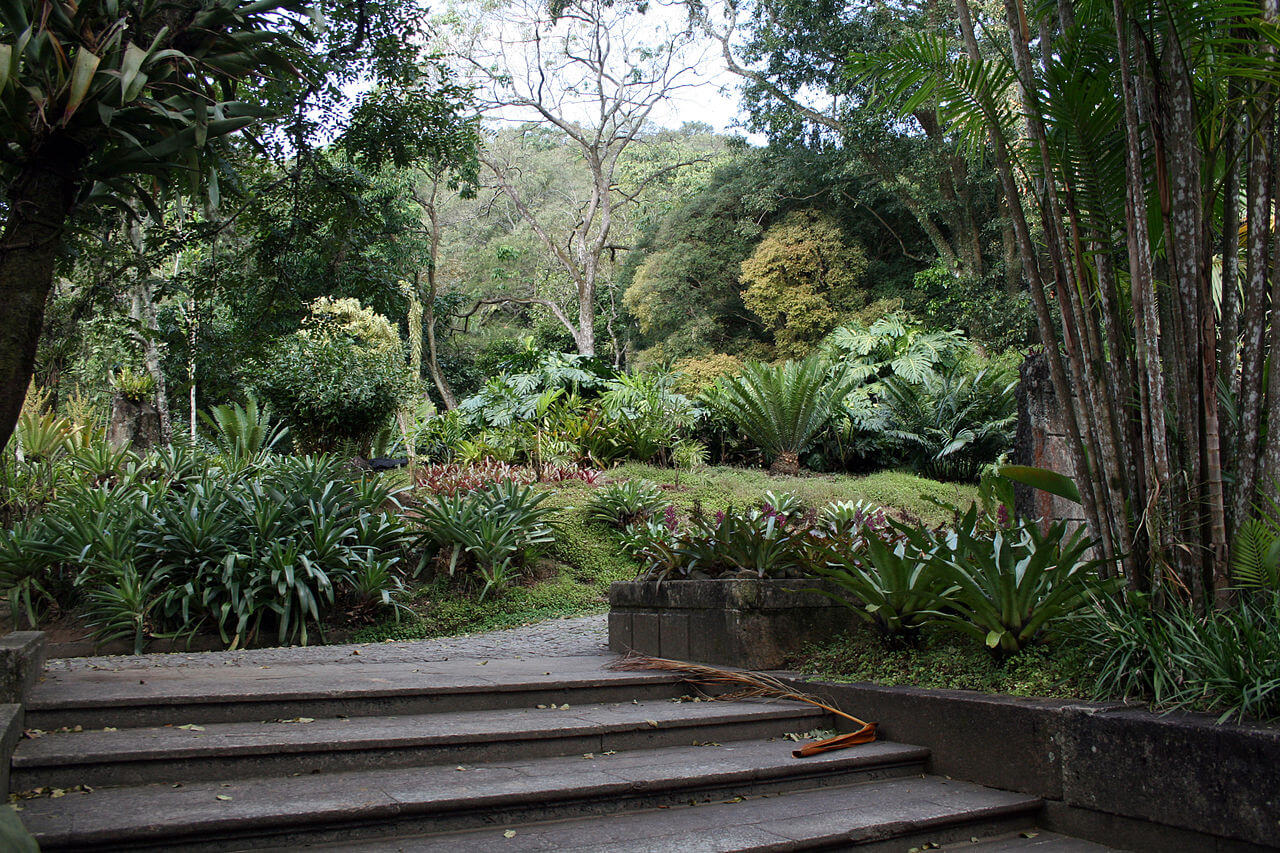
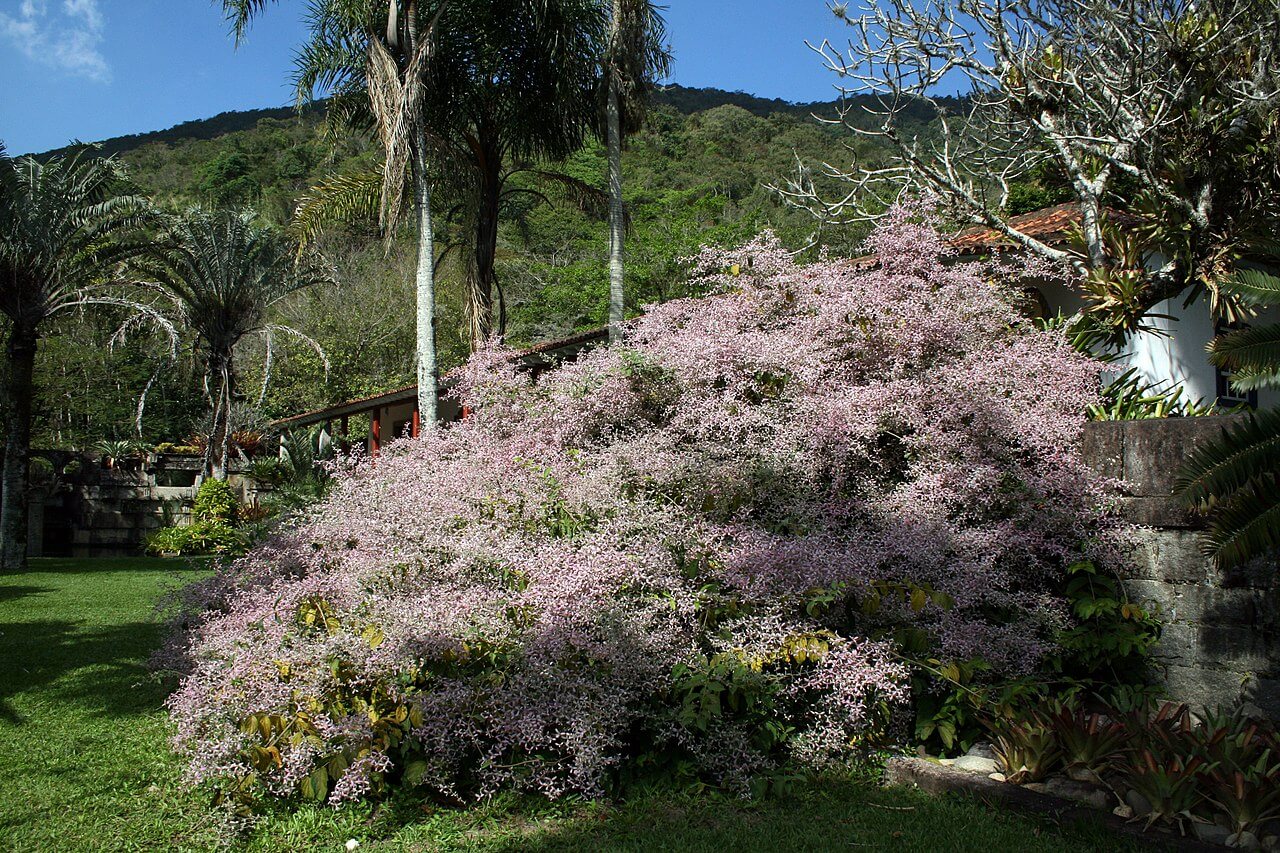
The Sítio houses over 3,500 cultivated species of tropical and subtropical flora, including more than 500 philodendron species—some discovered by Burle Marx himself, such as Philodendron burle-marxii. The gardens embody his design principles: sinuous, organic forms; exuberant mass plantings creating bold blocks of color and texture; architectural arrangements of plants as living sculptures; dramatic contrasts between species; and seamless integration with native vegetation.
Unlike traditional botanical gardens organized taxonomically, Burle Marx's gardens are compositions—paintings in plants where aesthetic considerations guide arrangement. The property features numerous distinct garden areas, each with its own character. Six lakes punctuate the landscape, their reflective surfaces creating "gardens in the sky"—mirrored compositions of clouds, mountains, and vegetation. The interaction between cultivated gardens and the surrounding Atlantic Forest creates a seamless transition between human design and wilderness.
The Buildings and Art Collections
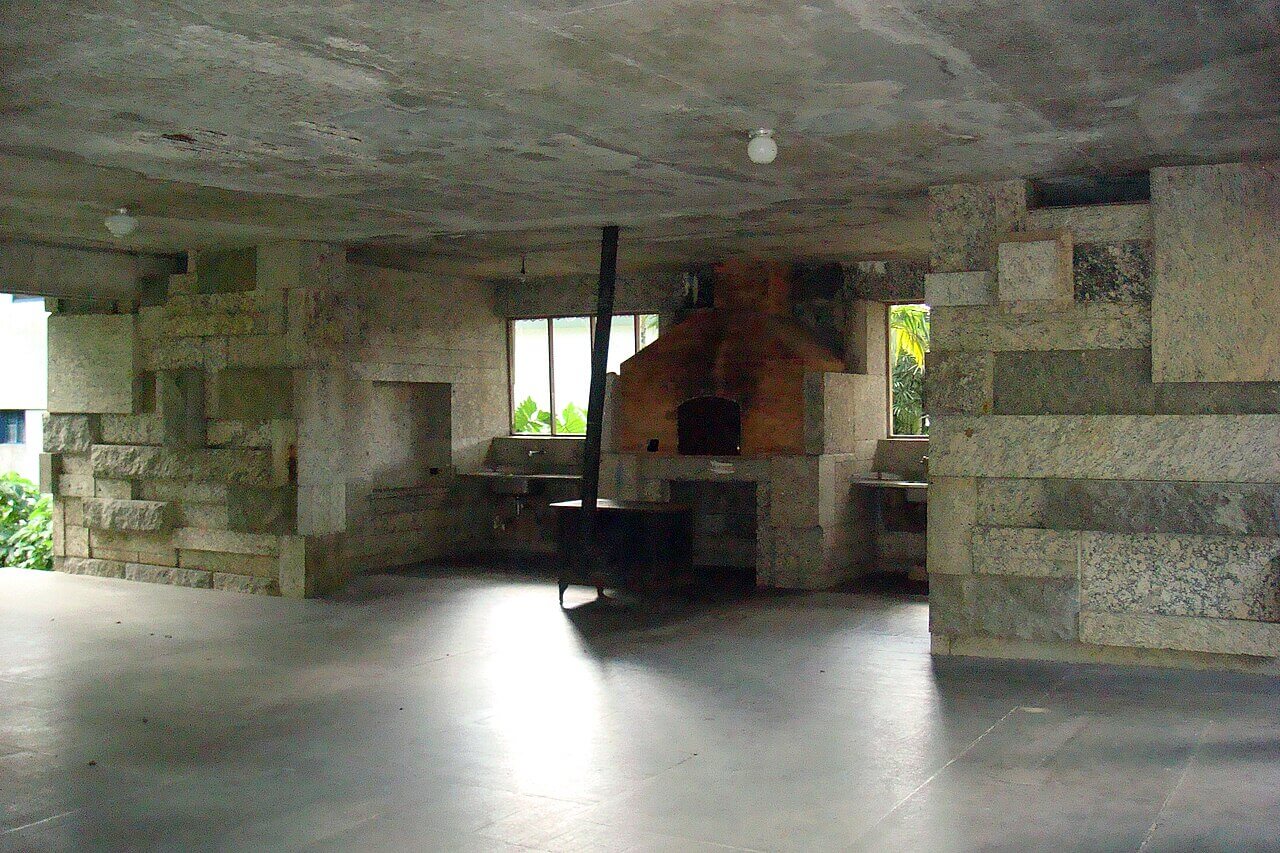
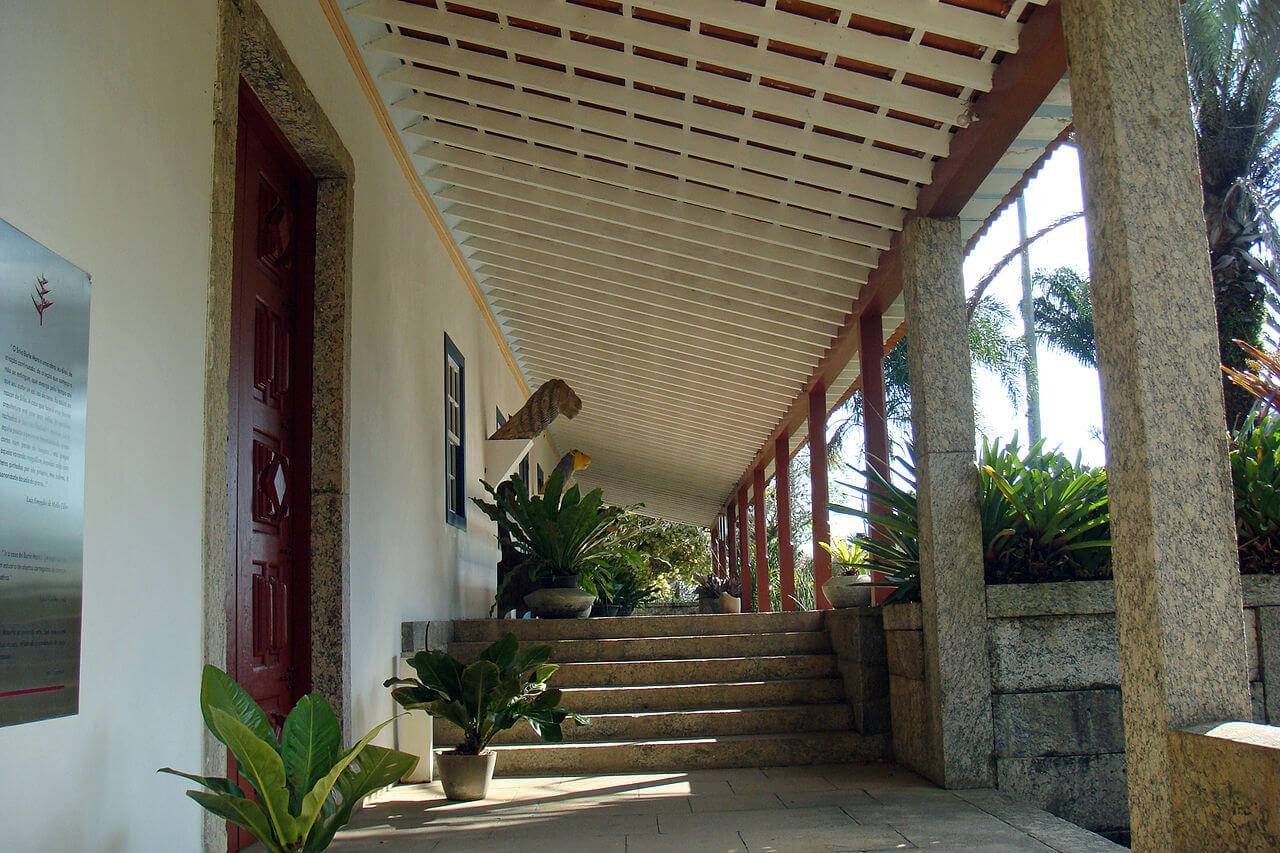
The Sítio comprises seven buildings scattered across the property. The main house combines modernist design principles with vernacular Brazilian elements, with large windows that create visual connections to the surrounding gardens. The interior displays Burle Marx's eclectic art collections, numbering over 3,000 items: pre-Columbian artifacts, Brazilian religious and folk art, his own paintings, sculptures, tapestries, jewelry, and ceramic works, and pieces by artist friends and collaborators.
Additional buildings include nurseries where Burle Marx propagated plants for his landscape projects, studios for painting and sculpture, workshops for creating tapestries and other crafts, and spaces for his extensive library. The ensemble creates what UNESCO describes as a "living work of art" where architecture, gardens, art collections, and natural landscapes interweave.
UNESCO World Heritage Inscription
On July 27, 2021, the Sítio Roberto Burle Marx was unanimously inscribed on the World Heritage List in the Cultural Landscape category. The inscription recognized the site under criteria (ii) and (iv), acknowledging its role in exhibiting important interchange of human values through its influence on modern garden design globally, and as an outstanding example of a cultural landscape that integrates environmental and cultural preservation.
UNESCO's inscription emphasizes several outstanding universal values. The Sítio represents the first modern tropical garden inscribed on the World Heritage List, acknowledging its pioneering role in establishing tropical modernism as a legitimate landscape design approach. The site demonstrates the key characteristics that defined Burle Marx's gardens and influenced modern landscape architecture internationally. The designation also recognizes the Sítio's role in botanical research and conservation, with the collection representing a living repository of tropical biodiversity, including plants that have disappeared from their natural habitats.
Conservation and Management
In 1985, Burle Marx donated the entire property to the Brazilian federal government, ensuring the site's preservation, the continuation of botanical and landscape research, and public access. The donation became effective in 1994 upon his death, when the Instituto do Patrimônio Histórico e Artístico Nacional (IPHAN) assumed management responsibility.
In preparation for the World Heritage nomination, the Sítio underwent significant requalification from 2018 through 2021, with investment of approximately R$5.4 million to enhance visitor facilities, implement accessibility improvements, expand public access, and strengthen research capabilities. IPHAN maintains the Sítio as a special cultural unit dedicated to preserving, researching, and disseminating Burle Marx's legacy.
Visiting the Sítio
The Sítio is open to the public through guided tours that must be reserved in advance. Tours are conducted Tuesday through Saturday at 9:30 AM, 1:00 PM, 1:30 PM, and 2:00 PM, with groups limited to approximately 5-15 visitors per guide. The standard tour lasts approximately 1.5 hours and covers roughly 1,800 meters (5,905 feet) of walking paths, with an elevation gain of roughly 45 meters (148 feet).
Tours are primarily conducted in Portuguese, though English-language tours are available with advance reservation. The Sítio provides tablets with audio guides in English, Spanish, Libras (Brazilian Sign Language), and audio descriptions for visitors with visual impairments. Admission fees are modest (approximately R$10 or about $2 USD), with discounts for students and visitors over 60. The site provides an electric vehicle for visitors with mobility limitations.
Access requires traveling to Barra de Guaratiba, with most visitors arriving by private vehicle, taxi, or ride-sharing services. The journey from central Rio or Ipanema takes 60-90 minutes, depending on traffic. The best time to visit is during Rio's dry season (May through September) when comfortable temperatures and lower humidity make outdoor exploration pleasant.
Legacy and Influence
Roberto Burle Marx's influence on landscape architecture extends far beyond Brazil. His revolutionary use of native plants, abstract compositions, and integration of landscape with modern architecture inspired designers globally. His advocacy for environmental conservation presaged contemporary concerns about biodiversity loss. By demonstrating that native plants could create gardens of extraordinary beauty, Burle Marx challenged assumptions that cultivated landscapes required imported exotics.
The Sítio preserves this legacy in living form. Unlike Burle Marx's landscape projects, which continue to evolve under new management, the Sítio remains largely as he left it—a complete artistic statement frozen at the moment of his death, yet alive through the seasonal rhythms of its plant collections. Visitors experience not merely a historic site but an ongoing demonstration of Burle Marx's vision: gardens as dynamic works of art that connect people with the extraordinary diversity and beauty of tropical nature.