
Diamantina: Diamond Capital of Colonial Brazil
Nestled in the mountainous region of Minas Gerais, Brazil, the town of Diamantina offers a captivating journey through time. Founded in 1729 during the Brazilian Gold Rush, Diamantina is renowned for its historic center, which has been designated a UNESCO World Heritage Site.



Historic Diamantina: Jewel of Brazil's Colonial Mining Era
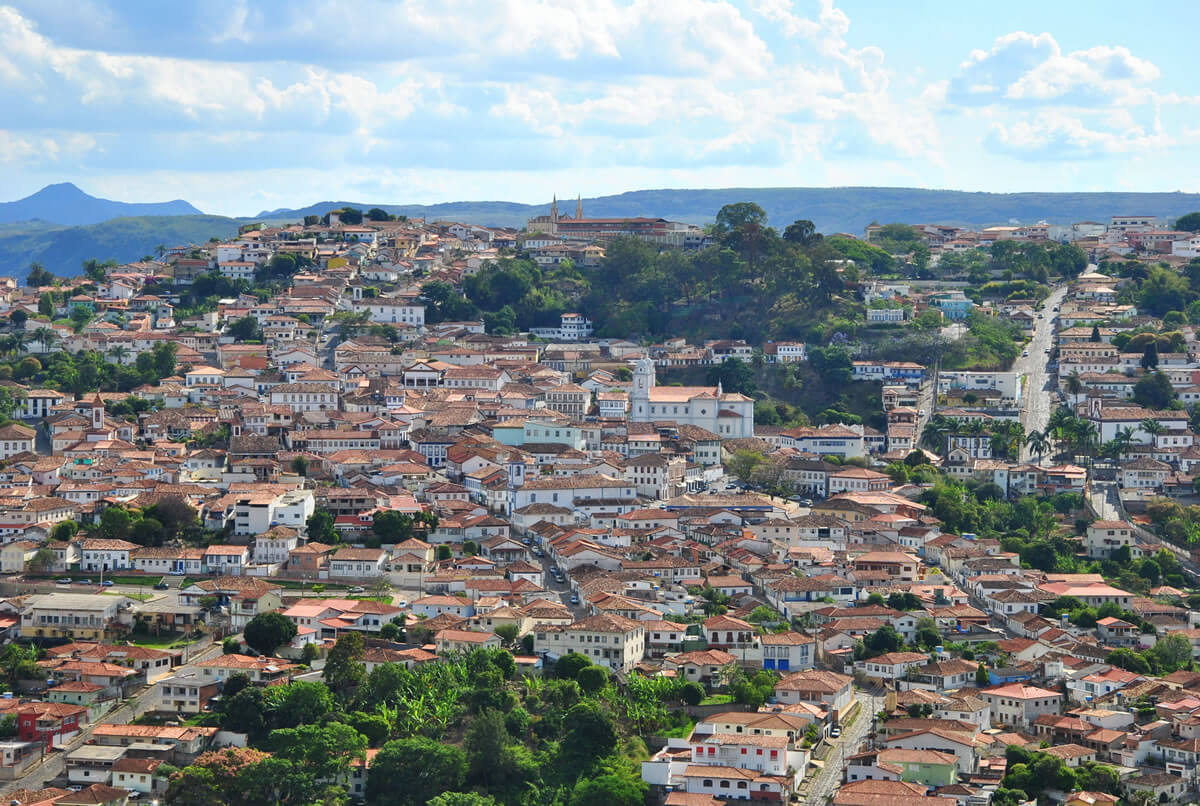
High in the arid mountains of the Serra do Espinhaço, the historic city of Diamantina stands as a testament to the diamond fever that gripped colonial Brazil in the 18th century. Originally known as Arraial do Tijuco, this remote settlement in northern Minas Gerais became the world's premier diamond-mining center, with its wealth transforming a rough mining camp into an elegant colonial city adorned with baroque churches and grand mansions. Today, with a population of approximately 48,000 residents, Diamantina preserves its colonial character so completely that UNESCO designated its historic center a World Heritage Site in 1999. Located 292 kilometers (181 miles) north of Belo Horizonte at an elevation of 1,114 meters (3,655 feet), Diamantina offers visitors a journey into Brazil's mining past, where the discovery of diamonds reshaped an empire and created one of Latin America's most distinctive urban landscapes.
Geographic Setting and Climate
Diamantina sits in a dramatic setting in the rugged Serra do Espinhaço, at 1,114 meters (3,655 feet) above sea level, with surrounding peaks exceeding 1,300 meters (4,265 feet). The Jequitinhonha River flows eastward, and its tributaries once yielded the diamonds that built Diamantina's fortunes. The region's rocky mountains, steep valleys, and ancient geological formations created the conditions that concentrated diamonds in alluvial deposits throughout the river systems.
The city experiences a tropical highland climate (Cwb), characterized by distinct wet and dry seasons, moderated by its elevation. The mean annual temperature is 19.3°C (66.7°F), with highs around 26°C (79°F) in January and February, while July sees cooler conditions, with lows around 12°C (54°F). Annual rainfall totals approximately 1,279 millimeters (50.4 inches), with over 70% falling from October through March. The dry season from May through September sees dramatically reduced precipitation, with July averaging only 14 millimeters (0.6 inches).
The municipality covers 3,870 square kilometers (1,494 square miles) and includes Biribiri State Park, a 16,999-hectare (42,010-acre) protected area preserving the region's natural landscapes.
Historical Development
Discovery and the Diamond Rush
European settlement began in the early 18th century when bandeirantes from São Paulo established a small encampment called Arraial do Tijuco around 1714. The discovery of diamonds around 1720-1725 transformed this modest settlement into one of the most important locations in the Portuguese colonial empire. Miners initially concealed the discovery from colonial authorities until Governor Lourenço de Almeida confirmed the diamond deposits in 1729.
The Portuguese Crown established the Demarcação Diamantina—a sealed district in which all diamond extraction was under royal monopoly. Appointed contractors paid substantial sums for exclusive rights to mine diamonds, employing thousands of enslaved workers who labored in the riverbeds sifting sediment for precious stones. During the 18th century, Diamantina represented the largest diamond mining operation in the western world, with production so substantial that it flooded the European market.
The Era of Chica da Silva
During the diamond boom's height, Tijuco was home to Chica da Silva (c. 1732-1796), one of colonial Brazil's most remarkable figures. Born to an enslaved African woman and a Portuguese man, Chica was purchased and freed by João Fernandes de Oliveira, one of the wealthiest diamond contractors in colonial Brazil.
Her relationship with João Fernandes—with whom she had thirteen children—scandalized colonial society but also demonstrated the fluidity possible within Brazil's rigid social hierarchies. Though they never officially married, Chica achieved extraordinary prominence. She became a member of prestigious religious brotherhoods normally restricted to whites, owned property, and enslaved people. She was buried in the Church of São Francisco de Assis—a privilege reserved for wealthy whites. Her story exemplifies both the possibilities and limitations of social mobility in colonial Brazil's slaveholding society.
Decline and Transformation
Diamond production peaked in the late 18th century before entering a sharp decline. Deposits became increasingly difficult to access, and the discovery of vast diamond fields in South Africa in the 1860s-1870s undercut Brazilian dominance. The abolition of slavery in 1888 removed the coerced labor force that had underpinned mining operations.
Diamantina adapted by diversifying toward agriculture, commerce, and small-scale industry. The extension of the Central Railway of Brazil to Diamantina in 1914 provided crucial connectivity. In the 20th century, Diamantina gained prominence through its association with Juscelino Kubitschek, who was born in the city in 1902. As president of Brazil (1956-1961), Kubitschek directed improvements to his hometown, including modernist buildings designed by Oscar Niemeyer.
The Historic Center
Urban Layout and Architecture
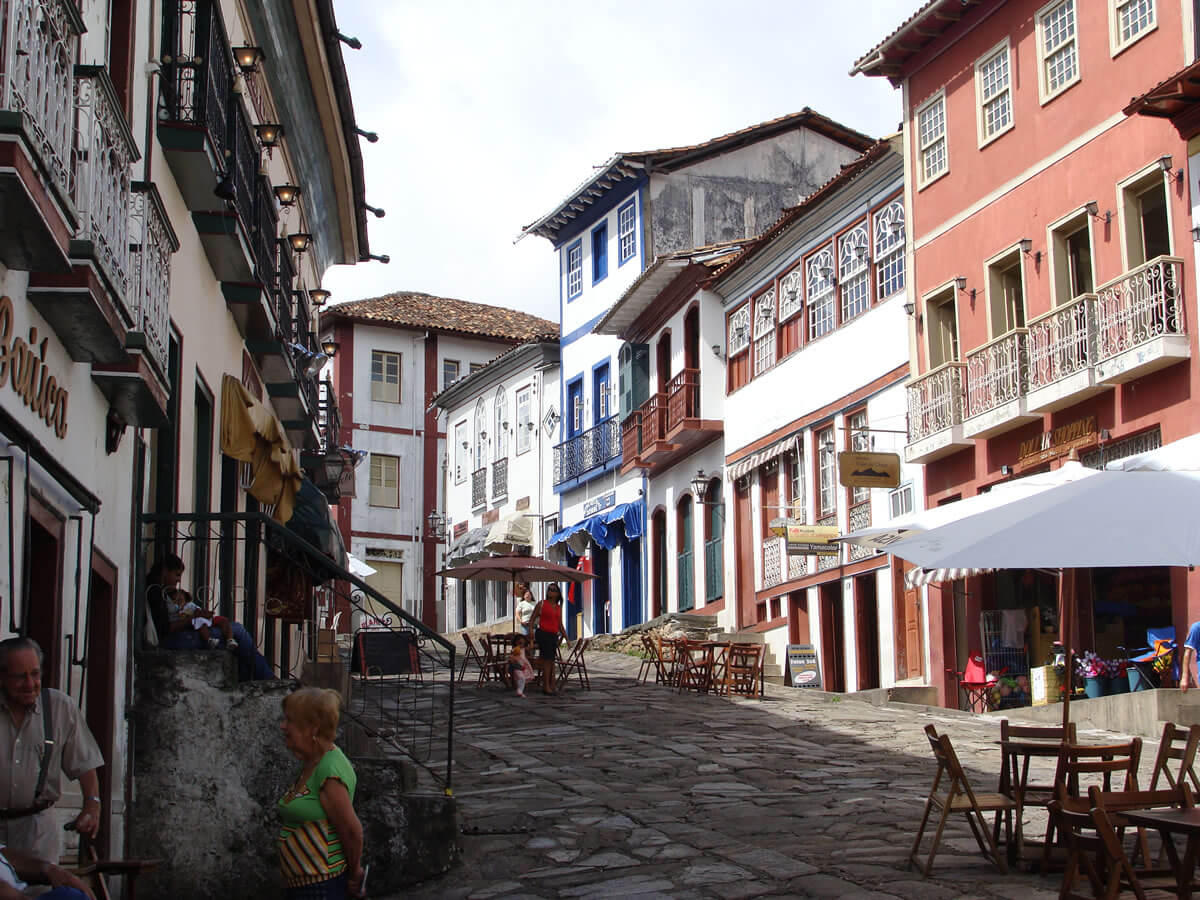
Diamantina's historic center is a well-preserved example of Brazilian colonial baroque architecture adapted to mountainous terrain. Unlike coastal cities with regular grid patterns, Diamantina's streets wind and climb according to natural topography, creating a picturesque urban landscape of winding lanes, steep stairs, and unexpected vistas.
The architecture showcases Portuguese colonial design executed primarily in wood rather than masonry. These wooden structures feature geometric precision, intricate details, and bright colors painted on white backgrounds. Grey flagstone paving covers the streets, creating a striking contrast with the colorful facades.
Religious Architecture
Diamantina's churches represent some of the finest examples of baroque and rococo religious architecture in Minas Gerais:
Nossa Senhora do Carmo (Our Lady of Carmo), built between 1760 and 1765, stands as Diamantina's most distinctive church. Uniquely, it lacks a front tower—a design choice that gives the structure special grace. Inside, the nave ceiling features impressive paintings by José Soares de Araújo, along with exquisite carved altarpieces.
São Francisco de Assis combines baroque and rococo elements and is the burial place of Chica da Silva.
Cathedral Basilica of Santo Antônio da Sé dominates the central square and serves as the ecclesiastical center of the diocese.
Other significant churches include Nossa Senhora das Mercês, Nossa Senhora do Amparo, Nossa Senhora do Rosário, and Senhor do Bonfim, their towers creating the distinctive skyline that defines Diamantina.
Notable Buildings
The Casa de Chica da Silva operates as a museum, preserving the memory of Diamantina's most famous resident and displaying period furnishings while exploring her complex legacy.
The Diamantina Museum occupies the former headquarters of the diamond district and showcases artifacts from the mining era, including tools and examples of rough and cut stones.
The Biblioteca Antônio Torres (Casa do Muxarabiê), with its distinctive wooden latticework balcony, houses an important library collection.
The Passadiço da Glória, a covered wooden walkway connecting the bishop's residence to the cathedral, represents a unique architectural feature that allowed religious authorities to pass between buildings without descending to street level.
UNESCO World Heritage Status
In 1999, UNESCO inscribed Diamantina's historic center on the World Heritage List, recognizing its outstanding universal value. The designation acknowledges Diamantina as an exceptional example of a colonial mining town whose urban layout reflects adaptation to rugged mountainous terrain. The UNESCO citation emphasizes the architectural significance of Diamantina's wooden baroque structures, which showcase Portuguese colonial design traditions executed with remarkable skill.
Cultural Heritage and Contemporary Life
Diamantina's population has remained relatively stable at approximately 48,000 residents. The contemporary economy relies primarily on tourism, services, small-scale industry, and agriculture. Tourism has grown significantly since UNESCO's designation, with visitors drawn to the historic center, museums, and annual music festivals celebrating Diamantina's heritage. The city is particularly famous for its serenatas, a musical tradition dating to the colonial era.
The Federal University of the Jequitinhonha and Mucuri Valleys provides higher education opportunities, while museums and historical buildings function as both tourist attractions and educational resources.
Notable figures from Diamantina include Alice Dayrell Caldeira Brant, who wrote Minha Vida de Menina (The Diary of Helena Morley), a classic of Brazilian literature, and Juscelino Kubitschek, who served as president of Brazil and oversaw the construction of Brasília.
Visiting Diamantina
Diamantina is accessible by road from Belo Horizonte via federal highway BR-259, a journey of approximately 292 kilometers (181 miles). Diamantina Airport offers regular flights to Belo Horizonte. The compact historic center is best explored on foot, with its steep streets and stairways creating an immersive experience of colonial urban planning.
The best time to visit is during the dry season (May through September) when comfortable temperatures and clear skies facilitate outdoor exploration. Notable celebrations include the Vesperata in September, when the city illuminates historic buildings with candles and musicians perform serenades from balconies and windows.
Regional Context and Cultural Significance
Diamantina belongs to the constellation of historic mining towns in Minas Gerais that collectively document Brazil's colonial era. While Ouro Preto, Mariana, and Congonhas represent the gold mining cycle, Diamantina stands out as the premier diamond-mining center. This distinction shaped the town's development, creating unique architectural and social patterns.
The city's location in the remote northern reaches of Minas Gerais contributed to its isolation and helped preserve its colonial character through the 19th and 20th centuries. Diamantina represents more than architectural beauty or mining history—it embodies the complex legacy of colonial Brazil, the adaptation of European cultural forms to New World contexts, and the emergence of distinctly Brazilian social patterns within the rigid hierarchies of colonial society. The story of Chica da Silva, in particular, illuminates both the possibilities and limitations of social mobility in a society structured by race and slavery.