
The South Atlantic Ocean: A Critical Component of Global Ocean Systems
The South Atlantic Ocean is a vast body of water that has a significant impact on the geography, ecology, and economy of the Americas. It supports diverse ecosystems, regulates global climate patterns, and shapes regional economies, integral to the development and vitality of nations along its coasts.
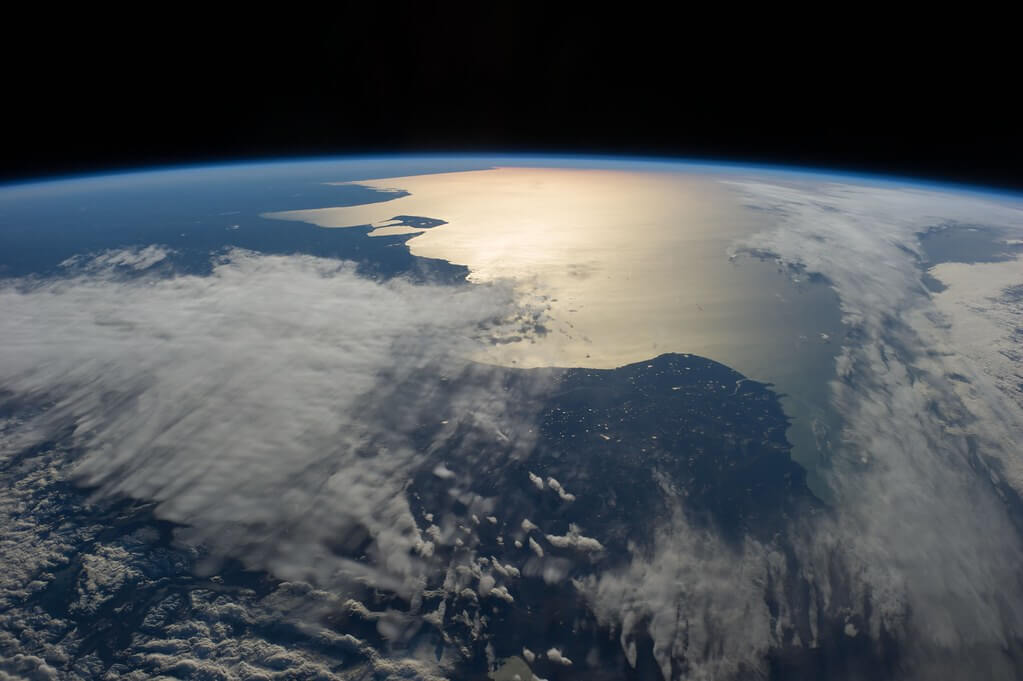
The South Atlantic Basin: Connecting Continents Through Ocean Circulation
The South Atlantic Ocean represents one of Earth's most dynamic and influential oceanic regions, serving as a crucial link between the Atlantic's northern and southern hemispheres while connecting South America and Africa through vast expanses of blue water. Covering approximately 40.7 million square kilometers (15.7 million square miles), this oceanic basin extends from the equator southward to the Southern Ocean, encompassing roughly one-quarter of the entire Atlantic Ocean's surface area.
This remarkable body of water functions as far more than a simple geographic boundary between continents. The South Atlantic plays a crucial role in global ocean circulation, climate regulation, and marine biodiversity conservation. Its unique position allows it to influence weather patterns across multiple continents while supporting some of the world's most important fisheries and marine ecosystems. From the warm tropical waters near the equator to the cold, nutrient-rich regions near Antarctica, the South Atlantic Ocean encompasses extraordinary environmental diversity that supports both regional economies and global ecological processes.
The basin's geological history, shaped by the breakup of the supercontinent Gondwana about 130 million years ago, still influences its physical characteristics and oceanic processes today. Its complex current systems, varied bathymetry, and diverse marine habitats make it a fascinating subject for scientific study and a critical component of Earth's interconnected ocean systems.
Geographic Boundaries and Physical Characteristics
The South Atlantic Ocean is bounded by South America to the west and Africa to the east, with its northern boundary typically defined as the equator and its southern boundary marked by the 60°S parallel, where it meets the Southern Ocean. This vast expanse includes some of Earth's most remote oceanic regions, with maximum east-west distances exceeding 6,000 kilometers (3,730 miles) and north-south distances spanning approximately 6,700 kilometers (4,160 miles).
The basin's bathymetry reveals a complex underwater landscape dominated by the Mid-Atlantic Ridge, which runs north-south through the ocean's center and represents one of the world's longest mountain ranges. This underwater ridge system, rising 2,000-3,000 meters (6,560-9,840 feet) above the surrounding abyssal plains, creates a natural divider that influences current patterns and sediment distribution throughout the basin.
Average depths in the South Atlantic reach approximately 3,300 meters (10,830 feet), with maximum depths exceeding 8,400 meters (27,560 feet) in the South Sandwich Trench near the Scotia Arc. The continental shelves along both African and South American coasts vary significantly in width, from narrow shelves along much of the South American coast to broader shelves off Argentina and parts of West Africa.
Water temperatures in the South Atlantic vary dramatically by latitude, ranging from 27°C (81°F) in equatorial regions to near-freezing temperatures near the Southern Ocean boundary. Surface salinity typically ranges from 34 to 37 parts per thousand, with the highest salinities in subtropical regions where evaporation exceeds precipitation and freshwater input.
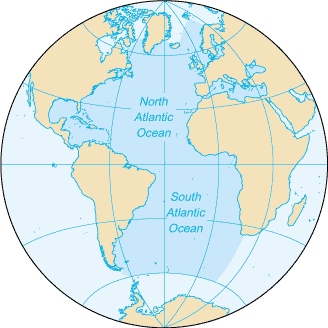
Atlantic Ocean global map.
The South Atlantic Gyre System
The South Atlantic's circulation is dominated by a massive counterclockwise gyre system, one of the ocean's most important current networks. This gyre connects several major current systems and plays a crucial role in global heat transport, nutrient distribution, and marine ecosystem dynamics.
Brazil Current
The Brazil Current flows southward along Brazil's coast as a warm current, moderating temperatures and influencing regional weather patterns. This western boundary current carries warm, saline waters from tropical regions southward along the South American coast, transporting approximately 4-16 Sverdrups (4-16 million cubic meters per second) depending on latitude and season. The current reaches depths of up to 700 meters (2,300 feet) and maintains temperatures between 18°C and 27°C (64°F to 81°F) throughout its southward journey.
The Brazil Current's influence extends far beyond simple heat transport. Its warm waters support tropical marine ecosystems along much of Brazil's coast while contributing to the humid, subtropical climate that characterizes southeastern South America. The current's interaction with atmospheric systems helps drive precipitation patterns that support some of the world's most biodiverse terrestrial ecosystems, including portions of the Atlantic Forest.
Falkland (Malvinas) Current
The Malvinas (Falkland) Current is a cold current that flows northward along the Argentine coast, carrying nutrient- and oxygen-rich sub-Antarctic waters. This current system transports approximately 5-15 Sverdrups northward and maintains temperatures between 4°C and 15°C (39°F to 59°F), creating a dramatic thermal contrast with the adjacent Brazil Current.
The convergence of these two opposing currents around 38°S latitude creates the Brazil-Falkland Confluence, one of the most energetic regions in the global ocean. This convergence zone generates complex eddy systems, intense mixing, and enhanced biological productivity that supports important marine ecosystems and commercial fisheries.
South Atlantic Current
The eastward-flowing South Atlantic Current completes the southern portion of the gyre, carrying waters from the Brazil-Falkland Confluence across the South Atlantic toward Africa. Its surface velocity is about 0.2 m/s, and it primarily transports heat, salt, and marine organisms between the western and eastern South Atlantic basins.
Benguela Current
Along Africa's western coast, the cold, northward-flowing Benguela Current creates one of the world's most productive upwelling systems. This current carries cold, nutrient-rich waters from the Southern Ocean northward along the coasts of South Africa and Namibia, supporting extraordinary marine productivity that rivals the Pacific Ocean's famous upwelling systems.
Marine Ecosystems and Biodiversity
The South Atlantic Ocean supports remarkable marine biodiversity across a range of ecosystems, from tropical coral reefs near the equator to productive upwelling zones along African coasts and unique island environments scattered throughout the basin.
Tropical and Subtropical Ecosystems
In the northern South Atlantic, warm waters support diverse tropical marine communities, including coral reefs, seagrass beds, and mangrove ecosystems along both African and South American coasts. These ecosystems harbor species such as Caribbean reef sharks (Carcharhinus perezi), queen angelfish (Holacanthus ciliaris), and various parrotfish species (Scarus and Sparisoma species) that depend on coral reef habitats for survival.
The Brazilian coast supports several endemic species, including the Brazilian guitarfish (Pseudobatos horkelii) and various endemic reef fish species found nowhere else on Earth. Offshore waters support important populations of commercially valuable species, including yellowfin tuna (Thunnus albacares), skipjack tuna (Katsuwonus pelamis), and various billfish species.
Temperate and Sub-Antarctic Systems
The southern South Atlantic supports different ecosystems adapted to cooler, more nutrient-rich conditions. These regions harbor important populations of southern right whales (Eubalaena australis), which use Argentine coastal waters as breeding and nursing grounds. Fur seal populations, including South American fur seals (Arctocephalus australis), depend on productive waters along both South American and African coasts.
The Patagonian shelf represents one of the most productive temperate marine ecosystems in the Southern Hemisphere, supporting massive populations of Argentine shortfin squid (Illex argentinus), which form the basis for important commercial fisheries. These productive waters also support significant populations of southern sea lions (Otaria flavescens) and various penguin species, including Magellanic penguins (Spheniscus magellanicus).
Oceanic Island Ecosystems
The South Atlantic contains several remarkable oceanic islands and island groups that support unique endemic species and serve as crucial breeding sites for seabirds and marine mammals. The Tristan da Cunha archipelago, often called the world's most remote inhabited island group, supports several endemic bird species and serves as a critical breeding site for various seabird species.
Ascension Island serves as a crucial breeding site for green turtles (Chelonia mydas), with females traveling thousands of kilometers from Brazilian feeding areas to nest on Ascension's beaches. This remarkable navigation feat represents one of the longest known marine animal migrations and demonstrates the interconnected nature of South Atlantic marine ecosystems.
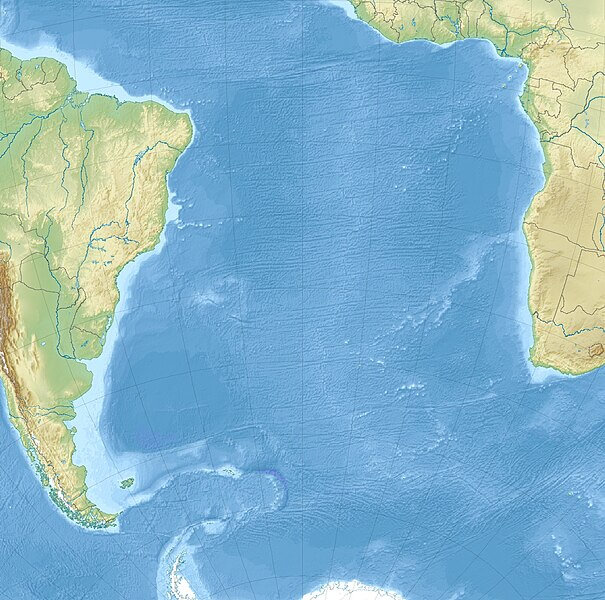
Relief map of the South Atlantic Ocean.
Climate Influence and Global Significance
The South Atlantic Ocean plays a crucial role in global climate regulation through its participation in the Atlantic Meridional Overturning Circulation (AMOC), one of Earth's most important climate systems. This circulation pattern transports warm surface waters northward and cold deep waters southward, helping to distribute heat between the hemispheres and moderate global climate patterns.
The South Atlantic's contribution to heat transport reaches approximately 0.6 petawatts (0.6 × 10^15 watts) northward, representing a significant component of the global heat budget. This heat transport helps maintain temperate climates in the North Atlantic region, contributing to the overall stability of the Earth's climate system.
Regional climate impacts extend throughout the surrounding continental areas. The warm Brazil Current moderates temperatures along much of South America's eastern coast, while the cold Benguela Current contributes to the arid conditions that characterize southwestern Africa's coastal regions. The temperature contrasts created by these opposing current systems influence atmospheric circulation patterns, which in turn affect weather and climate across much of South America and Africa.
Economic Significance and Human Activities
The South Atlantic Ocean supports extensive economic activities that provide livelihoods for millions of people across multiple continents. Commercial fisheries represent one of the most important economic sectors, with combined South Atlantic catches exceeding 2 million metric tons annually and supporting fishing fleets from Argentina, Brazil, South Africa, Namibia, and numerous other nations.
Fisheries and Marine Resources
Patagonian shelf fisheries are among the most valuable in the Southern Hemisphere, with Argentine hake (Merluccius hubbsi), Argentine shortfin squid (Illex argentinus), and other species supporting multi-billion-dollar industries. The Benguela upwelling system along Africa's west coast supports similarly productive fisheries based on species such as pilchard (Sardinops sagax), anchovy (Engraulis encrasicolus), and various hake species.
Tuna fisheries operate throughout the South Atlantic's tropical and subtropical regions, with international fleets targeting yellowfin, bigeye (Thunnus obesus), and skipjack tuna using methods such as purse seining and longlining. These fisheries generate hundreds of millions of dollars annually and provide protein for markets worldwide.
Maritime Transportation
The South Atlantic serves as a crucial maritime highway connecting Europe, Africa, and the Americas. Major shipping routes cross the ocean, carrying everything from raw materials to manufactured goods, with ports such as Santos (Brazil), Buenos Aires (Argentina), Cape Town (South Africa), and Lagos (Nigeria) serving as critical transportation hubs.
The Panama Canal's expansion has enhanced the South Atlantic's importance as a shipping route, with increased vessel traffic connecting Asian markets with South American ports. This increased shipping activity has economic benefits but also creates environmental challenges, including pollution, the introduction of invasive species, and potential accidents.
Energy Resources
Offshore oil and gas exploration has become increasingly important in the South Atlantic, with significant discoveries off the coasts of Brazil, Angola, and Argentina. Brazil's pre-salt oil fields, located in the deep waters of the South Atlantic, represent some of the world's most important recent petroleum discoveries and have transformed Brazil into a major oil exporter.
Renewable energy development is also expanding, with offshore wind projects planned or under development along several South Atlantic coastlines. These projects represent significant investments in clean energy infrastructure and demonstrate the ocean's potential to support sustainable economic growth.
Environmental Challenges and Conservation
The South Atlantic Ocean faces numerous environmental challenges that threaten its ecological integrity and economic productivity. Climate change represents perhaps the most significant long-term threat, with rising temperatures, changing current patterns, and ocean acidification potentially disrupting marine ecosystems throughout the basin.
Climate Change Impacts
Rising sea surface temperatures are already affecting marine species distributions, with some species shifting their ranges poleward in response to warming waters. These shifts can disrupt established food webs and challenge fishing industries that rely on stable fish populations.
Ocean acidification, caused by increased atmospheric carbon dioxide absorption, poses particular threats to calcifying organisms, including corals, shellfish, and various planktonic species. The South Atlantic's upwelling regions, where naturally acidic deep waters reach the surface, may experience especially severe acidification impacts.
Pollution and Marine Debris
Plastic pollution represents a growing threat throughout the South Atlantic, with microplastics now detected in marine organisms from tropical waters to sub-Antarctic regions. Major river systems, including the Amazon and Rio de la Plata, transport significant quantities of land-based pollution into the South Atlantic, creating dead zones and contaminated sediments that affect marine life.
Chemical pollution from agricultural runoff, industrial discharge, and shipping activities further challenges marine ecosystem health. Heavy metals, pesticides, and other toxic substances bioaccumulate through food webs and can affect human health through seafood consumption.
Overfishing and Ecosystem Disruption
Intensive fishing pressure has depleted several important fish stocks throughout the South Atlantic. Some tuna populations have declined significantly due to overfishing, while coastal fisheries face pressure from both industrial and artisanal fishing activities.
Illegal, unreported, and unregulated (IUU) fishing represents a significant challenge in the South Atlantic's remote waters, with unauthorized vessels operating beyond the reach of effective enforcement. This illegal fishing undermines conservation efforts and threatens the sustainability of legitimate fishing operations.
Conservation Efforts and Marine Protection
Recognition of the South Atlantic's ecological importance has increased conservation efforts and led to the establishment of marine protected areas throughout the region. Several countries have created large-scale marine parks and reserves that protect critical habitats and species.
Brazil has significantly expanded its marine protected area coverage, with reserves protecting important breeding areas for marine turtles, seabirds, and marine mammals. Argentina has established marine protected areas along its extensive coastline, including reserves that protect unique Patagonian marine ecosystems.
International cooperation has led to the development of regional fisheries management organizations that work to ensure sustainable fishing practices and prevent overfishing of shared fish stocks. These organizations face ongoing challenges but represent important steps toward sustainable ocean management.
Several South Atlantic islands have been designated as UNESCO World Heritage Sites in recognition of their unique ecological value. These designations help protect critical breeding sites for seabirds and other marine species while promoting sustainable tourism that can provide economic alternatives to extractive industries.
Scientific Research and Monitoring
The South Atlantic Ocean has been the subject of extensive scientific research to understand its role in global ocean circulation, climate regulation, and marine ecosystem function. International research programs have deployed sophisticated monitoring equipment throughout the basin to track current patterns, temperature changes, and ecosystem dynamics.
The RAPID-MOCHA array, which monitors the Atlantic Meridional Overturning Circulation, includes South Atlantic measurements that help scientists understand how this crucial climate system may be changing in response to global warming. Satellite monitoring provides continuous observation of sea surface temperatures, ocean color, and sea level changes throughout the region.
Marine biological surveys continue to discover new species and document biodiversity patterns in the South Atlantic's vast and relatively unexplored regions. Deep-sea exploration has revealed unique ecosystems around underwater mountain ranges and volcanic features, while genetic studies are revealing previously unknown connections between marine populations across the basin.
Future Challenges and Opportunities
The future of the South Atlantic Ocean will depend on humanity's ability to balance economic development with environmental conservation. Climate change mitigation efforts, sustainable fishing practices, and pollution reduction will all be crucial for maintaining the ocean's ecological integrity and economic productivity.
Emerging opportunities include the development of sustainable mariculture operations, expanded renewable energy production, and ecotourism that celebrates the region's remarkable marine biodiversity. Advanced technologies may provide new tools to monitor and protect marine ecosystems while supporting sustainable economic development.
International cooperation will be crucial for addressing transboundary challenges, including the conservation of migratory species, pollution control, and climate change adaptation. The South Atlantic's vast size and international character require coordinated efforts from multiple nations and organizations.
Conclusion
The South Atlantic Ocean stands as one of Earth's most important and dynamic oceanic regions, connecting South America and Africa while playing a central role in global climate regulation through its participation in the Atlantic Meridional Overturning Circulation. The Brazil Current's warm waters moderate South American climates, the Benguela Current sustains some of the world's most productive fisheries, and the Brazil-Falkland Confluence creates a zone of exceptional biological richness where these opposing currents meet.
That richness faces mounting pressure from climate change, plastic and chemical pollution, and overfishing, threats that international cooperation, expanding marine protected areas, and ongoing scientific monitoring through programs like the RAPID-MOCHA array are only beginning to address at the scale required. The gap between the ocean's ecological importance and the resources committed to protecting it remains the basin's central challenge.
As global understanding of ocean systems deepens, the South Atlantic will remain both a critical natural laboratory and a vital component of Earth's life-support systems, one whose health directly affects the well-being of millions of people and countless species that depend on it across two continents.