
The Brazil Current: Western South Atlantic's Warm Water Highway
The Brazil Current is the western boundary current of the South Atlantic Ocean and a key part of the global thermohaline circulation system. This warm current flows south along Brazil's extensive coast, carrying tropical waters from equatorial regions toward the temperate South Atlantic.
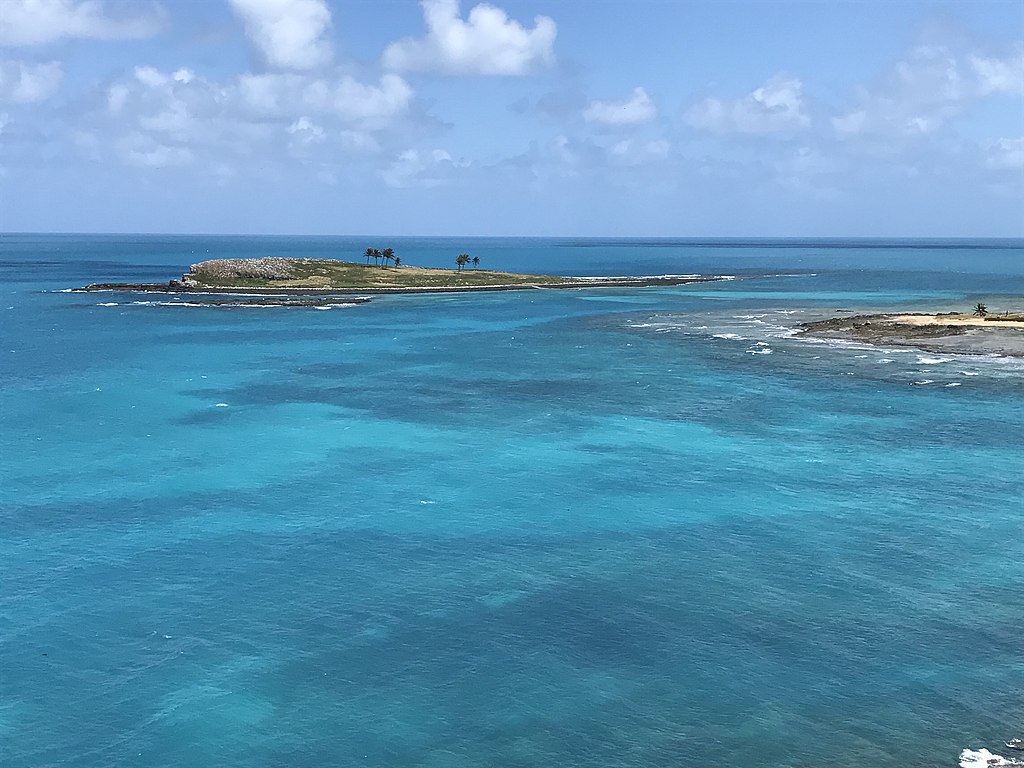
The Brazil Current System: Tropical Waters and Marine Biodiversity Along South America's Eastern Coast
The Brazil Current represents the western boundary current of the South Atlantic Ocean and serves as a crucial component of the global thermohaline circulation system. This warm-water current flows southward along Brazil's extensive coastline, carrying tropical waters from equatorial regions toward the South Atlantic's temperate latitudes. Named after the nation whose shores it follows for over 3,000 kilometers (1,860 miles), the Brazil Current plays a vital role in regional climate regulation, marine ecosystem dynamics, and oceanic heat transport.
Unlike its Pacific counterpart, the cold, nutrient-rich Humboldt Current, the Brazil Current is characterized by warm, oligotrophic waters that support distinct tropical and subtropical marine communities. Its influence extends from the dynamics of Brazil's coastal climate to the broader patterns of Atlantic Ocean circulation, making it an essential component of both regional and global oceanic systems. The current's interaction with the cold Falkland Current creates one of the most dramatic oceanographic boundaries in the Southern Hemisphere, generating complex eddy systems and supporting diverse marine ecosystems along South America's eastern margin.
Geographic Scope and Physical Characteristics
The Brazil Current originates near 10°-15°S latitude, where the South Equatorial Current splits near Cabo de São Roque, Brazil, and flows southward to approximately 30°-40°S latitude, where it encounters the northward-flowing Falkland Current. This extensive southward journey covers approximately 3,500 kilometers (2,175 miles) along South America's eastern coastline, making it one of the longest western boundary currents in the world.
The current reaches depths of up to 700 meters (2,300 feet), with estimated transport volumes of 2.5 Sverdrups (2.5 million cubic meters per second) at 12°S, increasing to 4 Sverdrups at 15°S as the current gains strength moving southward. At its maximum development near 30°S, the Brazil Current can transport between 16 and 20 Sverdrups, making it comparable in volume to other major western boundary currents such as the Gulf Stream.
The current is characterized by warm temperatures ranging from 19°C to 27°C (66°F to 81°F) and high salinity averaging 35 to 37 parts per thousand. These warm, saline waters originate from the tropical Atlantic and maintain their characteristics throughout much of the current's southward journey. Surface temperatures typically remain above 24°C (75°F) in the northern reaches and gradually cool to 19°C (66°F) in the southern portions near the Brazil-Falkland Confluence.
The current has a layered structure, with the warmest, most saline waters concentrated in the upper 200 meters (660 feet). Below this surface layer, the current carries South Atlantic Central Water, which originates from subtropical convergence zones and maintains intermediate temperatures and salinities. The current's width varies from 100 to 200 kilometers (60 to 125 miles) nearshore, expanding to 400 kilometers (250 miles) or more in its offshore extensions.
The Brazil-Falkland Confluence
One of the most remarkable features of the Brazil Current system occurs at its southern terminus, where it meets the cold, northward-flowing Falkland Current around 38°-40°S latitude. This confluence creates one of the most energetic regions in the global ocean, generating a complex system of eddies, fronts, and mixing zones that extends hundreds of kilometers into the South Atlantic.
The temperature contrast between the two currents can exceed 10°C (18°F) over distances of just a few kilometers, creating a sharp oceanic front that acts as both a barrier and a mixing zone for marine life. This confluence region, known as the Brazil-Falkland Confluence, features intense mesoscale activity, with warm-core and cold-core eddies regularly spinning off the main current boundaries.
These eddies, ranging from 50 to 200 kilometers (30 to 125 miles) in diameter, transport heat, salt, and nutrients throughout the southwestern Atlantic, influencing regional climate and marine productivity far from their origin. The confluence zone shifts seasonally, moving north during austral winter and south during summer, creating a dynamic boundary that affects marine ecosystems across a broad region.
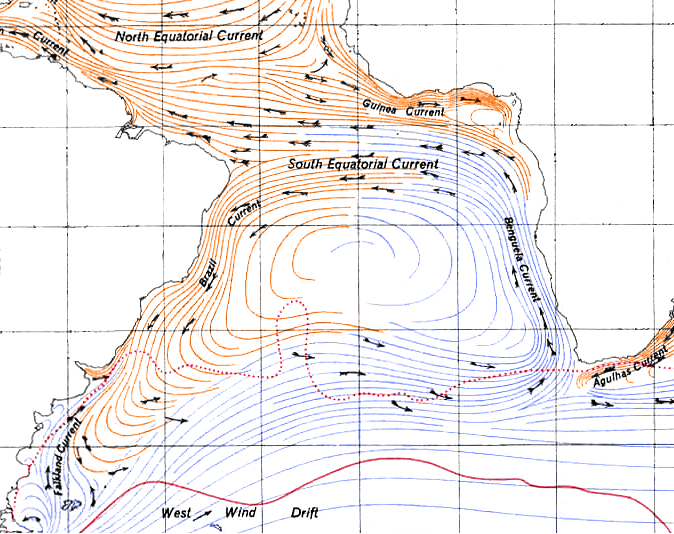
Map depicting the Brazil Current in the South Atlantic.
Marine Ecosystem Characteristics
The Brazil Current supports a distinctly different marine ecosystem compared to eastern boundary currents like the Humboldt Current. Its warm, oligotrophic waters are characterized by lower nutrient concentrations and consequently lower primary productivity. However, this limitation supports unique ecological communities adapted to tropical and subtropical marine conditions.
Primary Productivity and Phytoplankton Communities
Primary productivity in Brazil Current waters typically ranges from 150 to 400 grams of carbon per square meter per year, significantly lower than upwelling-driven systems but comparable to other tropical oligotrophic regions. The phytoplankton community is dominated by small flagellates, coccolithophores such as Emiliania huxleyi, and various dinoflagellate species, including Trichodesmium and Pyrodinium bahamense.
Seasonal productivity peaks occur during austral winter and spring when increased mixing brings nutrients from deeper waters to the surface. During these periods, diatom blooms can occur, particularly near coastal areas where terrestrial nutrient inputs and shallow water mixing enhance productivity.
Pelagic Fish Communities
The Brazil Current supports important commercial fish populations adapted to warm-water conditions. Key species include skipjack tuna (Katsuwonus pelamis), yellowfin tuna (Thunnus albacares), dorado or mahi-mahi (Coryphaena hippurus), and various billfish species, including blue marlin (Makaira nigricans) and sailfish (Istiophorus platypterus).
Coastal pelagic species include Brazilian sardine (Sardinella brasiliensis), which supports important fisheries along the southeastern Brazilian coast, and various anchovy species. The warm waters also support populations of flying fish (Exocoetus and Hirundichthys species) and various squid species, including the commercially important Argentine shortfin squid (Illex argentinus) in the southern reaches.
Marine Reptiles and Mammals
The Brazil Current region supports several endangered marine turtle species, including the critically endangered hawksbill turtle (Eretmochelys imbricata) and the important populations of green turtle (Chelonia mydas). Loggerhead turtles (Caretta caretta) use the current as a developmental habitat, with juveniles often associated with floating sargassum beds.
The warm waters support diverse cetacean populations, including humpback whales (Megaptera novaeangliae) that migrate along the current during their breeding season, and resident populations of bottlenose dolphins (Tursiops truncatus) and spinner dolphins (Stenella longirostris). The confluence region with the Falkland Current creates feeding areas that attract southern right whales (Eubalaena australis) and various rorqual species.
Sharks and Rays
The region harbors several threatened elasmobranch species, including the critically endangered Atlantic Goliath Grouper (Epinephelus itajara), black grouper (Hyporthodus nigritus), and the endangered scalloped hammerhead shark (Sphyrna lewini). Tiger sharks (Galeocerdo cuvier), bull sharks (Carcharhinus leucas), and various reef shark species utilize the warm waters for feeding and reproduction.
Climate Influence and Regional Impacts
The Brazil Current strongly influences regional climate patterns along South America's eastern coast. Its warm waters contribute to the humid, tropical, and subtropical climates characteristic of much of Brazil's coastal region. The current helps moderate seasonal temperature variations and contributes to the high humidity that supports the Atlantic Forest (Mata Atlântica) ecosystem along much of the Brazilian coast.
The current's heat transport plays a crucial role in the Atlantic Meridional Overturning Circulation (AMOC), carrying approximately 0.6 petawatts of heat northward as part of the global thermohaline circulation system. This heat transport affects not only South American climate but also the overall heat balance of the Atlantic basin.
Seasonal variations in the current's intensity and position influence rainfall patterns along the Brazilian coast. During austral summer, when the current is strongest and positioned furthest offshore, enhanced evaporation contributes to increased precipitation in coastal regions. Conversely, during winter, reduced evaporation and altered atmospheric circulation can contribute to drier conditions.
Economic Significance and Fisheries
The Brazil Current region supports important commercial fisheries, though these are generally less productive than those associated with eastern boundary upwelling systems. The total marine fish catch from Brazilian waters typically ranges from 600,000 to 800,000 metric tons annually, supporting thousands of fishing vessels and processing facilities along the coast.
Tuna fisheries represent a particularly valuable component, with Brazilian and international fleets targeting skipjack, yellowfin, and bigeye tuna in current-associated waters. The sardine fishery along the southeastern coast, while smaller than those in upwelling regions, remains important for local and regional food security.
The current also supports recreational fishing industries, particularly for billfish and other pelagic species. Sport fishing for marlin, sailfish, and tuna generates significant economic activity in coastal communities from Rio de Janeiro to southern Brazil.
Interaction with Global Ocean Systems
The Brazil Current plays a crucial role in global ocean circulation as part of the South Atlantic's western boundary current system. Its transport of warm, saline waters southward represents a key component of the return flow that balances the northward transport of North Atlantic Deep Water in the Atlantic's thermohaline circulation.
At the Brazil-Falkland Confluence, the current contributes to the formation of the South Atlantic Current, which flows eastward across the Atlantic basin. This eastward flow helps drive the circulation of the South Atlantic Gyre and influences water mass properties throughout the South Atlantic Ocean.
The current's interaction with atmospheric systems also contributes to regional weather patterns. It can influence the development of South Atlantic tropical cyclones, though these are relatively rare compared to other ocean basins. The warm waters provide energy for atmospheric convection and can enhance the intensity of passing weather systems.
Environmental Challenges and Conservation
The Brazil Current region experiences some of the strongest sea surface temperature variations in the global ocean, with marine heatwaves and cold spells creating significant challenges for marine ecosystems. Climate change projections suggest that the current may intensify and shift position in response to changing wind patterns and global warming.
Rising ocean temperatures pose particular challenges for temperature-sensitive species, while ocean acidification threatens shell-forming organisms throughout the current system. Changes in precipitation patterns associated with global climate change could alter terrestrial nutrient inputs to coastal waters, potentially affecting marine productivity.
Overfishing remains a concern, particularly for highly migratory species such as tunas and billfish that traverse international waters. The lack of coordinated management across the current's extensive range complicates conservation efforts for these species.
Coastal development along Brazil's extensive coastline poses additional challenges through habitat destruction, pollution, and altered freshwater inputs. The growth of major coastal cities and industrial development has increased pressure on estuarine and nearshore environments that serve as nursery areas for many marine species.
Marine Protected Areas and Conservation Efforts
Brazil has significantly expanded its marine protected area coverage, increasing from 1.5% to 24.5% of its marine territory, surpassing international biodiversity targets. These protected areas span ecosystems across the Brazil Current region, from coastal reefs to offshore seamounts and islands.
Key protected areas include the Fernando de Noronha Marine National Park, Abrolhos National Marine Park, and various state and federal reserves along the coast. These areas preserve critical habitats for marine turtles, seabirds, and fish populations while also serving as reference sites for scientific research.
Recent efforts have focused on creating large-scale marine protected areas around oceanic islands and seamounts, recognizing the importance of safeguarding pelagic ecosystems within the Brazil Current system. These initiatives represent some of the most significant marine conservation efforts in the South Atlantic.
Scientific Research and Monitoring
The Brazil Current has been the subject of extensive scientific research, with ongoing monitoring programs tracking its variability and ecosystem dynamics. International collaborations, including the Global Ocean Observing System and various bilateral research agreements, have enhanced understanding of the current's role in regional and global ocean systems.
Long-term monitoring programs use expendable bathythermographs (XBTs), satellite altimetry, and autonomous floats to track the current's temperature, salinity, and velocity structure. These observations have revealed significant variability on timescales from seasonal to decadal, with implications for climate prediction and marine ecosystem management.
Recent research has focused on understanding the current's response to climate change, its role in marine biodiversity patterns, and its influence on regional fisheries productivity. Advanced modeling studies are improving predictions of how the current may change in response to evolving climate conditions.
Conclusion
The Brazil Current represents a fundamental component of South Atlantic Ocean circulation and a crucial element in global climate regulation. From its origins in the tropical Atlantic to its dramatic confluence with the Falkland Current, this warm-water system shapes marine ecosystems, regional climate patterns, and economic activities along one of the world's longest coastlines.
Although it lacks the exceptional productivity of eastern boundary upwelling systems, the Brazil Current supports unique tropical and subtropical marine communities adapted to warm, oligotrophic conditions. Its role in global heat transport makes it essential for understanding both regional climate dynamics and global ocean circulation patterns.
As environmental pressures intensify, the Brazil Current system faces challenges from climate change, overfishing, and coastal development. However, Brazil's significant expansion of marine protected areas and ongoing international research collaborations provide hope for effective conservation and management of this vital oceanic system.
The current's complexity and ecological importance underscore the need for continued research, monitoring, and conservation efforts. As we advance our understanding of ocean-climate interactions and marine ecosystem dynamics, the Brazil Current will undoubtedly remain a critical focus for both scientific investigation and conservation action, representing a vital component of the South Atlantic's oceanic heritage and a key to understanding our planet's marine future.