
Pampulha Modern Ensemble: Masterpiece of Brazilian Modernism
The Pampulha Modern Ensemble, designed in 1940 in Belo Horizonte, Brazil, is a remarkable achievement in modernist architecture and landscape design. It was led by architects Oscar Niemeyer and Roberto Burle Marx and redefined the relationship between architecture, nature, and modern art.
Pampulha Modern Ensemble: Brazil's UNESCO Garden City
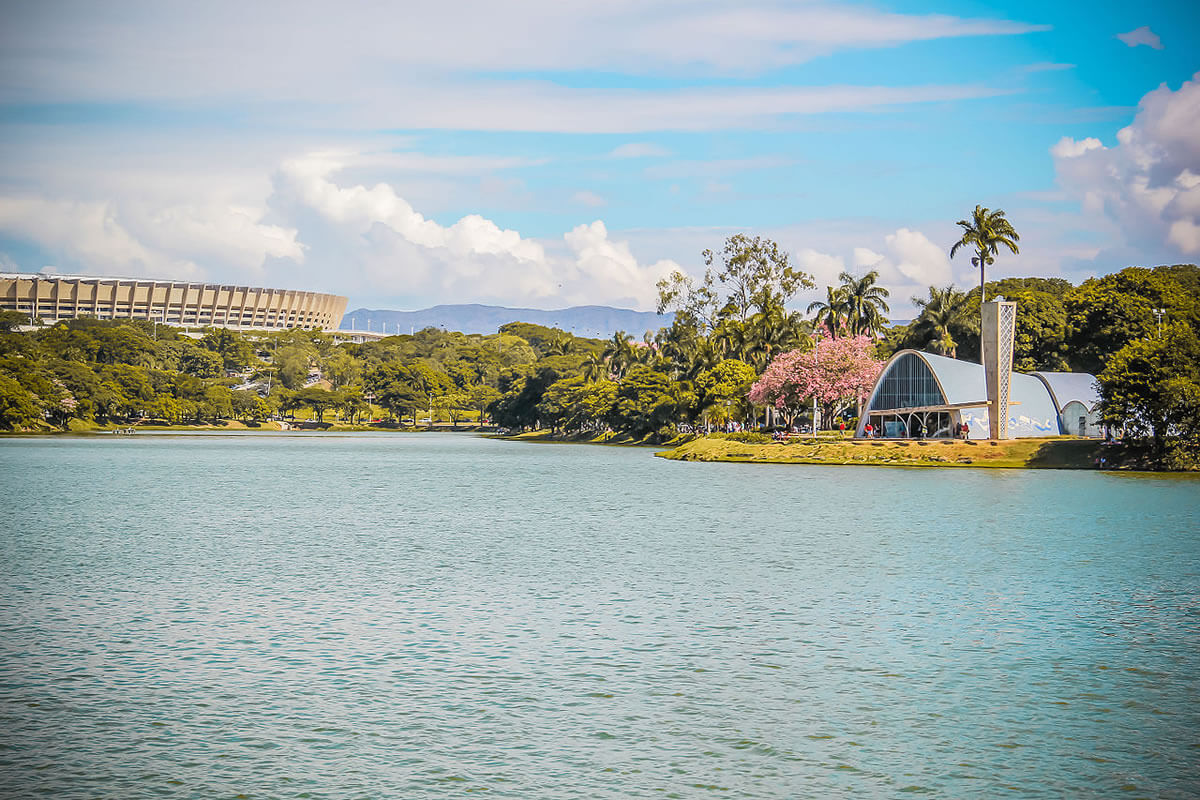
Encircling the tranquil waters of an artificial lake in Belo Horizonte, the Pampulha Modern Ensemble stands as one of the 20th century's most influential architectural achievements. Created in 1940 under the visionary leadership of Mayor Juscelino Kubitschek, this cultural and leisure complex represents a pivotal moment when modernist architecture broke free from rigid European orthodoxy to embrace the curves, colors, and climate of Brazil. Through the genius of architect Oscar Niemeyer, landscape designer Roberto Burle Marx, and a collaborative team of innovative artists, Pampulha pioneered an organic modernism that would echo throughout Latin America and beyond. In July 2016, UNESCO recognized this extraordinary ensemble as a World Heritage Site, acknowledging its outstanding contribution to human creative achievement.
For more information about Belo Horizonte, the city where Pampulha is located, see our companion article on Belo Horizonte: Brazil's First Planned Modern City.
A Garden City Vision
The Pampulha project emerged from Juscelino Kubitschek's vision to transform a suburban area approximately 8 kilometers (5 miles) north of Belo Horizonte's city center into a sophisticated garden city. This concept sought to blend modern living with designed natural landscapes, creating public spaces that would democratize access to culture and leisure.
The artificial lake at the heart of the project—Lake Pampulha—covers 2.6 square kilometers (1.0 square mile) and features a perimeter pathway of approximately 18 kilometers (11.2 miles). Originally constructed for flood mitigation and water supply, the lake became the mirror and stage for Niemeyer's architectural masterpieces. The waterfront location allowed buildings to be reflected in the lake's surface, creating architecture that engaged in constant dialogue with its watery setting.
The Collaborative Team
Oscar Niemeyer: Breaking the Modernist Mold
At age 33, Oscar Niemeyer received the commission that would establish his international reputation. Working with structural engineer Joaquim Cardozo, the young architect exploited the plastic potential of reinforced concrete to create bold, curvilinear forms that departed radically from the rigid geometries then dominating modernist design.
Niemeyer rejected the right angles and austere functionalism of the International Style. Instead, he embraced organic curves inspired by Brazil's landscape—the rolling hills, flowing waters, and sensuous forms of the tropical terrain. His famous statement that "I am not attracted to straight angles or to the straight line, hard and inflexible, created by man. I am attracted to free-flowing, sensual curves" found its first full expression at Pampulha.
Roberto Burle Marx: Painting with Plants
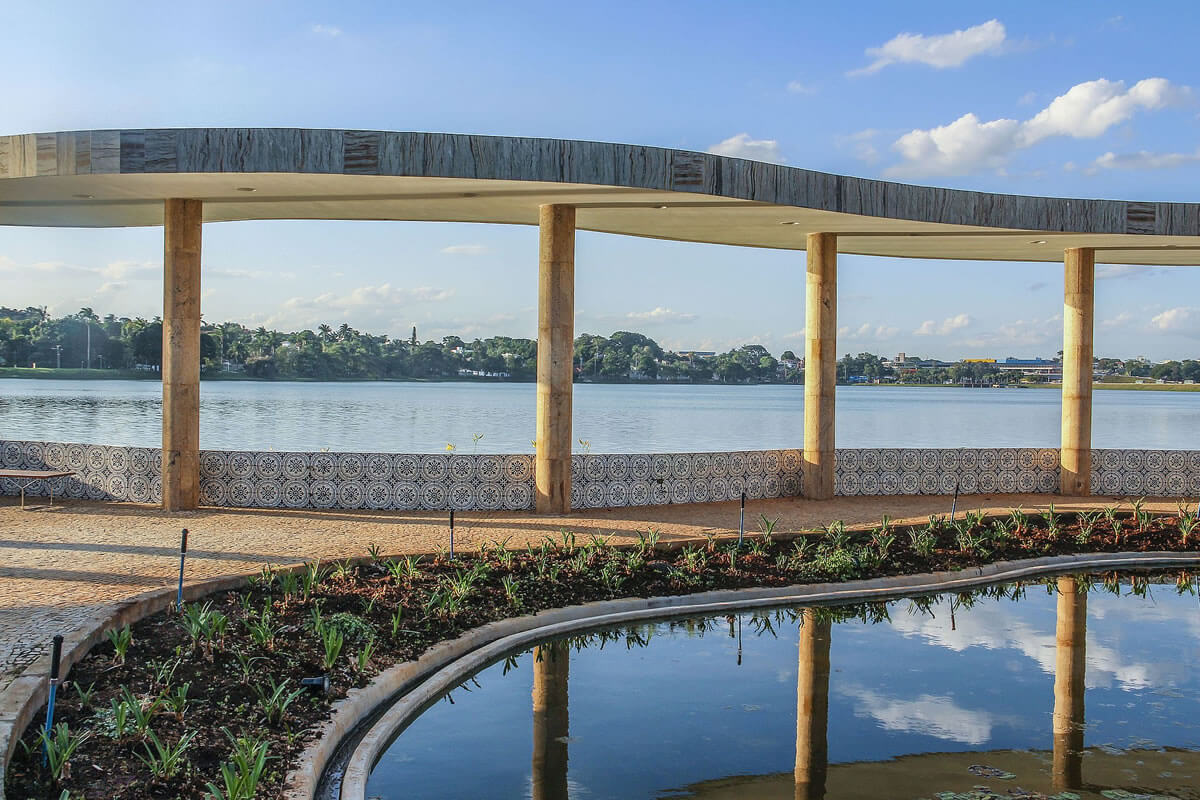
Landscape architect Roberto Burle Marx, trained as a painter, approached landscape design as three-dimensional art, using native Brazilian plants as his palette. His gardens at Pampulha featured meandering pathways, naturalistic plantings, and abstract patterns that echoed the organic forms of Niemeyer's architecture. The landscape design created a circuit of walkable spaces that invited visitors to experience the ensemble not as isolated monuments but as an integrated environment.
Artistic Collaboration
Visual artists, including Cândido Portinari and Paulo Werneck, contributed ceramic tile murals, paintings, and sculptural elements that fused seamlessly with the architecture. This synthesis of architecture, sculpture, painting, and landscape design created what UNESCO describes as "a harmonious whole" that represents a new contextual approach to modernism.
The Four Buildings
The Casino (Pampulha Art Museum)
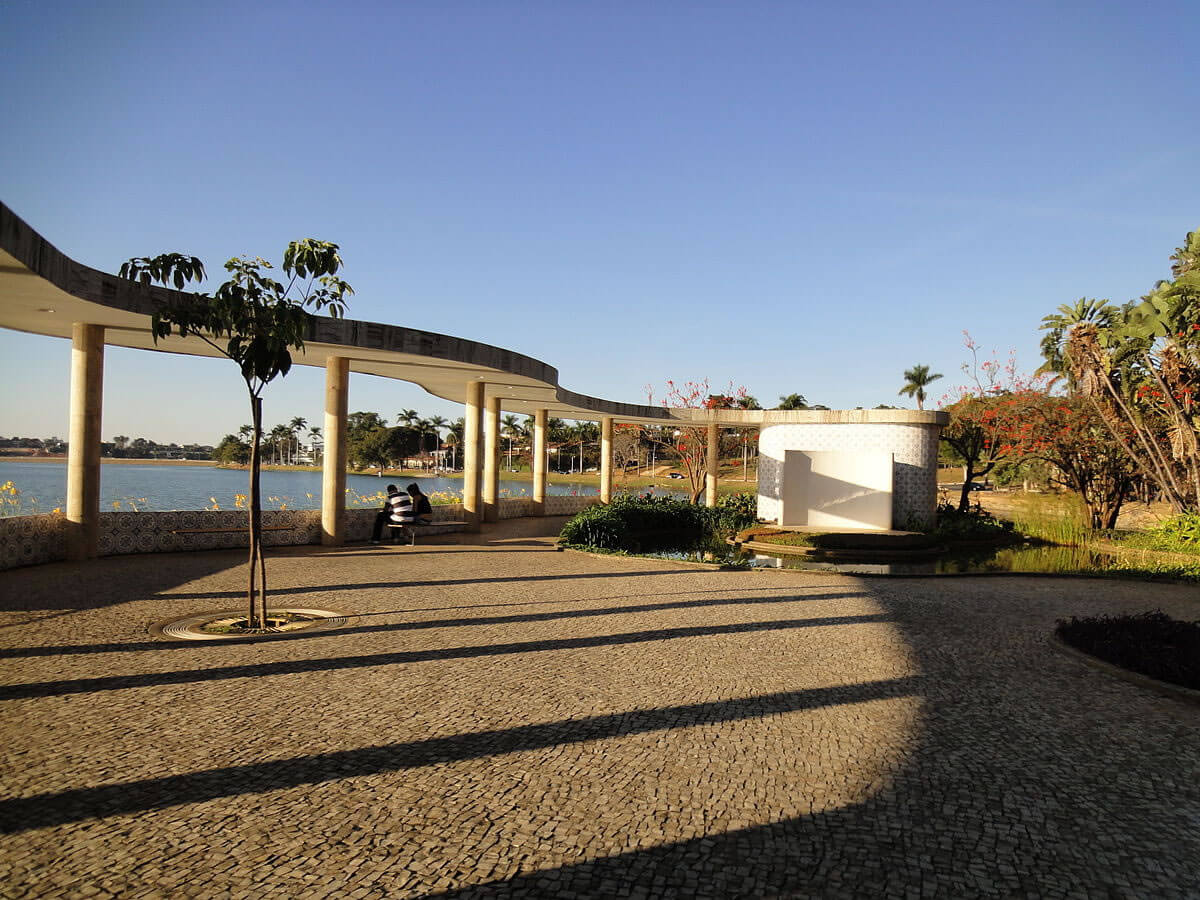
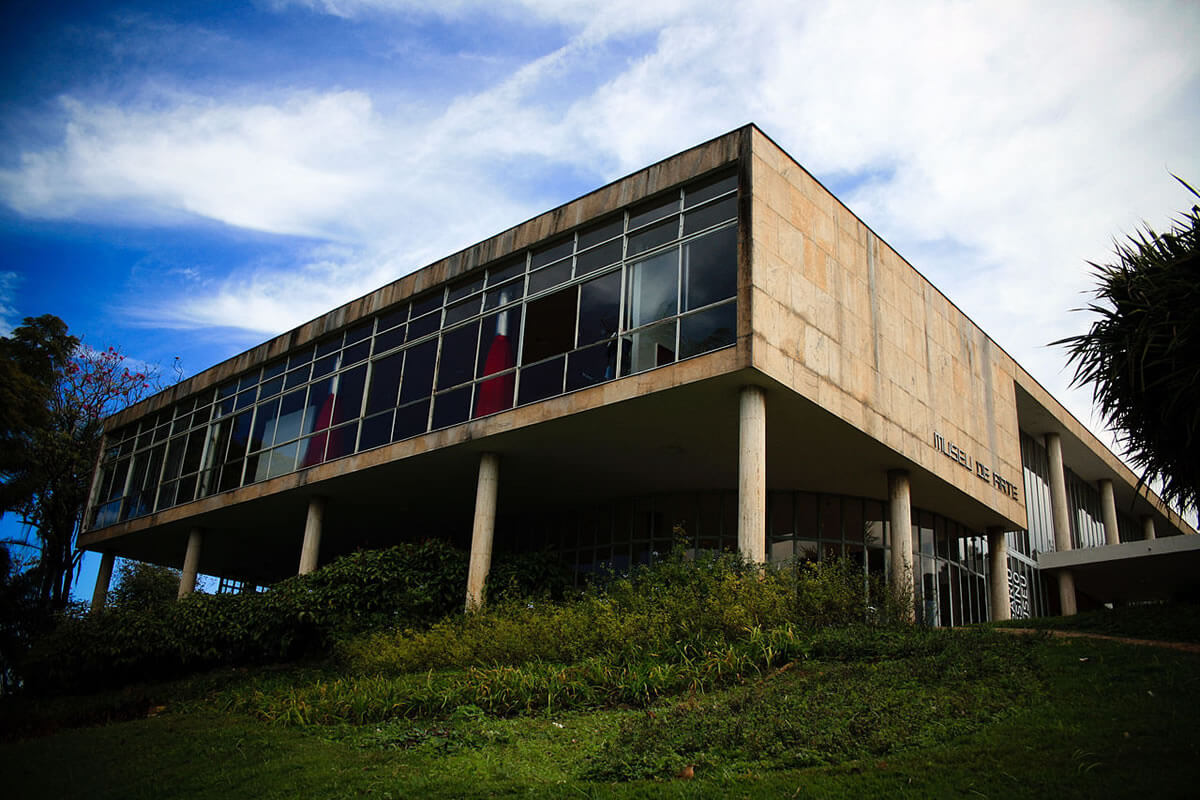
The former casino, now the Pampulha Art Museum, was inaugurated in 1943 and operated as a casino until gambling was prohibited across Brazil in 1946. The building sat vacant until 1957, when it reopened as an art museum. The casino exemplifies Niemeyer's mastery of sinuous forms and elegant proportions, with a serpentine façade featuring a curved portico supported by slender columns. The museum now houses approximately 1,600 works focusing on Brazilian contemporary art.
Casa do Baile (Centre of Reference in Urbanism, Architecture and Design)
The ballroom building, Casa do Baile, occupies a small artificial islet connected to the shore by an eleven-meter (36-foot) bridge. Its circular form and free-flowing curves create an intimate relationship with the surrounding lake. Repurposed in 2002 as the Centre of Reference in Urbanism, Architecture and Design, this cultural center now focuses on exhibitions, research, and public programming related to urban planning and architecture.
Golf Yacht Club (Yacht Tennis Club)
The Golf Yacht Club, now known as the Yacht Tennis Club, continues to function as a private leisure and recreation center. The building echoes the ensemble's elegant fluidity, with its architecture harmonizing with the lake and surrounding gardens.
Church of São Francisco de Assis: The Crown Jewel
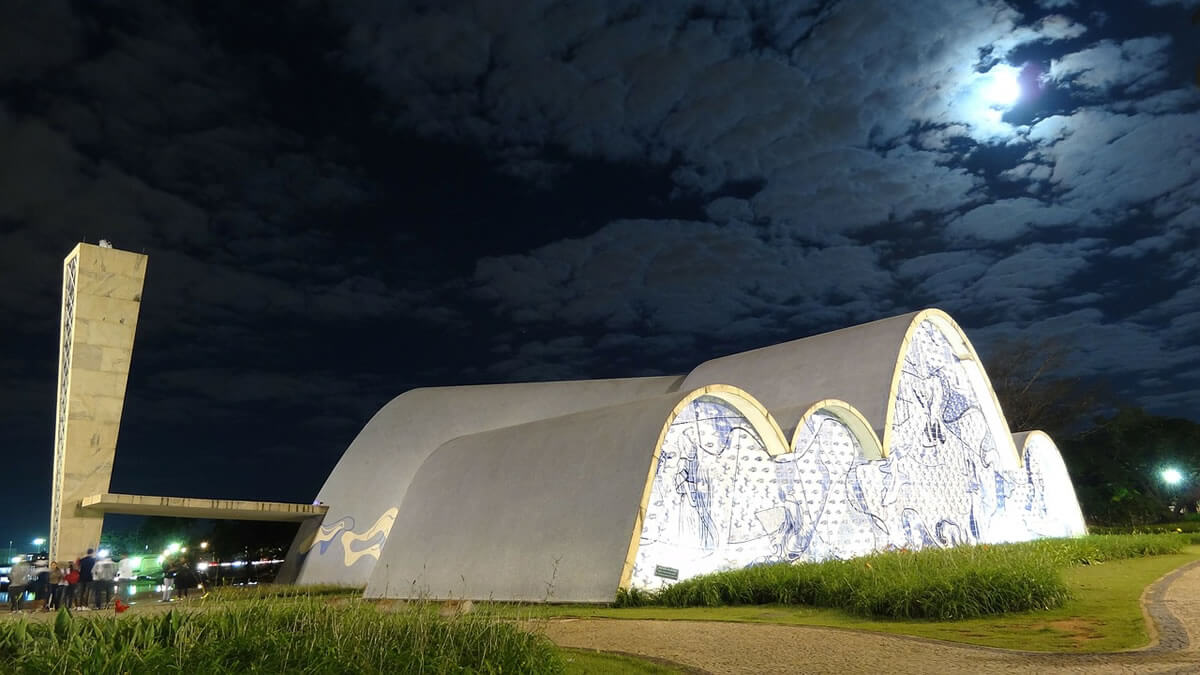
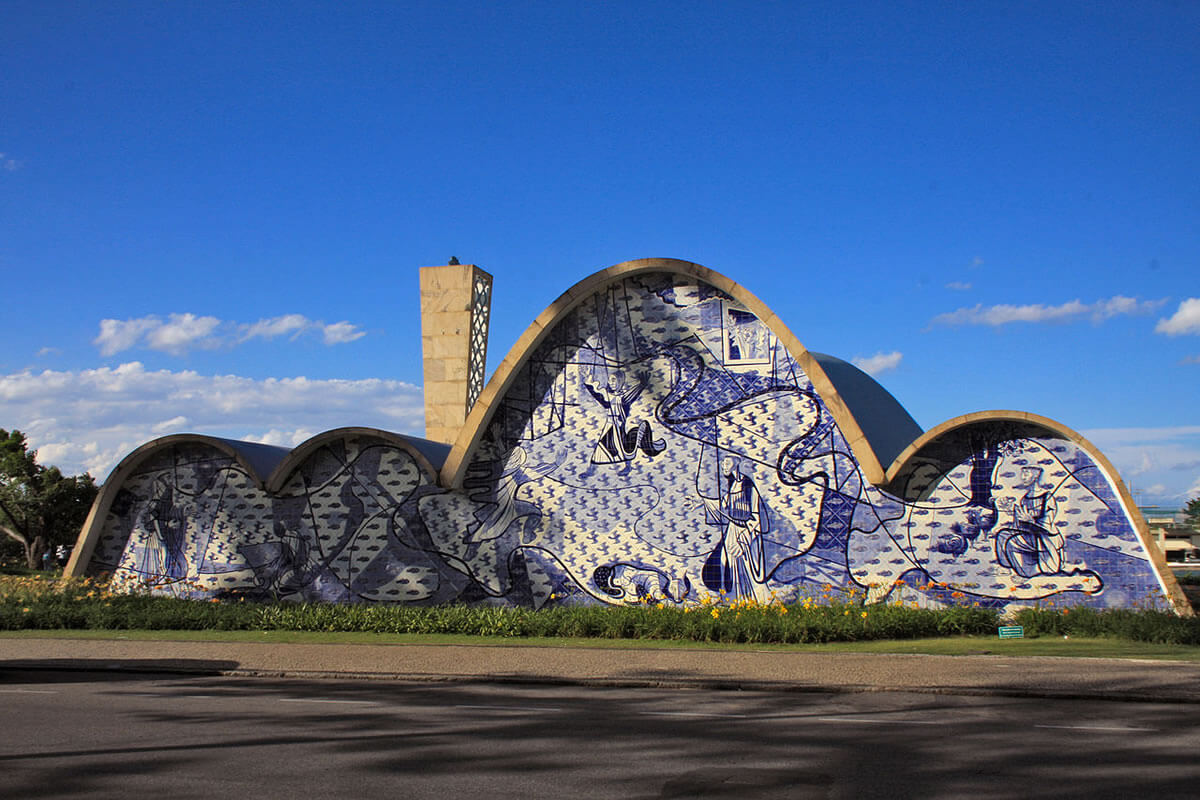
The Church of São Francisco de Assis, completed in 1943, represents Niemeyer's most audacious contribution to Pampulha. This small chapel consists of four undulating parabolic concrete vaults that create a wavelike profile. The structure simultaneously serves as both enclosure and support, eliminating traditional masonry walls in favor of a sculpted concrete shell.
Exterior walls feature brilliant blue-and-white ceramic tile mosaics by Cândido Portinari, depicting scenes from the life of Saint Francis. Inside, Portinari's Stations of the Cross panels line the compact interior. The integration of art and architecture achieves such completeness that the building functions as a total work of art.
The church's radical design initially scandalized conservative religious authorities. The Archbishop of Belo Horizonte refused to consecrate the building for 14 years, deeming its unconventional forms "unfit for religious purposes." The chapel remained unused until it was finally consecrated in 1959. Today, the Church of São Francisco de Assis is widely considered the highlight of the Pampulha ensemble and one of Niemeyer's early masterpieces.
International Recognition and Influence
The Pampulha Modern Ensemble achieved immediate international attention through the landmark exhibition "Brazil Builds: Architecture New and Old, 1652-1942," held at the Museum of Modern Art in New York in 1943. This exhibition introduced North American and European audiences to Brazilian modernism, with Pampulha prominently featured as evidence of a new architectural synthesis emerging in Latin America.
Niemeyer's innovations at Pampulha established design principles and collaborative relationships that would culminate in his most famous project: Brasília, Brazil's purpose-built capital, inaugurated in 1960.
UNESCO World Heritage Status
On July 17, 2016, UNESCO inscribed the Pampulha Modern Ensemble on the World Heritage List under criteria (i), (ii), and (iv). This designation made Pampulha Brazil's 20th World Heritage property.
The inscription recognizes the ensemble as a masterpiece of human creative genius through the collaborative integration of architecture, structural engineering, landscape design, and visual arts. UNESCO specifically notes that the ensemble "reflects the influence of local traditions, the Brazilian climate and natural surroundings on the principles of modern architecture," acknowledging its pioneering role in creating a contextually responsive modernism.
The Garden City Context
Beyond the four primary buildings, the original garden city concept persists in the surrounding neighborhood. Low-rise houses with spacious gardens and tree-lined avenues maintain the vision of a suburban district that balances urban living with natural landscapes. The 18-kilometer (11.2-mile) pathway around Lake Pampulha has become one of Belo Horizonte's most beloved public spaces, with the main road closing to vehicular traffic on weekend mornings to allow residents to walk, jog, and cycle.
Visiting Pampulha
The Pampulha complex is located approximately 8 kilometers (5 miles) north of downtown Belo Horizonte and is easily accessible by taxi, bus, or bicycle. Visitors can explore the ensemble on foot or by bicycle; a complete circuit around the lake covers approximately 18 kilometers (11.2 miles). Most visitors focus on the main architectural landmarks, which can be experienced in 2-3 hours.
The Church of São Francisco de Assis charges a nominal entrance fee to enter the main sanctuary. The Pampulha Art Museum charges an admission fee and hosts rotating exhibitions of Brazilian contemporary art. Casa do Baile offers free admission and hosts exhibitions related to architecture and urbanism. The best time to visit is during Belo Horizonte's dry season (May through September).
Cultural Significance and Legacy
The Pampulha Modern Ensemble represents a decisive moment when Latin American architecture claimed its own voice within international modernism—adapting universal principles to speak in local idioms, responding to regional climates and traditions, and expressing cultural aspirations distinct from those of Europe or North America. Niemeyer's breakthrough at Pampulha established him as one of the 20th century's most important architects, and the collaborative model he pioneered influenced practitioners globally.
Beyond architecture, Pampulha embodies democratic ideals about public space and cultural access. Kubitschek's vision of a garden city with cultural facilities open to all citizens reflected progressive beliefs about the role of beauty, leisure, and art in a just society. That Lake Pampulha remains a beloved gathering place for residents of all backgrounds suggests the enduring vitality of these ideals. The curved concrete vaults of São Francisco de Assis still rise above the lake like frozen waves, a testament to a visionary moment when architecture dared to embrace the curve, the color, and the creative spirit of Brazil itself.