
Guiana Highlands: Islands in the Sky, Emerald Heart of a Continent
The Guiana Highlands, situated within the ancient Guiana Shield, are a biodiverse region that spans southern Venezuela, the Guianas, northern Brazil, and southeastern Colombia. This expansive region features a captivating landscape of lowlands, forested slopes, and iconic plateaus.
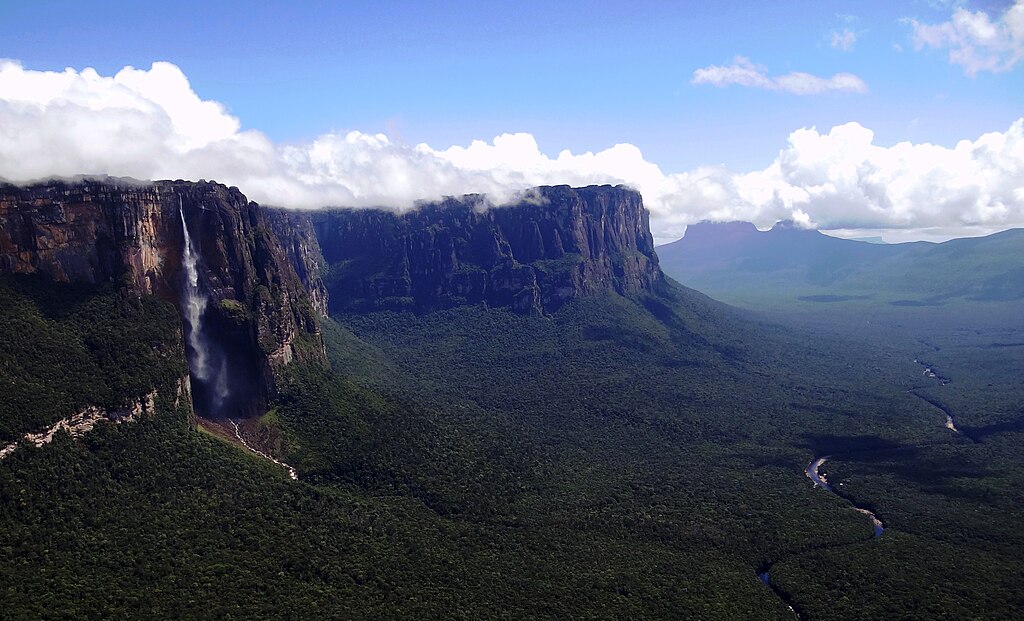
Emerald Peaks, Ancient Stone: A Journey Through the Guiana Highlands
Nestled within the ancient embrace of the Guiana Shield, the Guiana Highlands rise as a dramatic and biodiverse realm, stretching across the southern half of Venezuela, encompassing the Guianas (Guyana, Suriname, and French Guiana), the northern reaches of Brazil, and the southeasternmost portions of Colombia. This expansive region spans an impressive area of approximately 1,776,000 square kilometers (685,700 square miles), forming a sprawling and captivating canvas of undulating lowlands, densely forested slopes, and the iconic, towering plateaus that define its character. From the humid rainforests that carpet its lower elevations to the unique ecosystems perched atop its isolated summits, the Guiana Highlands showcase the remarkable geographical richness and ecological significance of this ancient Precambrian formation.
Tepuis: Sky Islands of the Guiana Highlands
The Guiana Highlands are most strikingly defined by the awe-inspiring spectacle of heavily forested plateaus and low mountains, dramatically punctuated by the iconic table-like formations known as tepuis, derived from the Pemon indigenous word for "house of the gods." These geological wonders, with their sheer vertical cliffs and often flat, mist-shrouded summits, rise majestically and abruptly from the surrounding landscape, lending an air of primordial mystique to the highlands. Among these natural sentinels, Mount Roraima stands as a particularly prominent landmark, its flat summit straddling the borders of Venezuela, Guyana, and Brazil. Its unique appearance has inspired legends and famously served as the setting for Sir Arthur Conan Doyle's classic novel, "The Lost World."
Tepuis are far more than mere geological curiosities; they are essentially isolated biological islands in the sky, harboring unique ecosystems that have evolved in relative isolation for millions of years. The challenging conditions of their summits – nutrient-poor soils, high rainfall, intense sunlight, and often dramatic temperature fluctuations – have fostered the evolution of highly specialized and endemic flora and fauna, found nowhere else on Earth. These towering plateaus, therefore, not only contribute to the breathtaking beauty of the Guiana Highlands but also serve as invaluable natural laboratories, offering unparalleled opportunities to study evolutionary processes and the remarkable adaptations of life to extreme environments.
A Biodiversity Hotspot: Endemism in Lush Rainforests
The Guiana Highlands emerge as a globally significant haven for biodiversity, harboring an exceptionally rich tapestry of plant life, estimated to comprise over 13,000 species of vascular plants. This remarkable floral abundance is further enhanced by the high levels of endemism, with approximately 40% of these plant species found exclusively within the region, underscoring the uniqueness and irreplaceable nature of the highlands' ecosystems. The vast Guianan rainforest, often considered a northern extension of the Amazon rainforest, flourishes across the lower elevations and slopes of the highlands, forming a dense and vital carbon sink and providing a crucial habitat for an astounding array of fauna, including countless species of insects, amphibians, reptiles, birds, and mammals, many of which are also endemic or exhibit highly specialized adaptations.
Sanctuaries of Life: Protected Areas within the Highlands
Recognizing the immense biological wealth and ecological fragility of the Guiana Highlands, a network of protected areas has been established across the region, playing a pivotal role in safeguarding this irreplaceable natural heritage. Each protected zone acts as a vital sanctuary, preserving the delicate balance of interconnected ecosystems and providing crucial opportunities for researchers and conservationists to study and understand the intricate ecological relationships within this unique environment. Notable among these vital conservation areas are:
Iwokrama Forest, Guyana: This extensive reserve serves as a pioneering living laboratory for sustainable forest management. It actively promotes ecological research, biodiversity conservation, and the development of models for responsible, community-based land use practices in a tropical rainforest environment.
Kaieteur National Park, Guyana: This national park is home to the majestic Kaieteur Falls, one of the world's most powerful waterfalls by volume. It not only protects this spectacular natural wonder but also safeguards a unique surrounding ecosystem characterized by nutrient-poor white-sand soils and specialized flora and fauna adapted to the falls' spray zone.
Canaima National Park, Venezuela: This UNESCO World Heritage Site encompasses a vast landscape of iconic tepuis, including the legendary Mount Roraima. It is internationally recognized for its exceptional natural beauty, unique geological formations, and significant cultural importance to the indigenous Pemon people.
These and other protected areas within the Guiana Highlands are crucial for ensuring the long-term preservation of the region's remarkable biological wealth and also offer opportunities for carefully managed eco-tourism, allowing visitors to witness the breathtaking splendor of this enchanting tableau while fostering sustainable practices that benefit both the natural environment and local communities. In the heart of the Guiana Highlands, the intricate and often fragile symbiotic relationship between ancient geological marvels and thriving, often endemic, ecosystems continues to unfold, inviting exploration, scientific inquiry, and a deep appreciation for the wonders of this ancient and captivating landscape.
Summary
The Guiana Highlands, nestled within the ancient Guiana Shield, represent a dramatic and ecologically vital region in northeastern South America. Characterized by its iconic tepuis – isolated, table-top mountains that harbor unique, endemic life – and vast expanses of biodiverse rainforest, the highlands showcase a remarkable interplay between ancient geological formations and thriving ecosystems. This region is a global biodiversity hotspot, with high levels of endemism in both its flora and fauna. Recognizing its ecological significance, numerous protected areas, including Iwokrama Forest, Kaieteur National Park, and Canaima National Park, have been established to safeguard this irreplaceable natural heritage. The Guiana Highlands stand as a testament to the enduring power of geological history in shaping unique biological realms, underscoring the need for continued stewardship and appreciation of their extraordinary natural wonders.