
The Mountain Ranges of the Guianas: Ancient Highlands
The Guianas—comprising Guyana, Suriname, and French Guiana—rise from South America's northeastern coast as guardians of one of Earth's most ancient geological formations. Here, atop the Guiana Shield, dramatic mountain ranges create a landscape that seems lifted from prehistory itself.
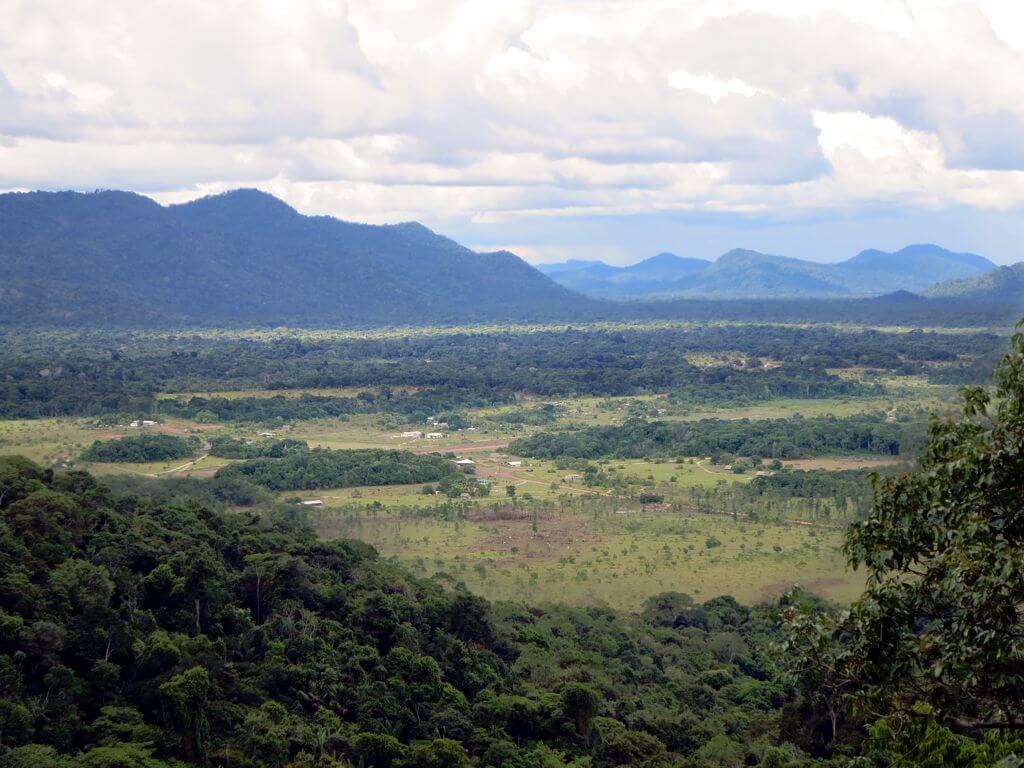
Tepuis and Highlands: The Geological Wonders of Guyana, Suriname, and French Guiana
The Guianas—comprising Guyana, Suriname, and French Guiana—rise from South America's northeastern coast as guardians of one of Earth's most ancient geological formations. Here, atop the 1.7-billion-year-old Guiana Shield, dramatic mountain ranges pierce tropical skies with their distinctive flat-topped summits, creating a landscape that seems lifted from prehistory itself. These mountains, born from Precambrian bedrock and sculpted by eons of weathering, stand as living monuments to the planet's earliest chapters while harboring some of the world's most extraordinary biodiversity.
The Guiana Shield forms the northern portion of the Amazonian Craton, the stable geological core of South America. This 1.7 billion-year-old Precambrian geological formation spans northeast South America, characterized by its higher elevations, known as the Guiana Highlands, where distinctive table-like mountains called tepuis are found. These ancient metamorphic rocks tell a story of continental collision and mountain building that predates the emergence of complex life on Earth, making the Guianas home to some of the planet's oldest exposed surface rocks.
The Pakaraima Mountains: Realm of the Tepuis
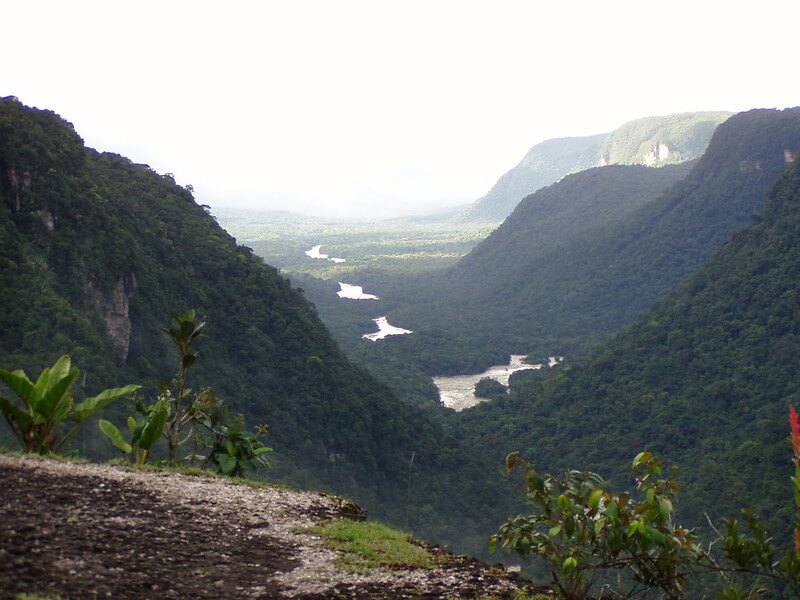
The most spectacular of the Guiana ranges, the Pakaraima Mountains, also known as the Pacaraima Mountains, stretch across Guyana's western border with Venezuela and Brazil, creating a natural fortress of sandstone plateaus and vertical cliffs. This range serves as the watershed between the Amazon and Orinoco river systems, its ancient surfaces carved into the iconic tepuis that define the region's character.
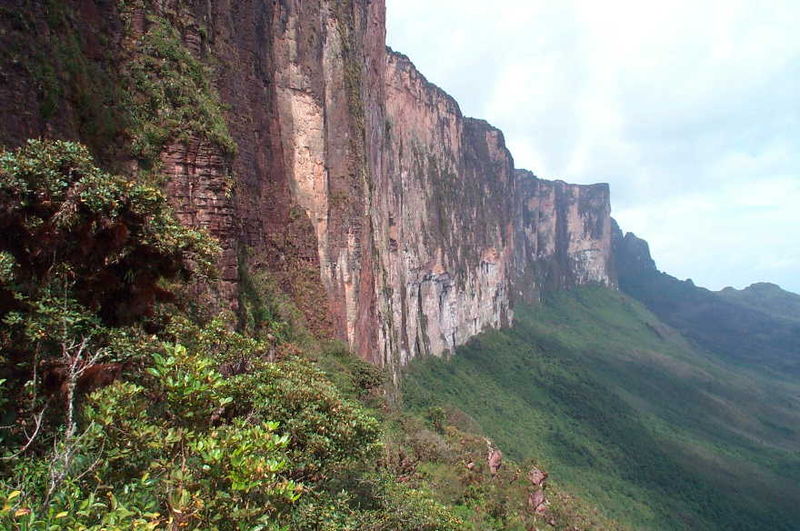
Mount Roraima dominates this landscape as the crown jewel of the Pakaraimas and the highest peak in Guyana. Rising to 2,810 meters (9,219 feet) above sea level, this massive tepui spans approximately 31 square kilometers (12 square miles) and features sheer vertical cliffs ranging from 400 to 1,000 meters (1,300 to 3,300 feet) on all sides. The mountain's flat summit creates a world unto itself, isolated from the surrounding landscape for millions of years and inspiring both scientific wonder and Indigenous reverence.
The Pemón people, who have inhabited this region for millennia, refer to tepuis as "house of the gods," acknowledging their sacred nature within Indigenous cosmology. Mount Roraima gained international fame as the inspiration for Sir Arthur Conan Doyle's novel "The Lost World," and its otherworldly appearance continues to capture imaginations, serving as the inspiration for Paradise Falls in Pixar's animated film "Up."
The geological isolation of these tepuis has created remarkable evolutionary laboratories. Separated from the surrounding lowlands by their vertical cliffs, each plateau summit hosts unique ecosystems with endemic species of plants, insects, and small vertebrates that evolved in isolation over millions of years. The summit of Mount Roraima, composed largely of ancient sandstone, supports a sparse but highly specialized flora adapted to the harsh conditions of high altitude, intense ultraviolet radiation, and nutrient-poor soils.
Kaieteur Falls, one of the world's most powerful waterfalls, thunders from the Pakaraima range, where the Potaro River plunges 226 meters (741 feet) in a single drop. This spectacular cascade, five times higher than Niagara Falls, demonstrates the dramatic relief created by the resistant sandstone plateaus rising abruptly from the surrounding lowlands.
The Kanuku Mountains: Guyana's Southern Rampart
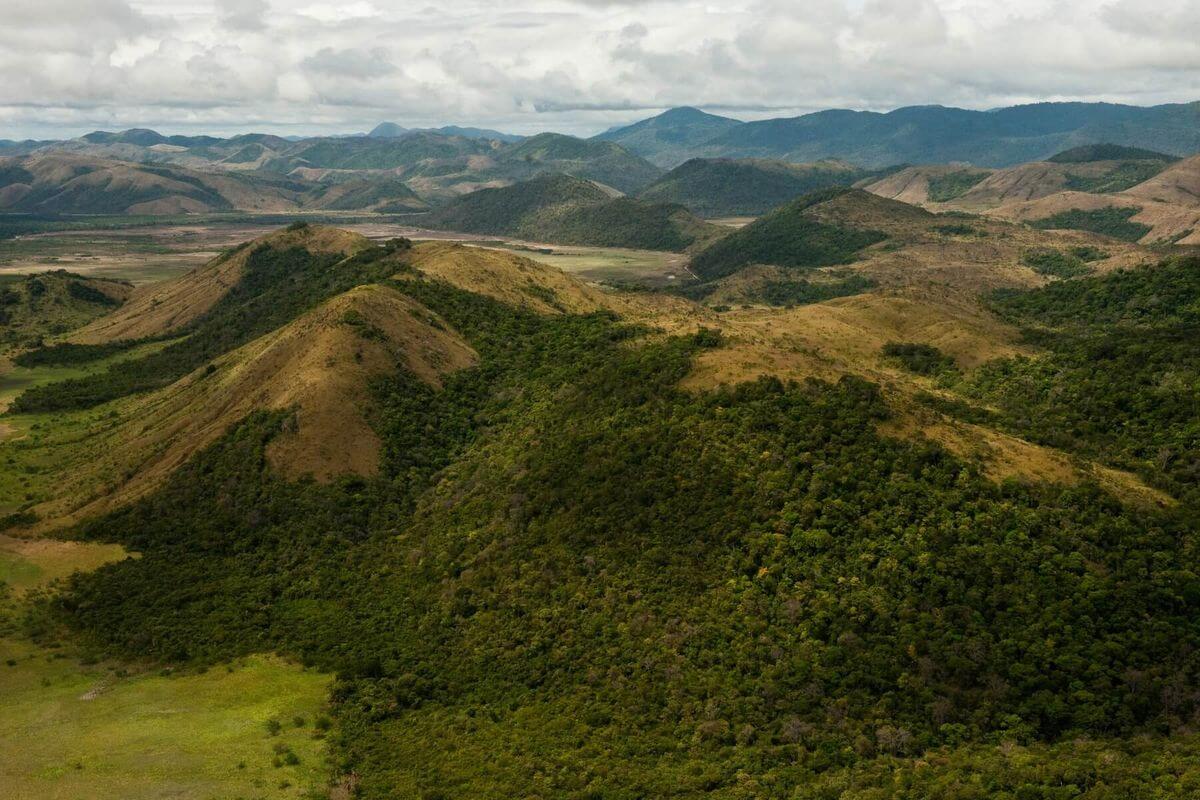
South of the Pakaraimas, the Kanuku Mountains form a gentler but equally important range across south-central Guyana. These mountains, while lower in elevation than their northern counterparts, play a crucial role in the region's hydrology and serve as a critical wildlife corridor connecting the Amazon Basin with the Guiana Shield highlands.
The Kanuks, as they are locally known, consist of two main sections: the East Kanuku and West Kanuku mountains. The highest peaks reach approximately 1,067 meters (3,500 feet), creating a landscape of rolling hills and isolated peaks covered in pristine tropical rainforest. Unlike the dramatic tepuis to the north, the Kanuku Mountains display more traditional mountain topography with ridges, valleys, and gradually sloping flanks.
These mountains serve as the headwaters for several major river systems, including tributaries of the Rupununi River, which flows north toward the Essequibo. The range acts as a natural barrier between the Rupununi savannas to the north and the Amazon Rainforest to the south, creating distinct ecological zones that support different assemblages of plant and animal species.
The biodiversity of the Kanuku Mountains rivals that of any tropical mountain range. The elevation gradient from lowland rainforest at the base to montane forest on the summits creates multiple habitat zones, each supporting distinct communities of flora and fauna. Endemic species of orchids (Orchidaceae), bromeliads (Bromeliaceae), and ferns carpet the forest floors, while the canopy harbors populations of howler monkeys (Alouatta spp.), jaguars (Panthera onca), and over 400 species of birds.
The Tumuc-Humac Mountains: The Eastern Divide
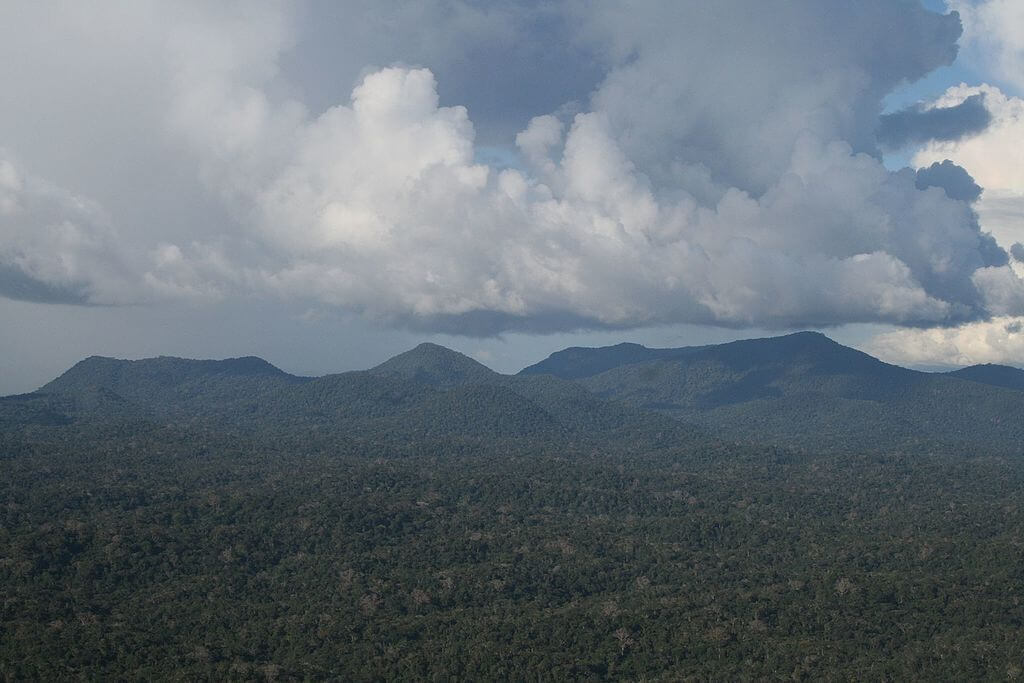
Along the borders of French Guiana and Suriname with Brazil, the Tumuc-Humac Mountains extend as the easternmost expression of the Guiana Highlands. This range extends approximately 290 kilometers (180 miles) in an east-west direction. It reaches elevations of up to 850 meters (2,800 feet), forming part of the watershed between the Amazon and Atlantic drainage systems.
The Tumuc-Humacs represent an eastern extension of the broader Guiana Shield uplands, characterized by rolling terrain, isolated peaks, and deeply incised valleys carved by centuries of tropical weathering. The range's name derives from Indigenous languages, with "tumuc" meaning "rock" and "humac" referring to "high place" or "mountain."
These mountains serve as the source region for numerous rivers flowing north toward the Atlantic coast of the Guianas and south toward the Amazon Basin. The Maroni River, which forms the border between French Guiana and Suriname, has its headwaters in these highlands, as do several tributaries of the Oyapock River along the French Guiana-Brazil border.
The forest ecosystems of the Tumuc-Humac Mountains represent some of the most pristine remaining examples of Guiana Shield biodiversity. Remote and largely inaccessible, these mountains harbor populations of species that have become rare or extinct in more accessible areas. Giant otters (Pteronura brasiliensis), harpy eagles (Harpia harpyja), and cock-of-the-rock (Rupicola rupicola) find refuge in these isolated highlands, while the forest canopy supports an extraordinary diversity of epiphytes, including numerous endemic species of orchids and bromeliads.
Suriname's Interior Highlands
Suriname's portion of the Guiana Shield includes several smaller but significant mountain ranges and isolated peaks scattered throughout the country's interior. The Wilhelmina Mountains in south-central Suriname reach heights of approximately 1,230 meters (4,035 feet) at Julianatop, the country's highest point. These mountains, like others in the region, consist primarily of ancient metamorphic rocks overlain by more recent sedimentary formations.
The Van Asch van Wijck Mountains in eastern Suriname and the Eilerts de Haan Mountains in the south contribute to the complex topography of the country's interior. These ranges, while lower than the Wilhelmina Mountains, play important roles in regional hydrology and serve as refugia for forest species during periods of climatic change.
Mining activities in Suriname's mountains have revealed the geological complexity of the Guiana Shield, with deposits of bauxite, gold, and other minerals concentrated in areas where ancient rocks have been exposed by erosion. The Bakhuis Mountains in western Suriname contain some of the world's highest-grade bauxite deposits, formed through millions of years of tropical weathering of aluminum-rich rocks.
French Guiana's Mountainous Interior
French Guiana's mountains, while generally lower than those of its neighbors, contribute significantly to the overall character of the Guiana highlands. The Inini-Camopi Mountains in the southern interior reach elevations of approximately 850 meters (2,789 feet), creating the headwaters for rivers flowing both north to the Atlantic and south toward the Amazon Basin.
These mountains support some of French Guiana's most intact forest ecosystems, serving as critical habitat for large mammals such as jaguars, pumas (Puma concolor), and giant anteaters (Myrmecophaga tridactyla). The isolation of these highland areas has also preserved traditional Indigenous territories, where Amerindian communities maintain cultural practices closely tied to the mountain forests.
The Mitaraka Massif, rising to 690 meters (2,264 feet) in the Tumuc-Humac range, gained international scientific attention when a 2015 biological expedition discovered numerous species new to science, highlighting the continued potential for biological discoveries in these remote highlands.
Geological Heritage and Modern Significance
The mountain ranges of the Guianas represent far more than scenic landscapes; they constitute living laboratories for understanding Earth's earliest history and the evolution of life in tropical environments. The Guiana Shield showcases complex metamorphic rocks, including layered metasediments, ancient greenstone belts indicating early volcanic activity, and vast expanses of sub-horizontal formations, including resilient sandstones, hard quartzites, and fine-grained shales.
These ancient formations provide insights into continental assembly processes that occurred billions of years ago, when the supercontinent Columbia was forming. The presence of banded iron formations, pillow basalts, and other rock types typical of Archean and Paleoproterozoic terrains makes the Guiana Shield a crucial reference area for understanding early Earth processes.
From a biological perspective, the isolation of mountain summits has created numerous endemic species found nowhere else on Earth. The tepuis alone are estimated to harbor over 2,000 endemic plant species, representing one of the highest levels of endemism found anywhere in the world. This extraordinary biodiversity reflects millions of years of evolution in isolation, with each mountain summit functioning as an island ecosystem.
Climate and Hydrology
The mountain ranges of the Guianas profoundly influence regional climate patterns and serve as the source of the region's major river systems. The elevation gradient from coastal lowlands to highland peaks creates distinct climatic zones, from tropical rainforest at sea level to cooler montane forests above 1,000 meters (3,281 feet).
Orographic precipitation, caused by moist air masses rising and cooling as they encounter the mountains, creates some of the highest rainfall totals in South America. Annual precipitation in the highland areas frequently exceeds 3,500 millimeters (138 inches), feeding the numerous rivers and waterfalls that drain the Guiana highlands.
The mountains serve as the continental divide between the Amazon Basin to the south and the rivers flowing directly to the Atlantic Ocean. The Essequibo River, South America's third-largest river, originates in the Pakaraima Mountains and flows north through Guyana. Similarly, the Courantyne River, forming the border between Guyana and Suriname, and the Maroni River between Suriname and French Guiana, both have their sources in these ancient highlands.
Conservation and Future Challenges
The mountain ranges of the Guianas face increasing pressure from mining activities, logging, and infrastructure development. The region's rich mineral resources, particularly gold and bauxite, have attracted industrial attention that threatens the integrity of mountain ecosystems. Climate change poses additional challenges, as rising temperatures may force montane species upward to higher elevations, potentially leading to local extinctions on isolated peaks.
However, the remote nature of many mountain areas provides natural protection, and several countries have established protected areas encompassing significant portions of the highlands. Kaieteur National Park in Guyana protects the spectacular falls and surrounding plateau, while various reserves in Suriname and French Guiana safeguard critical mountain watersheds and biodiversity.
Indigenous communities play a crucial role in conservation efforts, as their traditional territories often encompass large areas of mountain forests. The integration of Indigenous knowledge with modern conservation science offers promising approaches to protecting these irreplaceable ecosystems while respecting cultural values and traditional ways of life.
The mountain ranges of the Guianas stand as monuments to deep time and evolutionary creativity, their ancient summits harboring secrets of both geological and biological history. As guardians of extraordinary biodiversity and witnesses to billions of years of Earth's story, these highlands remind us of our planet's incredible age and the precious nature of the life they sustain. Their preservation represents not just a regional concern but a global responsibility, ensuring that future generations can continue to marvel at these houses of the gods and unlock the mysteries they contain.