
The Mojanda Lakes Complex: A Testament to Ecuador's Volcanic Legacy
High in Ecuador's northern Andes, the Mojanda Lakes are three turquoise lakes in an ancient volcanic caldera. The complex features ongoing volcanic activity with two stratovolcanoes forming simultaneously but displaying different eruptive behaviors and magmatic compositions.
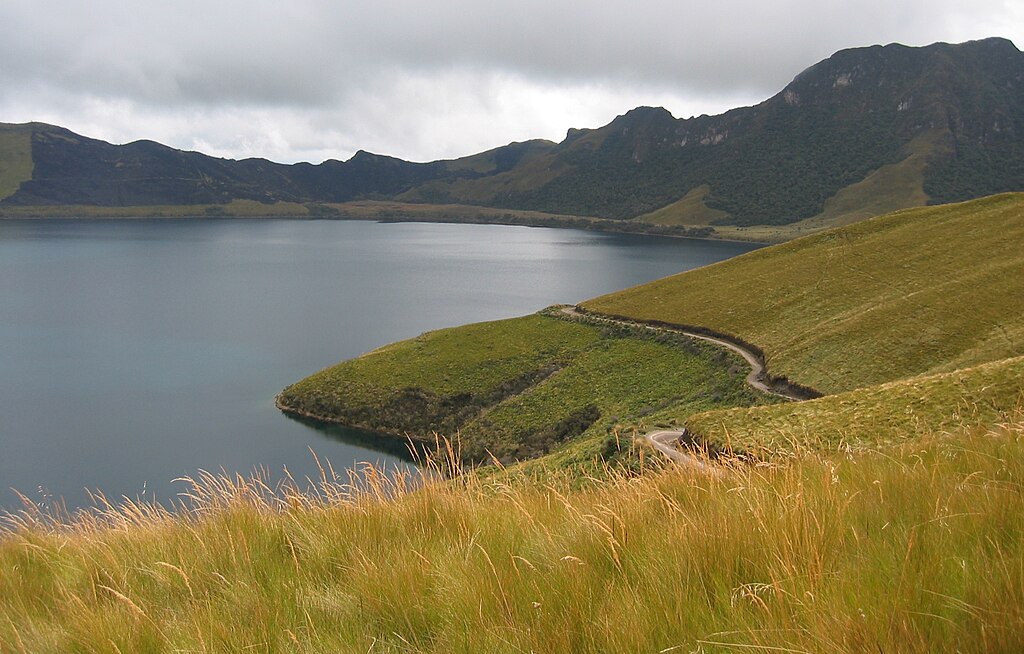
Volcanic Legacy and Alpine Waters: The Mojanda Lakes of Ecuador's Andes
High in the Andean highlands of northern Ecuador, where rolling páramo grasslands meet crystalline mountain air, lies one of the country's most remarkable geological formations: the Mojanda Lakes complex. Located at an elevation of roughly 3,800 m (12,467 ft) above sea level, these three turquoise lakes occupy the summit caldera of an ancient volcanic system that tells a compelling story of geological evolution spanning hundreds of thousands of years. The complex represents a unique example of contemporaneous volcanic activity, where two distinct stratovolcanoes—Mojanda and Fuya Fuya—developed simultaneously yet exhibited dramatically different eruptive behaviors and magmatic compositions.
Geological Formation and Complex History
The Mojanda volcanic complex exhibits a remarkably intricate geological history involving two adjacent, simultaneously active volcanoes. The formation process began with an earlier stratovolcano edifice, composed primarily of andesitic lava flows, which eventually collapsed to form a caldera. Within this original caldera, a new, smaller andesitic stratovolcano was subsequently constructed, creating the present-day Mojanda edifice.
Mojanda ranks among the largest volcanoes of Ecuador's northern Interandean Depression, rising southwest of the historic town of Otavalo. The volcanic system's complexity stems from the presence of two distinct eruptive centers: Mojanda sensu stricto and Fuya Fuya, separated by merely 3 km (1.9 mi) yet exhibiting contrasting geological characteristics.
The Mojanda component consists predominantly of basic andesite lava flows, scoria flow deposits, and a substantial summit series of vitric breccias. Meanwhile, the andesitic-to-rhyolitic Fuya Fuya volcano was constructed contemporaneously immediately to the west of Mojanda, representing a markedly different magmatic evolution.
The Caldera Formation and Lake Genesis
The summit caldera formed during a catastrophic Plinian eruption approximately 200,000 years ago, marking the end of Mojanda's active volcanic period. Both Mojanda volcano and Fuya-Fuya volcano exploded between 200,000 and 165,000 years ago, allowing water to collect within the resulting calderas. The summit cone was destroyed by phreatoplinian eruptions, which left a small summit caldera, creating the depression that would eventually house the lake system.
Fuya Fuya produced two major rhyolitic Plinian explosive eruptions, possibly associated with caldera formation, contributing to the complex's dramatic topographical transformation. The explosive nature of these eruptions created the necessary conditions for the formation of the current lake-filled calderas.
The Three Sacred Lakes
The caldera depression now contains three distinct crater lakes, each bearing names rooted in the Indigenous Quechua language that reflect their cultural significance to local communities. In the Indigenous Quechua language, they are Karikucha (Male Lake), Yanakucha (Black Lake), and Warmikucha (Female Lake). Karikucha represents the largest of the three lakes, dominating the caldera floor with its expansive turquoise waters.
These alpine lakes exist within a unique high-altitude ecosystem characterized by páramo vegetation—specialized grasslands adapted to the harsh conditions of the Andean highlands. The attraction is surrounded by rolling hills of long, yellow Paramo grass and a striking native forest a short distance away, creating a distinctive landscape that supports remarkable biodiversity.
Ecological Significance and Biodiversity
The Mojanda Lakes region supports an impressive array of endemic and threatened species adapted to high-altitude environments. Animal species in Mojanda include the endangered royal sunangel (Heliangelus regalis), a hummingbird species that represents one of the area's most significant conservation priorities. The páramo ecosystem surrounding the lakes serves as a critical habitat for numerous specialized plant and animal communities that have evolved to thrive in the challenging conditions of high-altitude tropical mountains.
The aquatic ecosystems within the lakes themselves support unique assemblages of microorganisms and invertebrates, which are adapted to the oligotrophic conditions typical of high-altitude crater lakes. The clear, mineral-rich waters maintain relatively stable temperatures year-round due to their substantial depth and thermal mass.
Conservation Status and Protection
Recognizing the exceptional ecological and geological value of the Mojanda Lakes complex, the area received protected status in 2002. The designation acknowledges both the scientific importance of the volcanic formations and the critical role the region plays in maintaining the integrity of the high-Andean ecosystem.
The protected status encompasses not only the immediate lake environment but also the surrounding páramo grasslands and montane forest fragments that contribute to the area's ecological connectivity. Conservation efforts focus on maintaining the delicate balance between sustainable tourism development and ecosystem preservation, ensuring that future generations can experience and study these remarkable geological formations.
Scientific and Educational Value
The Mojanda volcanic complex serves as an exceptional natural laboratory for understanding volcanic processes, caldera formation, and the dynamics of high-altitude ecosystems. The contrasting magmatic suites and eruptive styles exhibited by the Mojanda and Fuya Fuya components provide researchers with valuable insights into the mechanisms controlling simultaneous volcanic activity in convergent margin settings.
Geological studies of the complex contribute to a broader understanding of Andean volcanism and the processes that shape Ecuador's dynamic volcanic landscape. The well-preserved caldera structures and accessible lake environments make the site particularly valuable for educational purposes, offering students and researchers opportunities to observe and study volcanic processes in a relatively safe and accessible setting.
Tourism and Cultural Significance
The lakes are a popular tourist destination and are about 20 20-minute taxi ride from the largely Indigenous town of Otavalo. The proximity to Otavalo, famous for its Indigenous markets and cultural traditions, creates opportunities for integrated cultural and natural tourism experiences that benefit local communities while promoting conservation awareness.
The Quechua names of the lakes reflect their cultural significance to Indigenous communities, representing a connection between geological features and traditional knowledge systems that spans centuries. The gendered naming convention—Male Lake, Female Lake, and Black Lake—suggests cosmological associations that demonstrate the integration of natural phenomena into Indigenous worldviews.
Visitors to the lakes can experience the dramatic landscape through hiking trails that traverse the páramo environment, offering opportunities to observe both the geological features and the specialized ecosystems they support. The relatively accessible location makes the complex an important destination for ecological tourism in northern Ecuador.
Summary
The Mojanda Lakes complex represents a remarkable convergence of geological processes, ecological diversity, and cultural significance in Ecuador's northern highlands. The formation of the three crater lakes through catastrophic Plinian eruptions 200,000 years ago created a unique high-altitude aquatic ecosystem that continues to provide valuable scientific insights and conservation opportunities. The complex geological history, involving two contemporaneous but contrasting volcanic systems, demonstrates the dynamic nature of Andean volcanism and the processes that continue to shape Ecuador's mountainous landscape.
The protected status of the lakes ensures the preservation of both their exceptional geological features and the specialized páramo ecosystems they support. As climate change and development pressures increasingly threaten high-altitude environments throughout the Andes, the Mojanda Lakes complex serves as both a refuge for endangered species and a model for the successful conservation of volcanic landscapes. The ongoing scientific study of the complex continues to enhance understanding of volcanic processes and high-altitude ecosystem dynamics, while sustainable tourism development provides economic opportunities for local communities and promotes broader appreciation for Ecuador's remarkable geological heritage.