
At the World's End: The Yahgan People of Tierra del Fuego
At the ends of the Earth, in the channels and windswept islands of Tierra del Fuego, lived the Yahgan people, the world's southernmost Indigenous population. Their story reflects extraordinary adaptation, profound cultural depth, and a tragic near-complete decimation due to colonialism and disease.
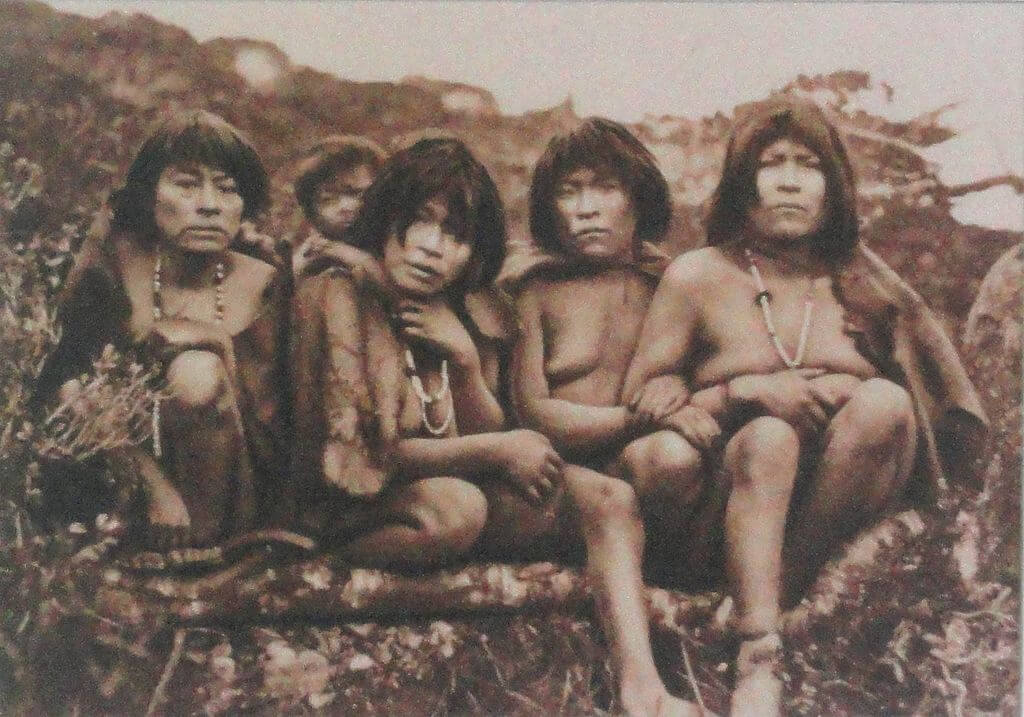
Keepers of the Southernmost Seas: The Enduring Legacy of the Yahgan People
At the very ends of the Earth, amidst the labyrinthine channels and windswept islands of Tierra del Fuego, lived the Yahgan, or Yaghan, (also known as Yámana) people, the world's southernmost Indigenous population. For thousands of years, these remarkable hunter-gatherers, masters of the sea and intimately connected to their harsh environment, thrived in what Europeans later referred to as the "Land of Fire." Their story is one of extraordinary adaptation, profound cultural depth, and, tragically, a near-complete decimation at the hands of colonialism and disease, leaving behind a legacy that now faces the delicate challenge of preservation and revitalization.
Masters of the Canoe and Cold: Life in the Archipelago
The traditional territory of the Yahgan encompassed the intricate network of islands and waterways south of Isla Grande de Tierra del Fuego, extending all the way to Cape Horn. Unlike their terrestrial neighbors, the Selk'nam, the Yahgan were a nomadic, canoe-faring people, their lives inextricably linked to the sea. Their distinctive bark canoes, sometimes featuring a small fire built on a sod base for warmth, served as their primary mode of transport and floating homes.
Their sustenance was derived almost entirely from the rich marine environment. Yahgan men were skilled hunters of sea lions, often using heavy harpoons, while women were exceptional divers, plunging into the frigid waters to collect shellfish. They also scavenged whale meat from beached carcasses and gathered local vegetation, including berries and fungi. This reliance on marine resources, combined with their incredible physiological adaptations, allowed them to survive in a climate that astonished early European explorers.
Perhaps the most striking aspect of their adaptation was their remarkable indifference to the cold. Despite the often subpolar conditions, the Yahgan traditionally wore little to no clothing, a practice that bewildered Europeans like Charles Darwin. They kept warm by huddling around small fires, both on land and in their canoes, and by covering their bodies with animal grease to trap heat. Research suggests they may have evolved significantly higher metabolisms than average humans, allowing them to generate more internal body heat, and their customary deep squatting position helped conserve warmth. The very name "Tierra del Fuego" (Land of Fire) was coined by European navigators who observed the myriad fires lit by the Yahgan dotting the shoreline.
A Rich Cultural Fabric: Language, Belief, and Social Structure
The Yahgan possessed a complex culture deeply intertwined with their environment, which was expressed through their language, beliefs, and social organization. The Yahgan language, or Yámana, is considered a language isolate, meaning it has no known linguistic relatives. It was famously rich and descriptive, reflecting their detailed understanding of their world. Sadly, with the passing of Cristina Calderón in 2022, the last known native speaker, the language is now considered extinct, though efforts are underway by descendants and linguists to preserve and revive it.
Yahgan society was typically organized into small, independent family groupings, with no centralized tribal leadership. The family, usually monogamous, served as the fundamental social, political, and economic unit. Religious beliefs permeated their lives, centering around a benevolent supreme deity, Watauinewa, the "master of the whole spirit world," and a host of lesser spirits and ghosts. Shamans (yékamuš) served as religious specialists and spiritual advisors. Ceremonies, such as the kina coming-of-age ritual for young men, involved masked figures and served to transmit cultural knowledge.
Their material culture, while seemingly simple to outsiders, was perfectly suited to their nomadic, aquatic lifestyle. Beyond their iconic canoes, they crafted tools for hunting and gathering and practiced intricate basket weaving. Their understanding of their environment was profound, allowing them to navigate the treacherous waterways and exploit resources with remarkable efficiency.
The Catastrophic Encounter: Decimation and Dispossession
The arrival of Europeans from the 16th century onwards marked a tragic turning point for the Yahgan people. Initial sporadic contacts gave way to increasing interaction with seal hunters, whalers, and missionaries in the 19th century. While missionaries, notably Thomas Bridges, made efforts to learn and document the Yahgan language, the overall impact of European presence was devastating.
The Yahgan, lacking immunity to Old World diseases, were decimated by epidemics of measles, smallpox, whooping cough, and respiratory illnesses. Their population, estimated to be between 2,500 and 3,000 in the mid-19th century, plummeted rapidly to just a few hundred by the turn of the 20th century and to a mere handful by the 1930s.
Furthermore, the introduction of European concepts of property and the establishment of sheep ranches led to conflict. Yahgan hunting their traditional lands were viewed as "poachers" by ranchers, leading to violent clashes and massacres. Efforts by governments to "civilize" and settle the Yahgan, moving them to centralized villages, further disrupted their traditional nomadic lifestyle and accelerated the loss of their culture and language.
A Resilient Spirit: Preservation and Future Hopes
Despite the catastrophic decline, the Yahgan people have not vanished entirely. Today, descendants of the Yahgan live primarily on Navarino Island in Chile, particularly in the community of Villa Ukika near Puerto Williams, as well as in Ushuaia, Argentina. While the Yahgan language itself is no longer spoken natively, there are ongoing efforts to preserve its vocabulary and grammar, often led by descendants like Cristina Calderón's family, who published a Yahgan-Spanish dictionary.
There is a growing movement among the Yahgan community and its supporters to revitalize their cultural heritage, including traditional handicrafts like basket weaving and the symbolic reconstruction of canoes. Archaeological research continues to uncover evidence of their long and rich history in Tierra del Fuego, offering new insights into their extraordinary adaptation and resilience.
The story of the Yahgan people serves as a poignant reminder of the fragility of Indigenous cultures in the face of colonial expansion and the devastating impact of introduced diseases. Yet, it is also a testament to the enduring human spirit and the importance of remembering and honoring the traditions of those who once thrived in the most remote corners of our planet. The efforts to preserve and reawaken the Yahgan legacy are not just about a single people, but about safeguarding a unique piece of humanity's shared heritage.
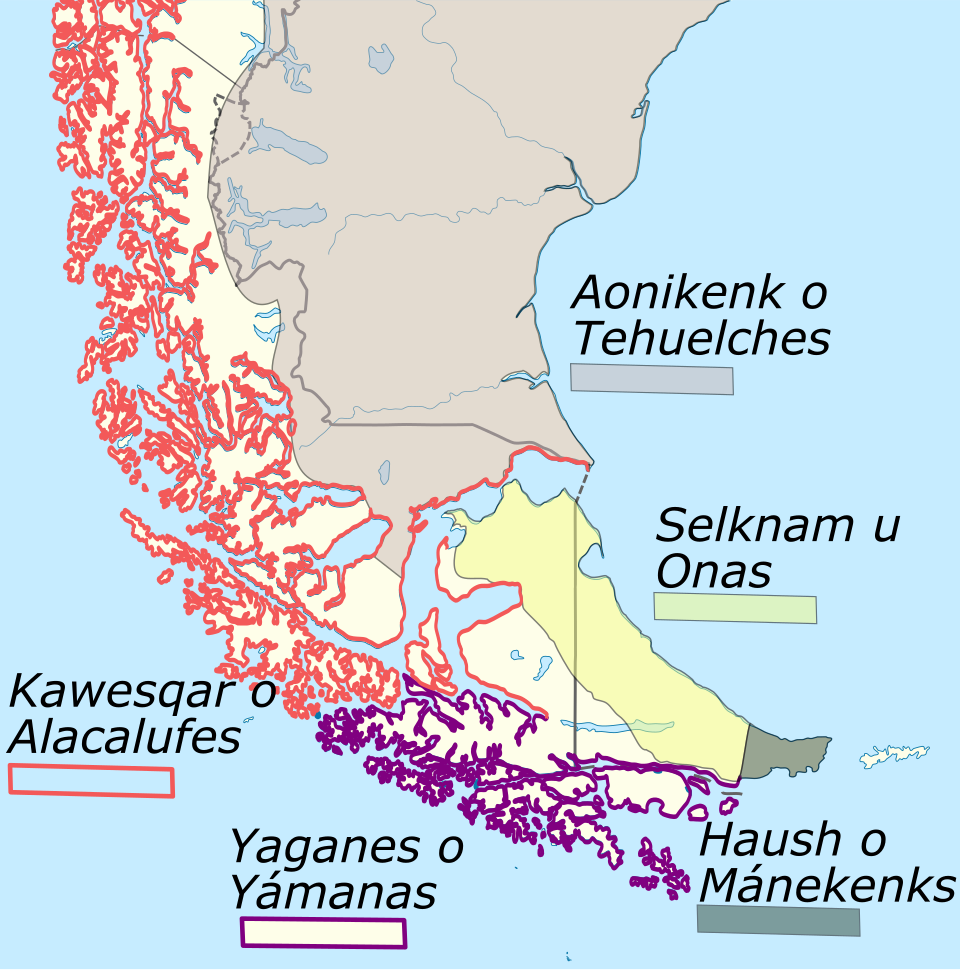
Indigenous peoples of Southern Patagonia.