
Emas National Park: Brazil's Grassland Sanctuary
In the vast expanse of Brazil's central grasslands lies Emas National Park. Named after the greater rhea—the majestic flightless bird that roams these endless plains—this remarkable protected area represents one of the Cerrado's most pristine grassland ecosystems.
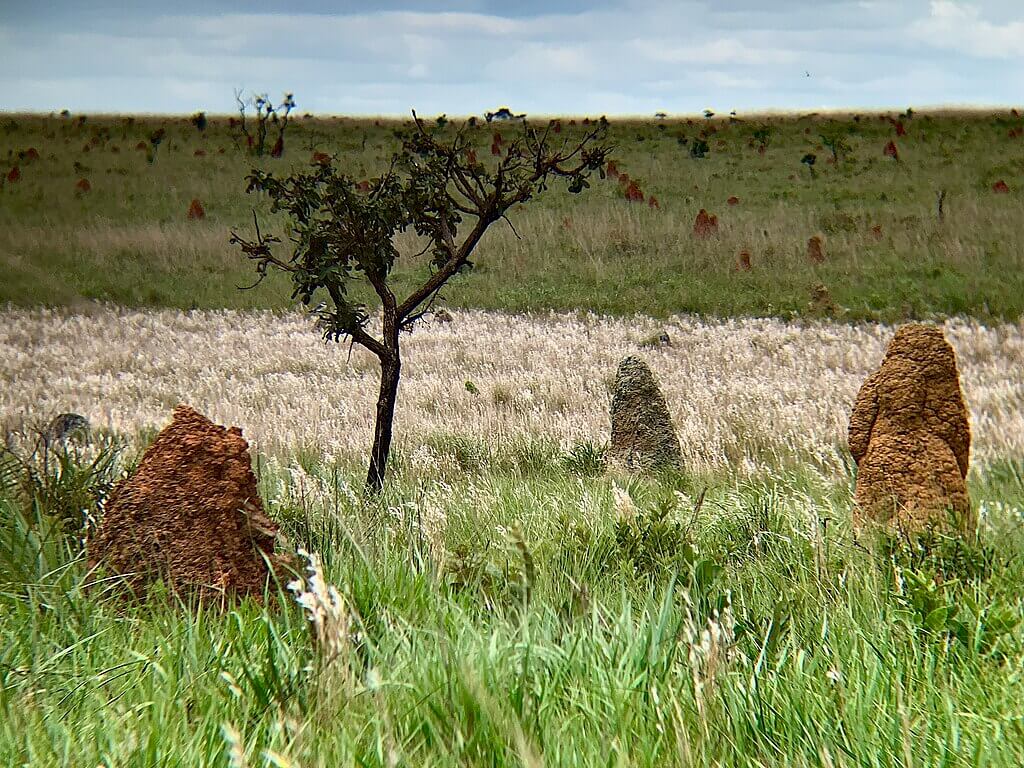
Where Termite Towers Meet Endless Grasslands: A Journey Through Emas National Park
In the vast expanse of Brazil's central grasslands, where undulating savannas stretch to the horizon and termite mounds rise like ancient monuments, lies Emas National Park. Named after the greater rhea—the majestic flightless bird that roams these endless plains—this remarkable protected area represents one of the Cerrado's most pristine grassland ecosystems. Covering 1,320 square kilometers (510 square miles) of cerrado savannah between the states of Goiás and Mato Grosso do Sul, Emas stands as a testament to the extraordinary biodiversity that once characterized Brazil's vast central plateau.
Rising from the heart of South America's most threatened biome, Emas National Park preserves a landscape that has supported unique wildlife communities for millennia. As part of the UNESCO World Heritage "Cerrado Protected Areas" designation alongside Chapada dos Veadeiros, this park contains flora and fauna that characterize the Cerrado – one of the world's oldest and most diverse tropical ecosystems. In an ocean of soybean plantations that now dominate the surrounding region, Emas serves as an irreplaceable ark for species that have evolved nowhere else on Earth.
Geographic Setting and Landscape
Located between 17º50'—18º15'S and 52º39'—53º10'W in Brazil's Center-West Region, Emas National Park showcases the classic features of the Cerrado's grassland formations. Unlike the dramatic plateaus and waterfalls of its World Heritage partner Chapada dos Veadeiros, Emas presents a more subtle but equally captivating landscape of rolling grasslands, scattered woodlands, and gallery forests that follow meandering streams.
The park's 132,941 hectares (328,317 acres) of undulating grasslands, campo sujo, cerrado woodlands, and gallery forests host the world's largest concentration of termite mounds. These remarkable structures, some reaching heights of 2 meters (6.5 feet), create a surreal landscape that provides unique microhabitats and serves as a distinctive feature of the park's ecosystem. The termite mounds not only contribute to the park's otherworldly appearance but also play crucial ecological roles in soil aeration, nutrient cycling, and habitat creation for numerous species.
The park's relatively flat topography, with elevations ranging from 800 to 1,000 meters (2,625 to 3,281 feet), creates ideal conditions for the grassland species that have made Emas their stronghold. This gentle terrain, combined with the region's distinct wet and dry seasons, has shaped one of the world's most specialized savanna ecosystems.
The Heart of the Cerrado
Emas National Park represents the quintessential Cerrado grassland ecosystem, characterized by a treeless savanna that has evolved over millions of years. The Cerrado hosts significant shares of the world's biodiversity, with at least 240 species endemic to the Cerrado ecosystem. This ancient biome, which once covered nearly 2 million square kilometers (772,000 square miles) across central Brazil, now exists in fragments, making protected areas like Emas increasingly vital for conservation.
In the last two decades, a massive 60 percent of the original vegetation has been lost to agricultural expansion, particularly soybean cultivation. The surrounding area is dominated by large soybean plantations, making Emas an island of natural habitat in a sea of monoculture agriculture. This context underscores the park's critical importance as a refuge for Cerrado biodiversity.
The Cerrado is home to almost 5% of the world's biodiversity, with more than 1,500 endemic animal species recorded in the region. Of the approximately 11,000 species of plants, nearly half are found only in the Cerrado. The biome also serves as a crucial watershed, with eight of Brazil's twelve major river basins having sources in the region.
Exceptional Wildlife Diversity
Emas National Park serves as one of South America's premier wildlife viewing destinations, offering visitors unparalleled opportunities to observe large mammals in their natural grassland habitat. The park's open landscapes and high animal densities create ideal conditions for wildlife observation and photography.
The Greater Rhea: Park Namesake
The greater rhea (Rhea americana), for which the park is named ("ema" being the Portuguese word for rhea), represents one of South America's most impressive birds. Standing up to 1.5 meters (5 feet) tall and weighing up to 25 kilograms (55 pounds), these flightless birds roam the grasslands in small groups, serving as important seed dispersers and ecosystem engineers. Large concentrations of Greater Rhea provide a surreal setting for visitors exploring the park's vast grasslands.
The rhea's presence indicates healthy grassland ecosystems, as these birds require extensive areas of open habitat and diverse plant communities for foraging. Their powerful legs, adapted for running across open terrain, allow them to reach speeds of up to 60 kilometers per hour (37 mph) when escaping predators.
Iconic Mammals of the Grasslands
Large concentrations of Pampas Deer and Giant Anteater make Emas one of the best places in South America to observe these remarkable mammals. The Pampas Deer (Ozotoceros bezoarticus), once widespread across South American grasslands, now finds its most important refuge in protected areas like Emas. These graceful cervids, standing about 75 centimeters (30 inches) at the shoulder, have evolved specifically for life in open savannas.
The Giant Anteater (Myrmecophaga tridactyla) reaches its highest densities in Emas National Park, where the abundance of termite mounds provides ideal foraging opportunities. These extraordinary mammals, measuring up to 2.1 meters (7 feet) in total length, can consume up to 35,000 ants and termites daily using their specialized, elongated snouts and powerful claws. The park's open terrain allows visitors exceptional opportunities to observe these normally elusive creatures.
The Enigmatic Maned Wolf
Maned wolves are frequently seen roaming the grasses in search of tinamou and other prey, making Emas one of the world's best locations for observing this unique species. The Maned Wolf (Chrysocyon brachyurus), standing up to 90 centimeters (35 inches) at the shoulder, has evolved the longest legs of any wild dog to navigate tall grasslands effectively.
These solitary canids maintain large territories within the park and have adapted to an omnivorous diet that includes fruits, small mammals, birds, and insects. Their distinctive appearance, with fox-like features and a prominent dark mane, makes them one of South America's most recognizable wildlife species. The park offers unrivalled photographic opportunities focused on the elusive Maned Wolf.
Apex Predators
Encountering elusive jaguars represents one of the park's most sought-after wildlife experiences. The jaguar (Panthera onca), America's largest cat, finds ideal hunting grounds in Emas's diverse habitats, preying on peccaries, deer, and other mammals. Though more challenging to observe than grassland species, jaguars play crucial ecological roles as apex predators in maintaining ecosystem balance.
The puma (Puma concolor) also inhabits the park, representing another top predator that helps control herbivore populations. The park is home to jaguars, giant anteaters, maned wolves, and pumas, creating one of South America's most complete predator-prey systems in a grassland environment.
Remarkable Avian Diversity
A kaleidoscope of bird species makes Emas a premier birding destination. The park holds the greatest concentration of Blue-and-Yellow Macaws outside Amazonia, and Blue-winged, Red-shouldered, and Red-bellied Macaws can also be seen. This concentration of large parrots in a grassland environment represents a unique ecological phenomenon.
The park supports numerous endemic and range-restricted species, including the campo flicker (Colaptes campestris), white-rumped tanager (Cypsnagra hirundinacea), and sharp-tailed grass-tyrant (Culicivora caudacuta). These specialized grassland birds have evolved specific adaptations for life in open savannas and represent important conservation targets.
Ground-dwelling species such as tinamous find ideal habitat in the park's varied grassland structure, while gallery forests provide nesting sites for species requiring trees. This habitat diversity creates one of Brazil's richest bird communities outside the Amazon basin.
Unique Ecological Features
Termite Mound Landscapes
The park's most distinctive feature is the world's largest concentration of termite mounds. These structures, built by various termite species over many years, create a unique landscape that influences local hydrology, soil chemistry, and microhabitat availability. The mounds serve as elevated perches for birds, shelter sites for small mammals, and crucial foraging areas for specialist feeders like the giant anteater.
The termite communities themselves represent remarkable examples of social insect organization, with some colonies containing millions of individuals working together to maintain their complex underground cities. These insects play crucial roles in decomposition and nutrient cycling, making them keystone species in Cerrado ecosystems.
Fire Ecology
Like other Cerrado areas, Emas National Park has evolved with natural fire regimes that shape plant community structure and maintain grassland habitats. Many plant species have developed adaptations to survive periodic burning, including underground storage organs, thick bark, and rapid regeneration capabilities.
Fire management in the park requires a careful balance between maintaining natural processes and protecting wildlife during critical periods. Controlled burns help prevent dangerous wildfire accumulation while maintaining the ecological processes that many species depend upon for survival.
UNESCO Recognition and Global Significance
Emas National Park is a UNESCO World Heritage Site as part of the "Cerrado Protected Areas" designation shared with Chapada dos Veadeiros National Park. This recognition acknowledges the park's outstanding universal value and its role in preserving one of the world's most threatened biomes.
The park is in the Pantanal Biosphere Reserve, which also includes the Pantanal, Chapada dos Guimarães, and Serra da Bodoquena national parks, highlighting its importance within a broader network of protected areas. This biosphere reserve designation emphasizes the park's role in sustainable development and conservation education alongside its World Heritage status.
The international recognition reflects Emas's significance as one of the last large areas of pristine Cerrado grassland, preserving evolutionary processes and species assemblages that have developed over millions of years. The Cerrado's low status and level of popularity mean that only 3 percent of the area is protected to this day, making Emas's protected status increasingly crucial.
Research and Scientific Importance
Emas National Park serves as a crucial research site for understanding grassland ecology, predator-prey relationships, and conservation strategies in threatened savannas. Long-term studies of maned wolf behavior, giant anteater population dynamics, and grassland bird communities provide essential data for species conservation across the Cerrado biome.
Research on termite ecology, fire management, and plant community dynamics contributes to a broader understanding of tropical savanna systems worldwide. The park's relatively intact ecosystems offer scientists opportunities to study ecological processes that have been disrupted or eliminated in most other Cerrado areas.
Studies of large mammal movements and habitat use help inform landscape-level conservation strategies, while monitoring programs track changes in species populations and ecosystem health over time. This scientific foundation supports adaptive management approaches that balance conservation objectives with practical management constraints.
Conservation Challenges
Despite its protected status, Emas faces significant conservation challenges typical of islands of natural habitat surrounded by intensive agriculture. Habitat fragmentation limits animal movements and genetic exchange with other populations, potentially leading to long-term viability concerns for species requiring large territories.
Edge effects from surrounding agricultural areas influence plant communities and wildlife behavior near park boundaries. Pesticide drift, altered hydrology, and invasive species represent ongoing threats that require active management responses.
Climate change poses additional challenges, potentially altering precipitation patterns and temperature regimes that have shaped Cerrado ecosystems for millennia. The park's role as a climate refuge may become increasingly important as environmental conditions change across the broader region.
Ecotourism and Economic Value
Emas National Park is an eco-tourist's dream come true, offering some of South America's best wildlife viewing opportunities in accessible grassland settings. The park's reputation for maned wolf sightings, large mammal concentrations, and spectacular birdlife attracts photographers and naturalists from around the world.
Well-developed infrastructure, including visitor centers and guided tour options, helps ensure that tourism activities support conservation goals while providing economic benefits to local communities. The park demonstrates how protected areas can contribute to sustainable development through nature-based tourism.
Educational programs help visitors understand Cerrado ecology and the importance of grassland conservation, creating ambassadors for broader biome protection efforts. The economic value of wildlife tourism provides incentives for maintaining the park's ecological integrity and expanding conservation efforts.
Future Prospects
The future of Emas National Park depends on maintaining its ecological integrity while addressing the challenges of existing as an isolated protected area in an agricultural landscape. Expanding biological corridors, restoring degraded habitats, and promoting sustainable land use in the surrounding areas are essential for long-term conservation success.
Continued research and monitoring will help park managers adapt to changing conditions and emerging threats. International cooperation through UNESCO programs and scientific partnerships provides frameworks for ongoing support and knowledge exchange.
The park's success in protecting Cerrado grassland species and ecosystems serves as a model for conservation efforts throughout the biome. As one of the few remaining large areas of pristine Cerrado grassland, Emas's importance will only increase as habitat loss continues elsewhere.
Conclusion
Emas National Park stands as an irreplaceable sanctuary for the vanishing world of Cerrado grasslands. Its vast savannas, iconic wildlife, and unique termite mound landscapes preserve evolutionary processes and species assemblages that represent millions of years of adaptation to South American grassland environments.
From the elegant greater rhea that gave the park its name to the enigmatic maned wolf stalking through tall grasses, Emas protects a remarkable assembly of species found nowhere else on Earth. The park's role as a UNESCO World Heritage Site acknowledges its global significance and responsibility to preserve these natural treasures for future generations.
As agricultural expansion continues to transform the Cerrado, protected areas like Emas become increasingly vital as refuges for biodiversity and repositories of ecological knowledge. The park's crystal-clear streams, endless grasslands, and abundant wildlife remind us of the incredible richness of Brazil's central savannas and our obligation to protect these irreplaceable ecosystems for all time.