
Salvador de Bahia: Brazil's First Capital and the Heart of Afro-Brazilian Culture
Founded in 1549 on a peninsula at the mouth of Todos os Santos Bay, Salvador de Bahia was Brazil's first capital and remains one of its largest cities, with about 2.4 million people and a majority Afro-Brazilian population. Its UNESCO-listed historic center, Candomblé traditions, music, cuisine, and Carnival make it the cultural heart of Brazil's Northeast.
Salvador de Bahia: A Living Mosaic of History and Culture
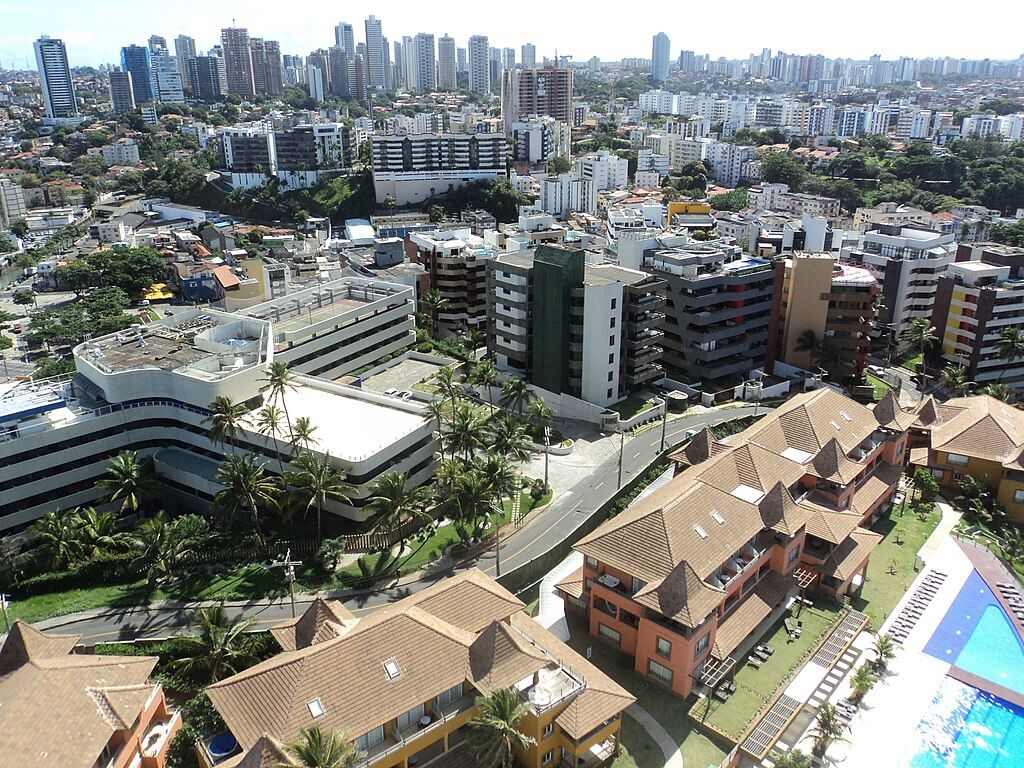
Salvador de Bahia, officially São Salvador da Bahia de Todos os Santos, is Bahia's capital and the cultural heart of Brazil's Northeast. Founded in 1549 on a peninsula between Todos os Santos Bay and the Atlantic Ocean, it was the capital of colonial Brazil for more than two centuries and remains one of the country's largest cities, with about 2.4 million people. Its predominantly Afro-Brazilian population gives it a distinctive character in music, religion, food, and festivals, while its historic colonial center is a UNESCO World Heritage Site.
Founding and Setting
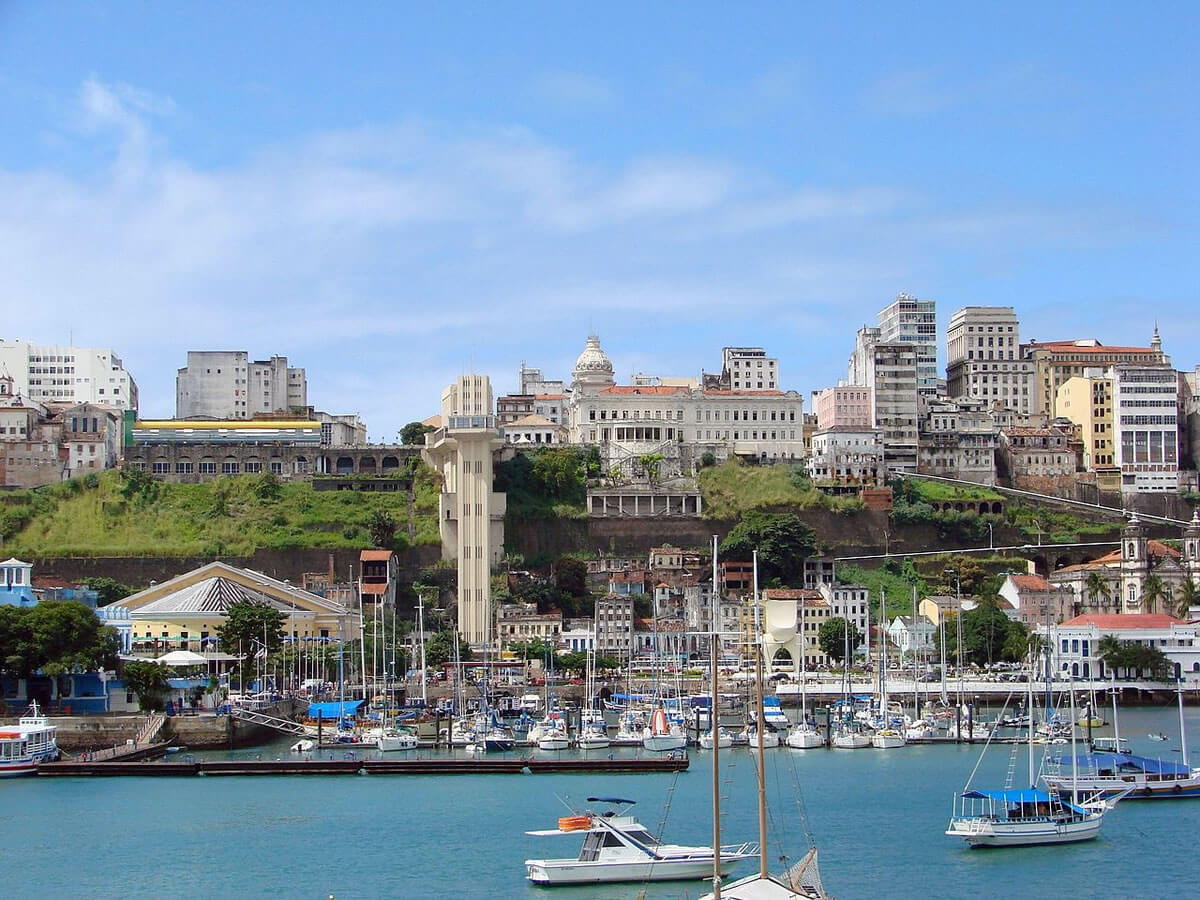
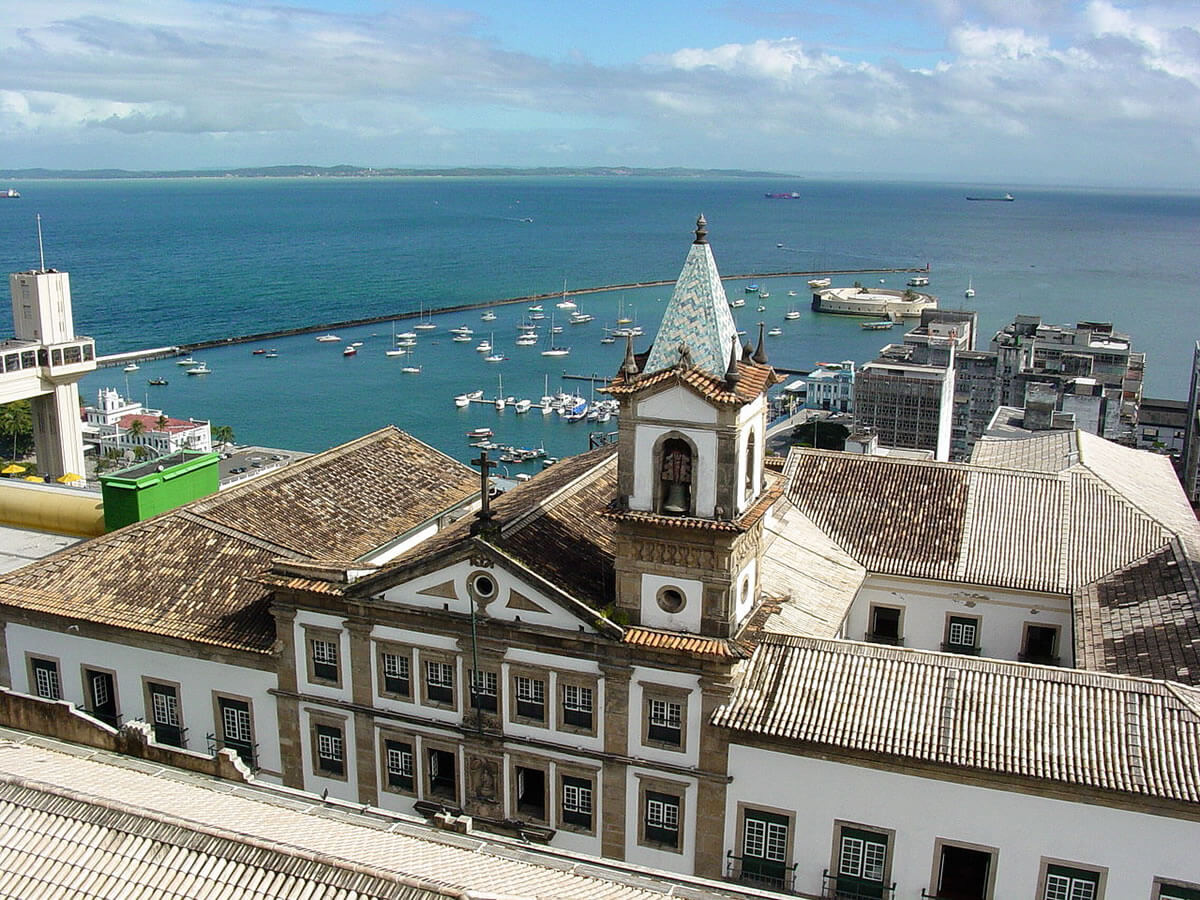
The Portuguese governor-general Tomé de Sousa founded the city on 29 March 1549 as Brazil's seat of royal government. It served as the colonial capital until 1763, when the seat of government moved to Rio de Janeiro. Its location offered an excellent natural harbor: the bay is sheltered, deep enough for large ships, and bordered by the fertile Recôncavo lowlands, which became the center of sugar production. The Dutch briefly held the city in 1624 and 1625. Today, the municipality covers about 693 km² (268 sq mi) and sits only a few meters above sea level at the water's edge, though much of the city rises on hills behind it.
The Upper and Lower Cities
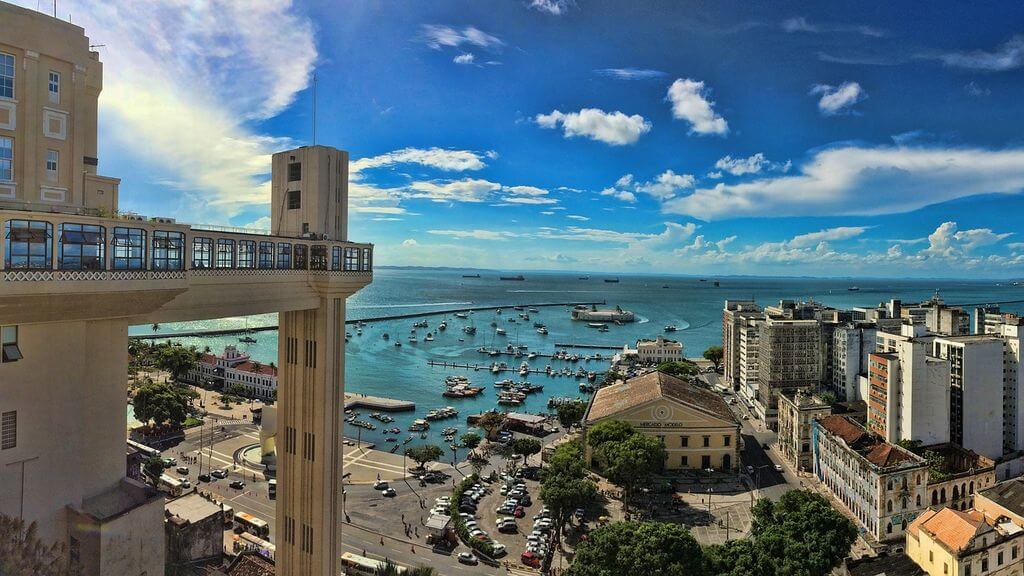
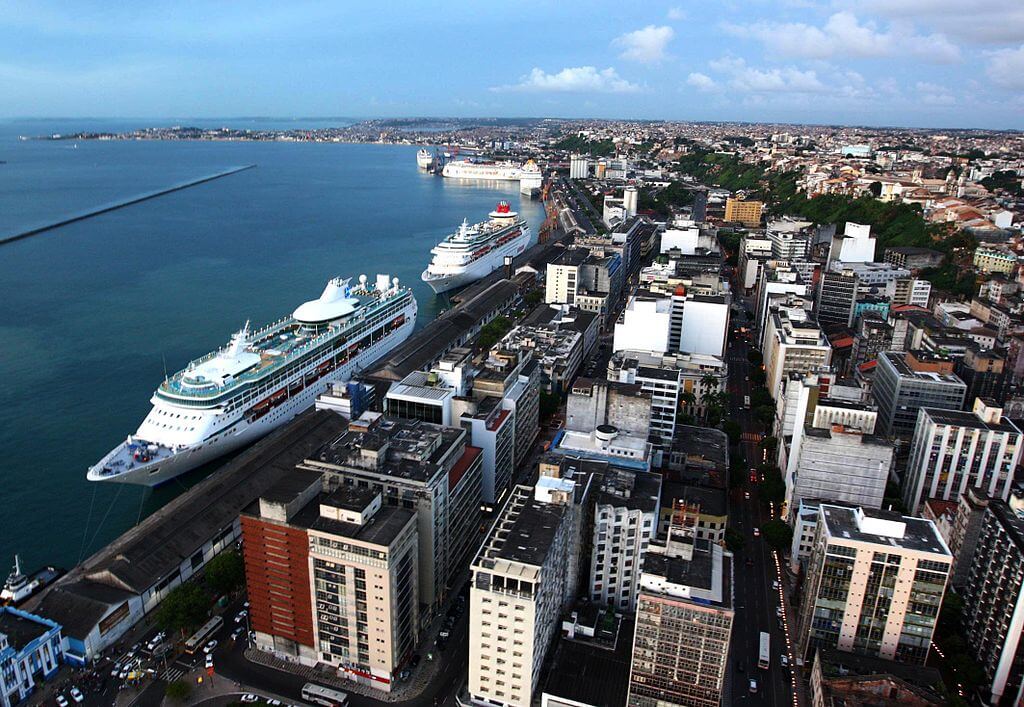
An escarpment about 85 m (279 ft) high divides Salvador into the Cidade Alta, or Upper City, and the Cidade Baixa, or Lower City. The Upper City held the cathedral, government buildings, and the homes of the elite, while the Lower City held the port, markets, and commerce, and the two have always depended on each other. The Elevador Lacerda, built between 1869 and 1873, links them over a height of 72 m (236 ft). It began as a hydraulic lift, was electrified in 1906, and received its Art Deco towers in 1930. Its four cabins each carry 27 passengers, and in 2019, about 33,000 people used it daily. IPHAN, Brazil's heritage agency, listed it as a national historic monument in 2006.
People and Population
The 2022 census counted about 2.42 million people in Salvador, making it Brazil's fifth-most populous municipality, down from third in 2010. The wider metropolitan region has an estimated 3.9 million residents. In the census, about 49 percent of residents identified as pardo (mixed-race) and 34 percent as Black, making Salvador one of the largest Afro-Brazilian cities in the Americas, while about 16 percent identified as white. Catholics make up about 44 percent of the population and Protestants about 24 percent, and about 3 percent follow Umbanda or Candomblé, though many more people take part in Afro-Brazilian ceremonies and festivals alongside other faiths.
Climate
Salvador has a tropical rainforest climate moderated by sea breezes. The mean temperature is about 25.6 °C (78 °F) and varies little through the year; the record high is 37 °C (99 °F), and the record low is 17.5 °C (63.5 °F). Annual rainfall averages about 1,830 mm (72 in), with the wettest months from April to June and the driest in December and January, and humidity stays high at about 80 percent. The city sees roughly 2,370 hours of sunshine a year.
The Historic Center and Pelourinho
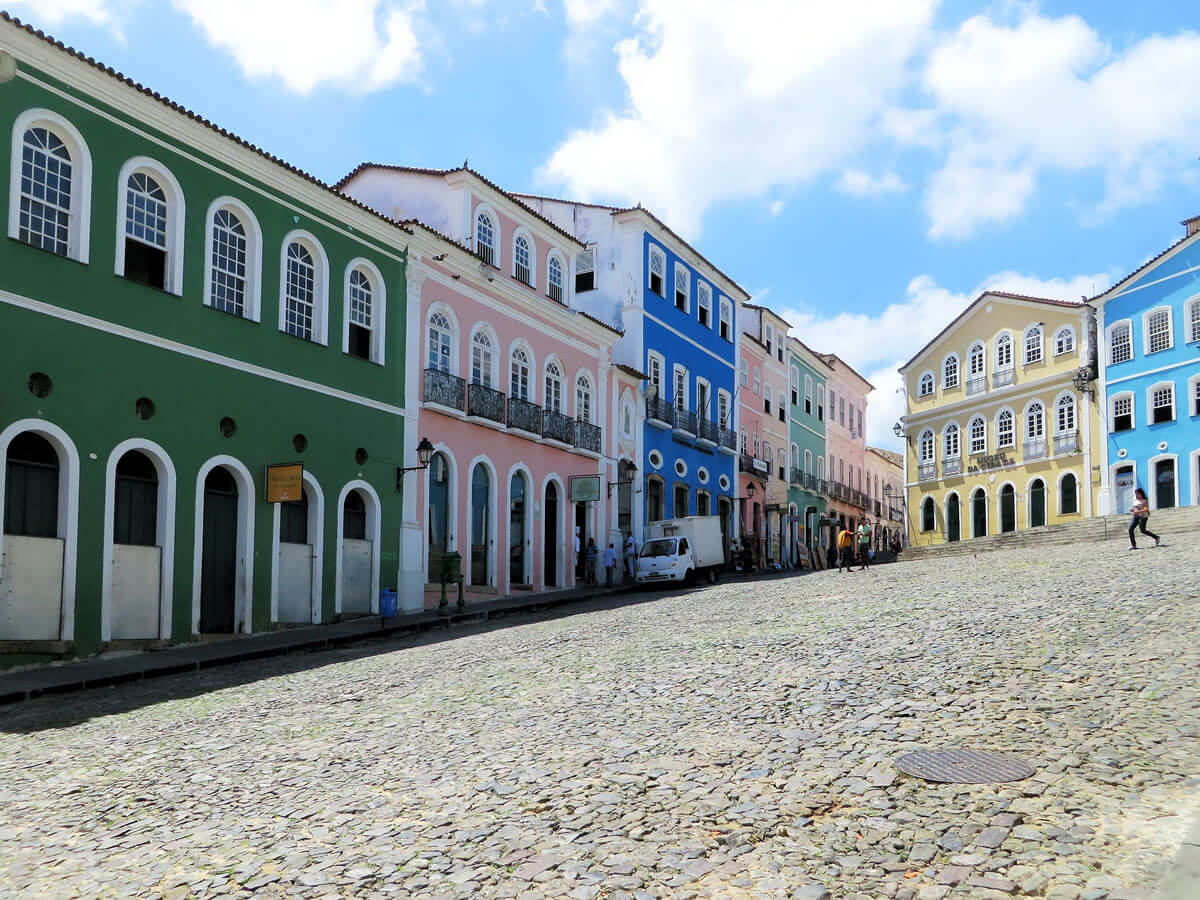
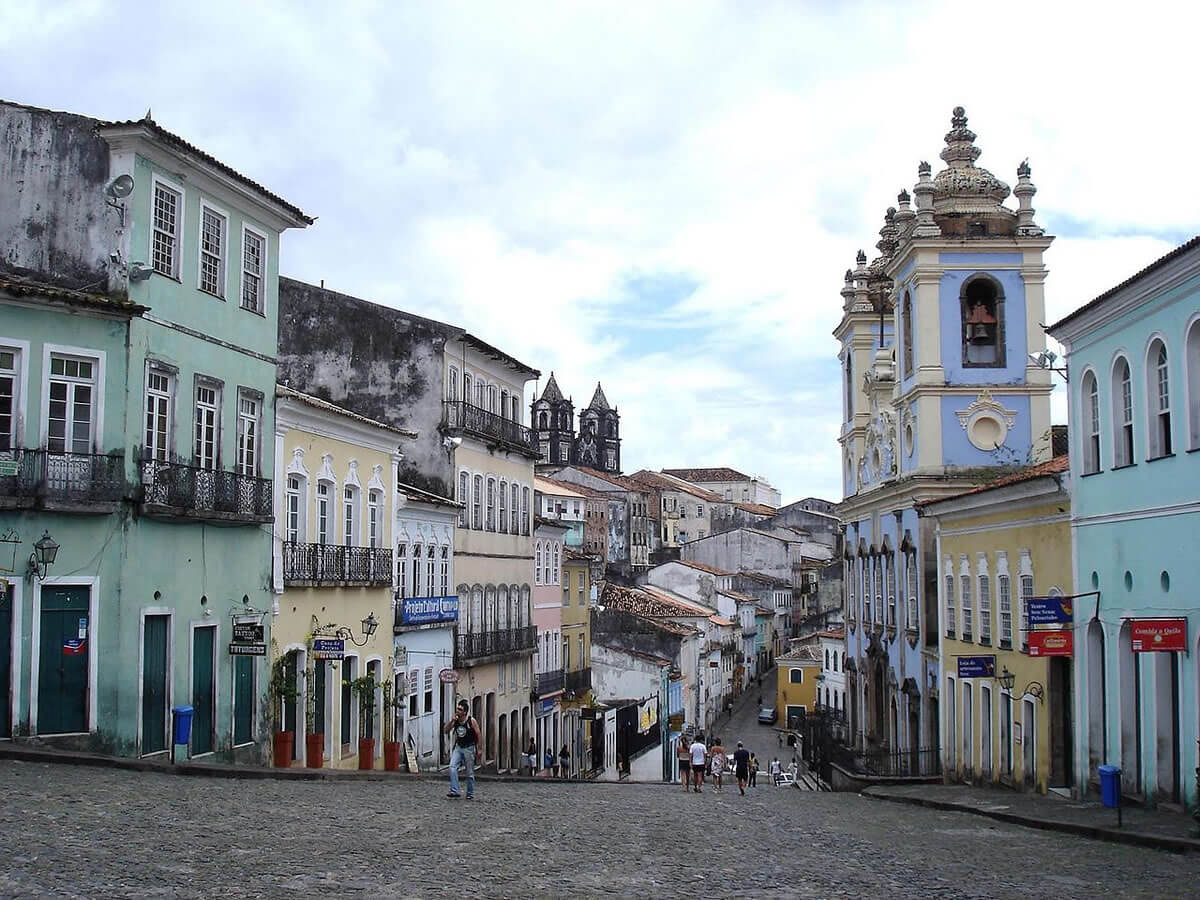
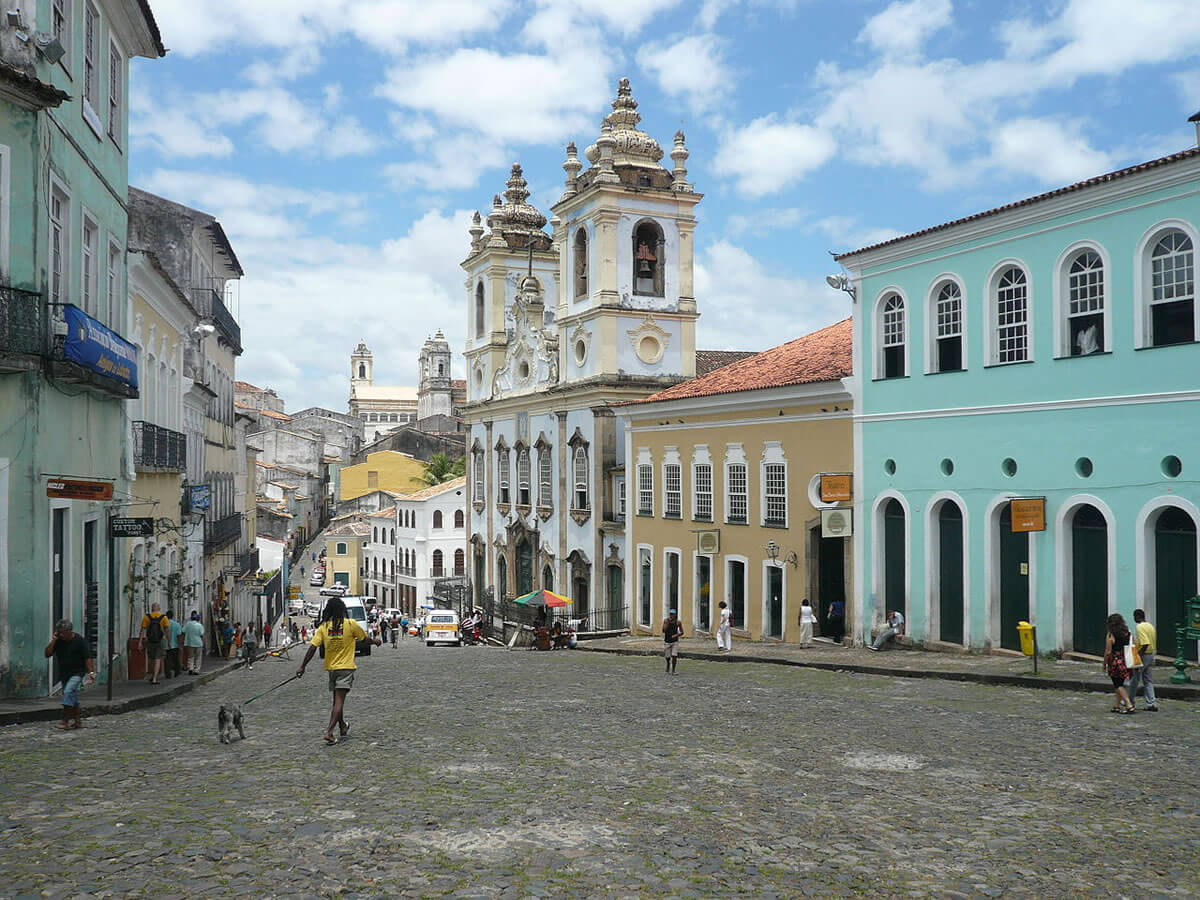
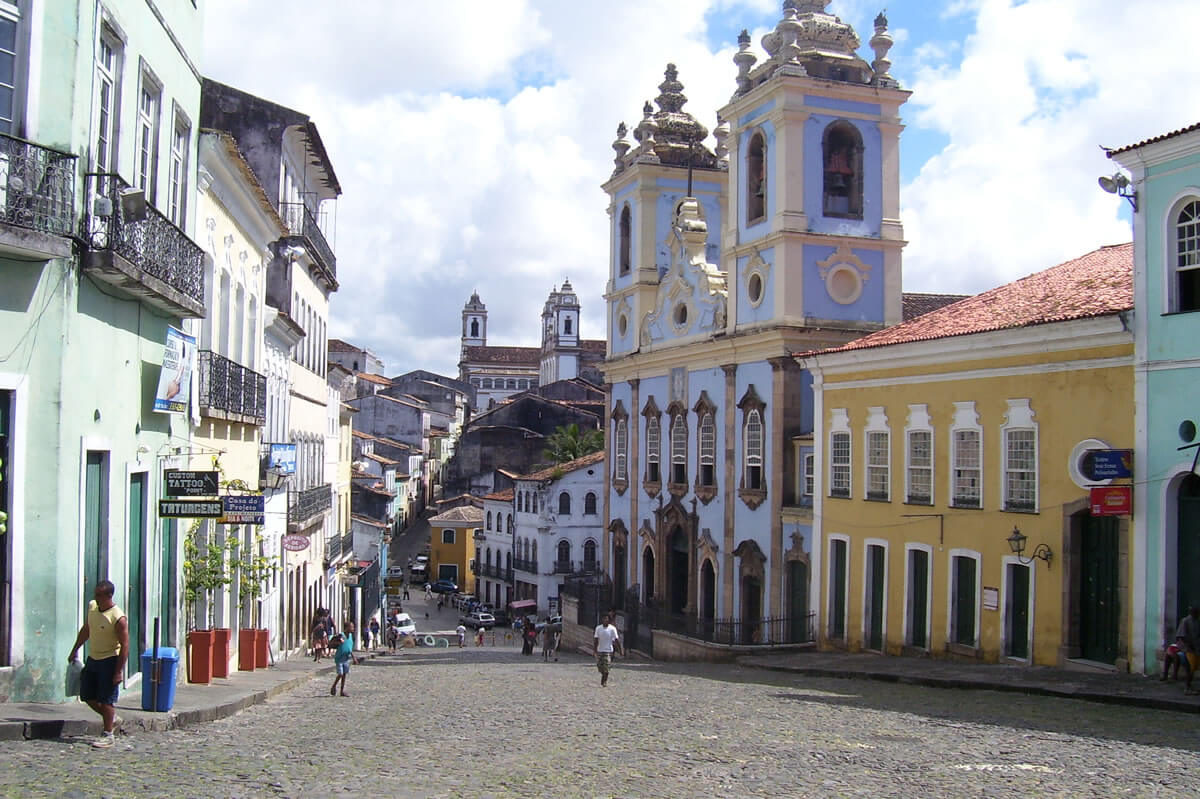
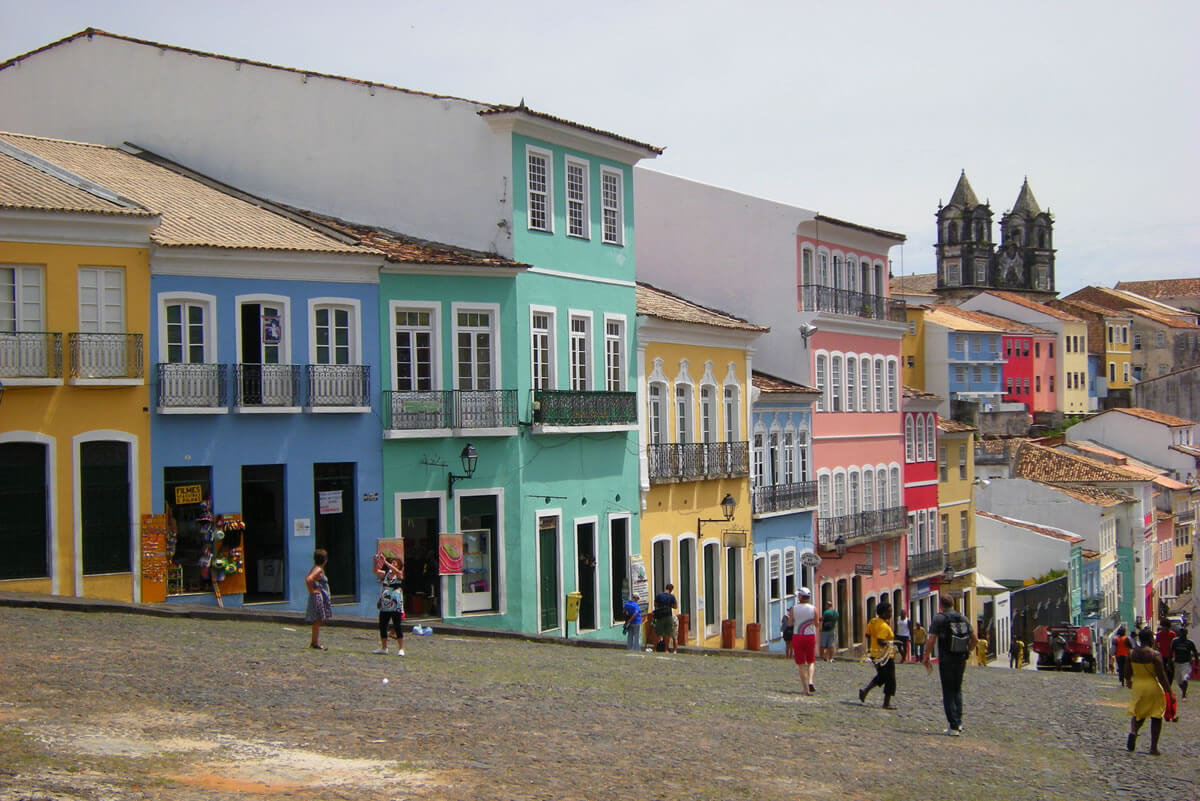
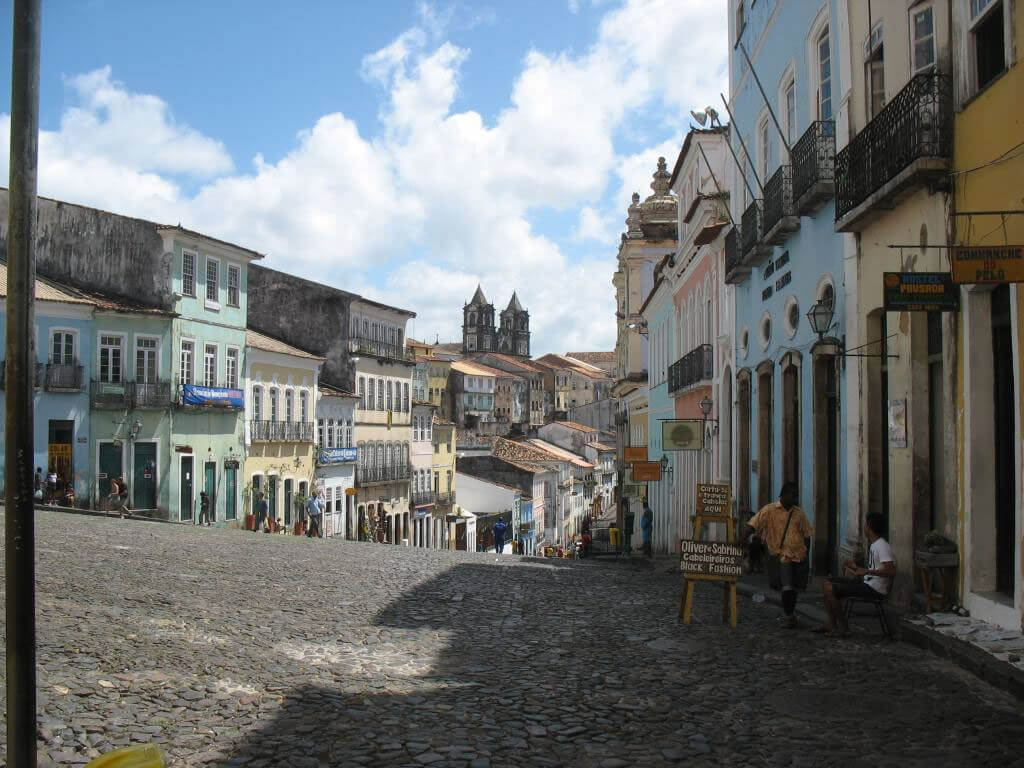
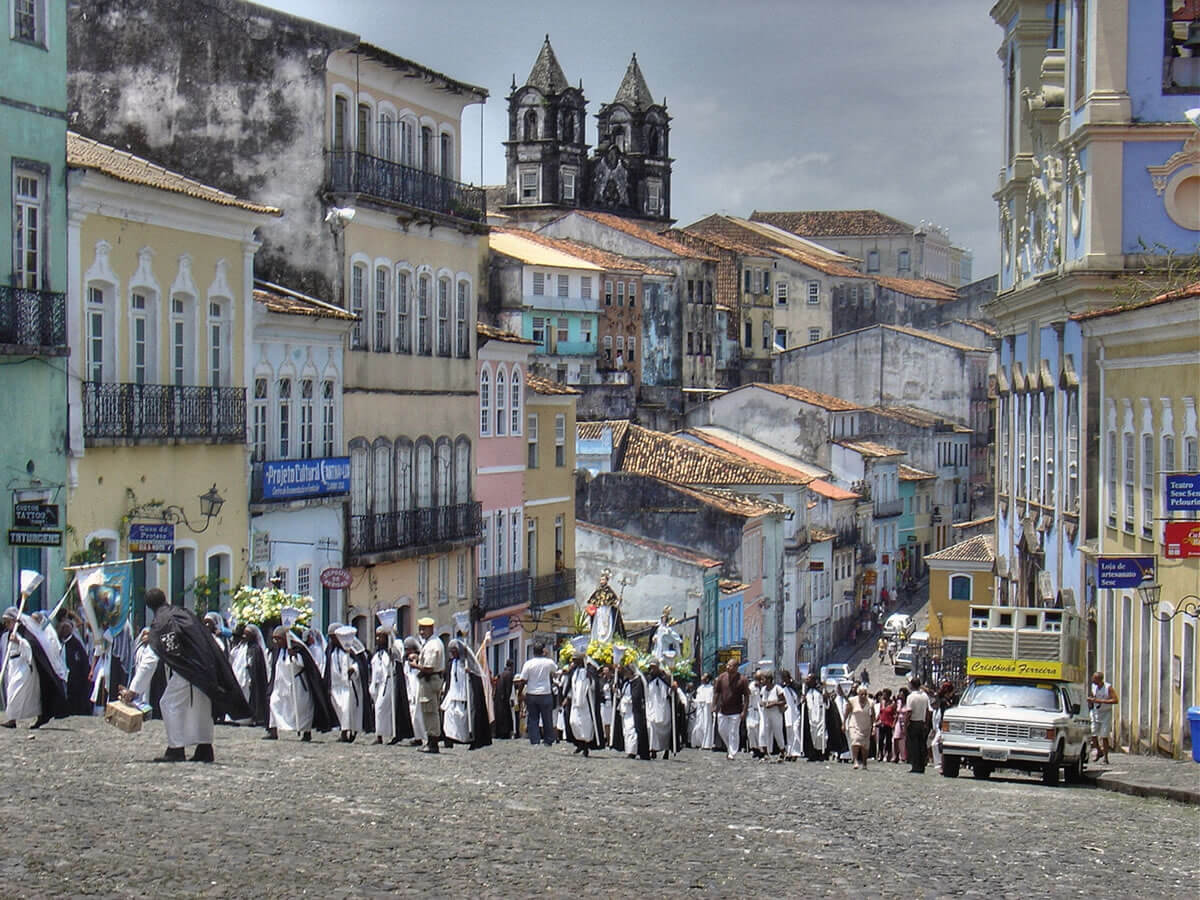
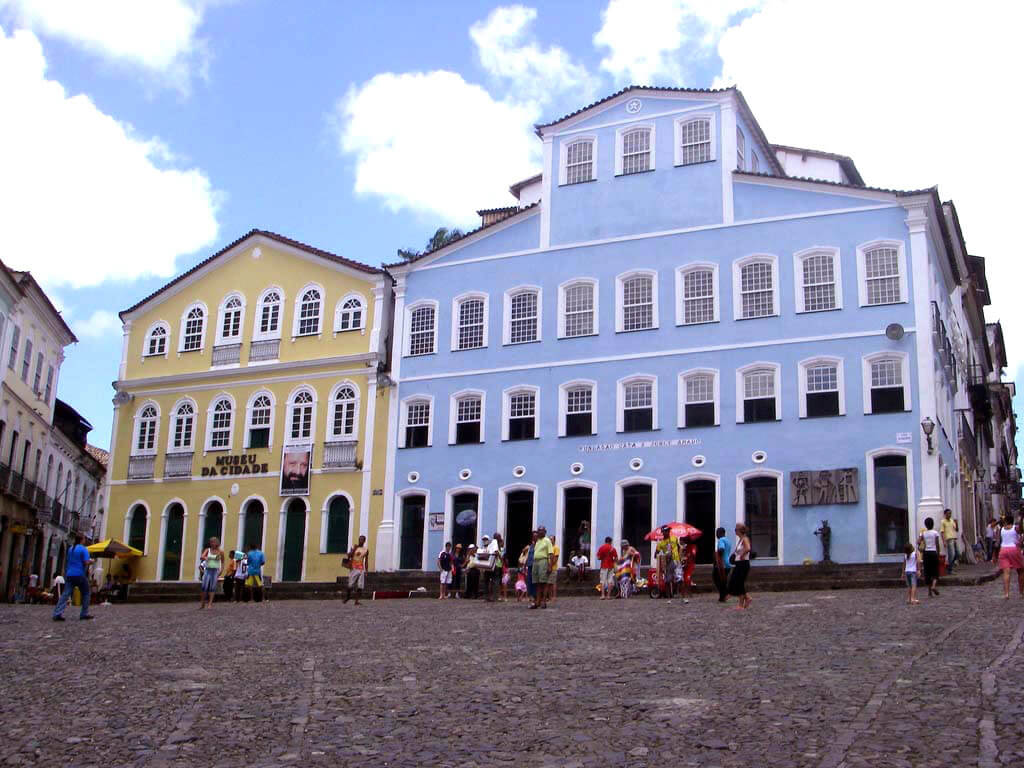
The Historic Centre of Salvador de Bahia was inscribed on the UNESCO World Heritage List in 1985, recognized for its role as a meeting point of European, African and Indigenous cultures. The property covers about 200 ha (494 acres) and is known for its Renaissance-influenced street plan, Baroque churches and convents, and brightly colored colonial houses. UNESCO notes that Salvador became the New World's first slave market in 1558, when enslaved Africans began to be brought to work on sugar plantations. The Pelourinho district takes its name from the whipping post (pelourinho) that once stood in its main square.
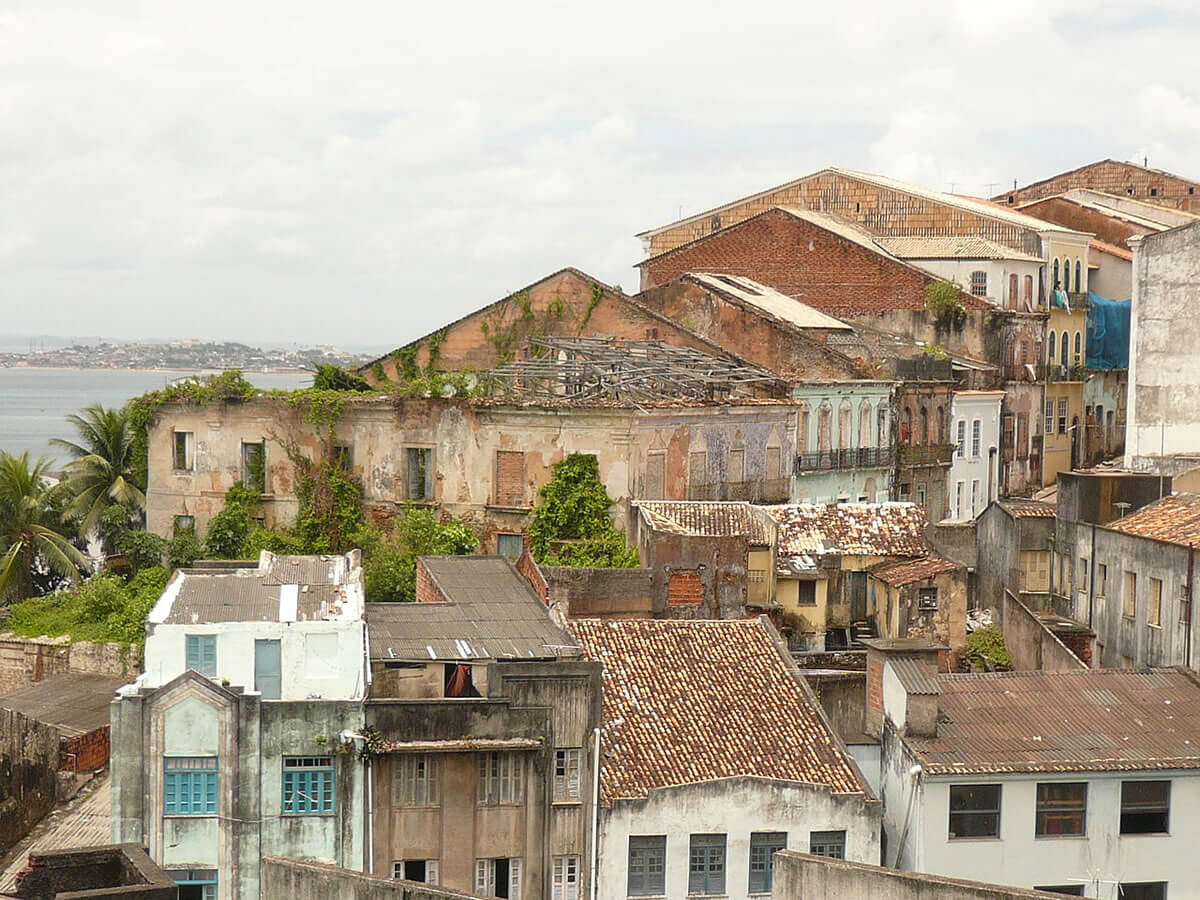
Landmarks include the Terreiro de Jesus and the cathedral; the churches of São Francisco, São Domingos, Carmo, and Santo Antônio; and palaces such as the Palácio Saldanha and Palácio Ferrão. In the 1990s, about 1,350 buildings were restored to attract tourism, but UNESCO records note that the program coincided with a sharp fall in residents, from 9,853 in 1980 to 3,235 in 2000, so the area is better known for visitors than for neighbors.
Afro-Brazilian Culture
Africans from many regions, including the Yoruba, Fon, and Bantu-speaking peoples, shaped Salvador's music, religion, and food. Candomblé, a religion that blends African deities (orixás) with elements of Catholicism, is practiced in houses called terreiros across the city, and each year Salvador honors Iemanjá, the goddess of the sea, with offerings carried to the water. Capoeira, the martial art and dance, has some of its most important schools here, and drum groups such as Olodum, Ilê Aiyê and Timbalada helped shape Brazilian popular music. UNESCO has named Salvador a City of Music in its Creative Cities Network.
The cuisine reflects the same heritage. Palm oil (azeite de dendê), pressed from the African oil palm (Elaeis guineensis), flavors dishes such as moqueca baiana, vatapá, caruru and bobó de camarão, while acarajé, a fritter of black-eyed peas (Vigna unguiculata) fried in dendê and sold by women in white dresses known as baianas, is both street food and a Candomblé offering.
Carnival
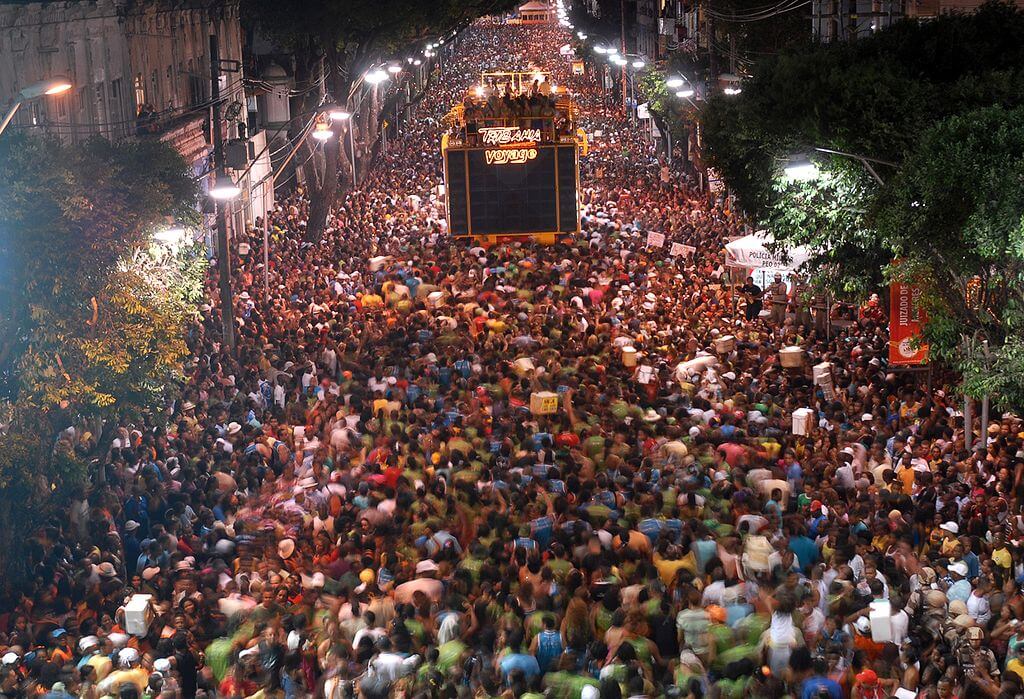
Salvador's Carnival is one of the world's largest street festivals. Bands play from sound trucks called trios elétricos along the main circuits in Barra-Ondina and the historic center, and Afro-Brazilian blocos such as Ilê Aiyê parade through the city's neighborhoods. Press accounts have put total participation at close to 4 million people along about 25 km (16 mi) of routes over the week. For the 2026 Carnival, held from 12 to 18 February, the city's tourism observatory expected more than 1.2 million visitors and about R$ 2.6 billion in spending.
Economy and Transport
Salvador is Bahia's commercial center, and services, commerce, and tourism drive its economy. The Port of Salvador, opened in 1913 and run by the state port authority Codeba, handled 3.2 million tonnes of cargo in the first half of 2025, including fruit exports, containers and bulk goods, and it also receives cruise ships: 62 cruise calls were scheduled for the 2025-2026 season. Industry is concentrated around the city rather than in it. The Mataripe oil refinery at São Francisco do Conde and the petrochemical complex at Camaçari lie within the metropolitan region, and in October 2025 the Chinese carmaker BYD inaugurated a plant at Camaçari, on the site of the former Ford factory, with an initial capacity of 150,000 vehicles a year and an investment of R$ 5.5 billion.
The city's international airport, Deputado Luís Eduardo Magalhães, lies about 28 km (17 mi) north of downtown. A metro line has run between Lapa and Pirajá since 2014, and a light-rail line (VLT) is being built through the Subúrbio Ferroviário, planned for 43.7 km (27 mi) in three stretches. Passenger service began in an assisted-operation phase in mid-2026 and, as of September 2026, ran about 6 km (4 mi) between São João do Cabrito and the Calçada station. Ferries cross the bay from near the Mercado Modelo to Itaparica.
Parks and Green Space
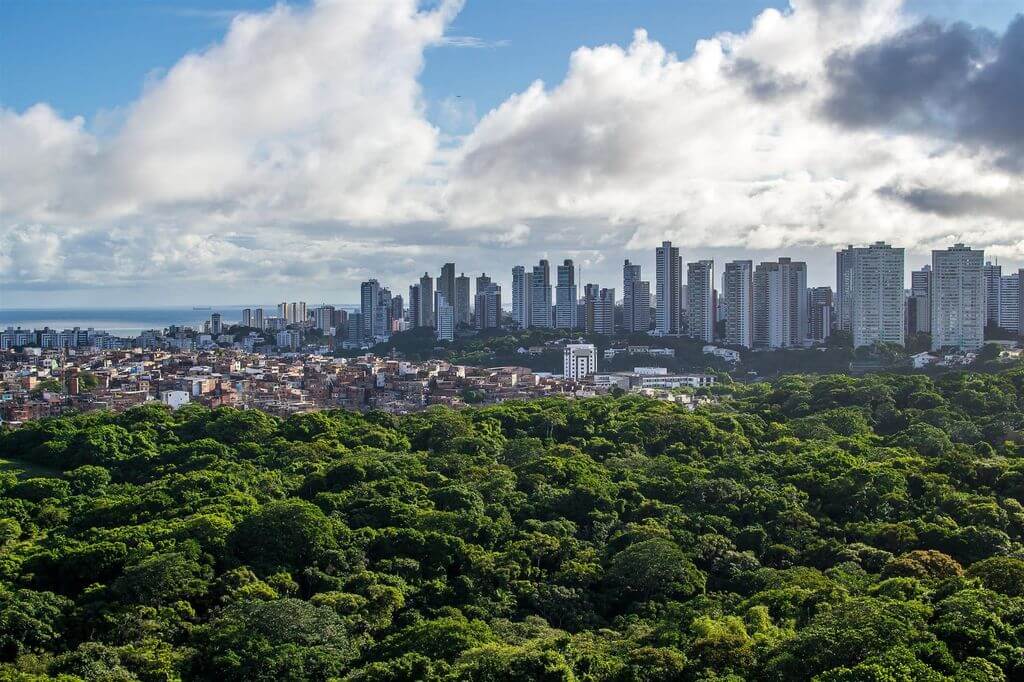
Despite its size, Salvador still holds pockets of nature. The Pituaçu Metropolitan Park, created in 1973, covers about 450 ha (1,112 acres) around a lake and Atlantic Forest remnants and has a 38 km (24 mi) cycle path, while the Abaeté Metropolitan Park protects 225 ha (556 acres) of dunes and lagoons near the beaches of Itapuã. Beaches such as Porto da Barra in the city center are among the best-known in Brazil.
Football
The city's two clubs, Esporte Clube Bahia and Esporte Clube Vitória, share a long rivalry. Bahia won the first Brazilian Cup (Taça Brasil) in 1959 and the national league in 1988, and Vitória won the Copa do Brasil in 2010. The Arena Fonte Nova hosted matches in the 2013 Confederations Cup, the 2014 World Cup and the 2016 Olympic football tournament.
Conclusion
Salvador joins one of the oldest colonial cities in the Americas with the living culture of the African diaspora, and its harbor, hills and neighborhoods still tell that story. How the city balances heritage, tourism, and the needs of its residents will shape its next chapter.