
Chiloé Island and Archipelago: A Mystical Realm of Nature and Culture in Southern Chile
Nestled in the pristine waters of southern Chile, the Chiloé Archipelago stands as a mystical realm where nature's grandeur seamlessly intertwines with a rich tapestry of cultural enchantment. At the heart of this breathtaking collection of islands lies Chiloé Island, the crown jewel of the chain.
Chiloé: Chile's Enchanted Archipelago of Biodiversity and Folklore
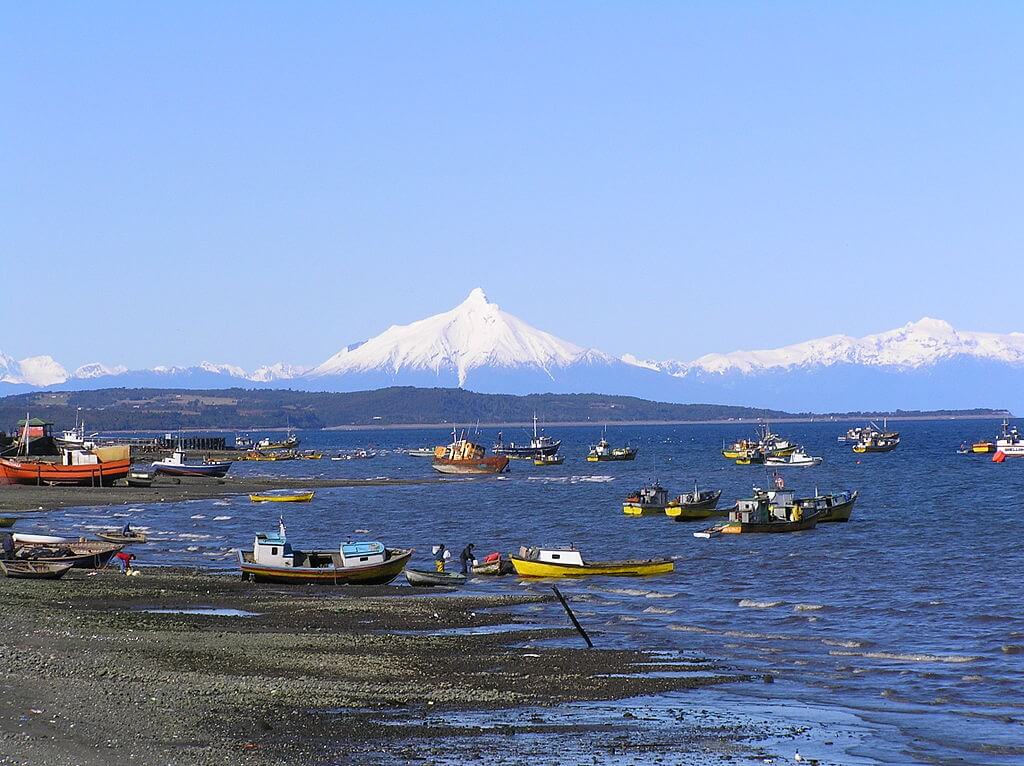
Nestled in the pristine waters of southern Chile, the Chiloé Archipelago stands as a mystical realm where nature's grandeur intertwines seamlessly with a rich cultural tapestry. This breathtaking collection of more than forty islands, separated from the mainland by the narrow 2-kilometer-wide (1.2-mile) Chacao Channel to the north and the vast Sea of Chiloé to the east, beckons travelers to discover a world where ancient traditions, distinctive architecture, and culinary excellence coexist with extraordinary biodiversity. The World Wildlife Fund has recognized the archipelago as one of twenty-five priority areas for global ecosystem conservation.
The Crown Jewel: Chiloé Island
At the heart of this archipelagic wonder lies Chiloé Island (Isla Grande de Chiloé), the crown jewel of the chain and Chile's second-largest island. This sprawling landmass spans 8,394 square kilometers (3,241 square miles), making it the fifth-largest island in South America. Stretching approximately 190 kilometers (118 miles) from north to south, with an average width of 55 to 65 kilometers (34 to 40 miles), Chiloé Island boasts diverse landscapes that have captivated explorers and naturalists for centuries.
Geography and Climate
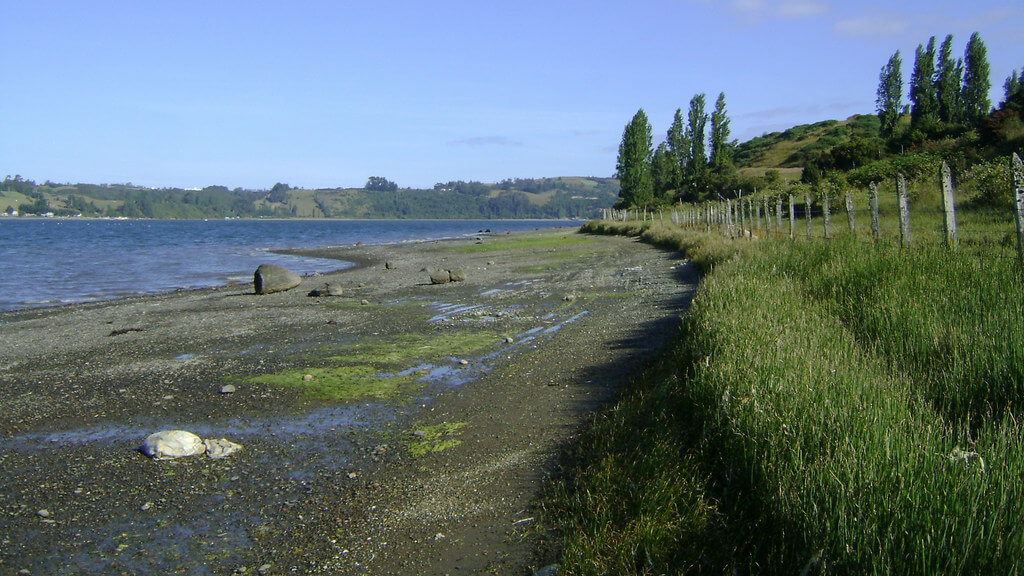
Two parallel mountain ranges run north to south along the island's spine: the Cordillera del Piuchén in the north, reaching elevations of approximately 900 meters (2,953 feet), and the Cordillera de Pirulil in the central-southern region. The island displays striking geographical contrasts—its southwestern half remains a wilderness of contiguous forests, wetlands, and swamps, while the northeastern sectors are dominated by rolling hills with pastures, forests, and cultivated fields.
Chiloé experiences a humid, cool temperate maritime climate with average annual temperatures of approximately 11°C (52°F). The western side receives the brunt of Pacific weather systems, making it one of the world's wettest regions, with annual precipitation often exceeding 2,000 millimeters (79 inches). This abundant rainfall, combined with cool temperatures, creates ideal conditions for temperate rainforests—a globally rare ecosystem type. The eastern sectors experience somewhat milder conditions, protected from Pacific storms by the intervening mountains.
The island's geological character was profoundly shaped by the Llanquihue glaciation, which ended approximately 12,500 years ago. Massive ice sheets carved the landscape, creating the Chacao Channel and effectively transforming Chiloé from a mainland peninsula into an island.
Maritime Settlements and Access
The island's capital, Castro, nestled on the eastern shore, serves as the administrative and cultural hub. Founded in 1567, Castro represents one of Chile's oldest continuously inhabited cities. Ancud, situated at the island's northwestern corner near the Chacao Channel, ranks as the second-largest town. Other significant settlements include Quellón at the southern tip, Dalcahue with its famous Sunday artisan market, and Chonchi, known as the "Ciudad de los Tres Pisos" (City of Three Floors) due to its distinctive hillside architecture. Together, these communities support approximately 168,000 residents, predominantly concentrated along the eastern and northern coasts.
Access to the archipelago is provided by frequent ferry service across the Chacao Channel, with Mocopulli Airport near Dalcahue offering commercial air service since 2012.
A Living Tapestry of Folklore and Tradition
Chiloé's allure extends far beyond its natural splendor; it is a cultural melting pot where folklore, mythology, cuisine, and unique architectural styles have flourished over centuries. The islands have been home to diverse peoples, from the ancient Chonos, seafaring nomads skilled in navigating treacherous waters in traditional dalca boats, to the Huilliches, coastal peoples who practiced horticulture and fishing. This Indigenous heritage merged with Spanish colonial influences beginning in 1567, creating vibrant traditions that permeate every aspect of island life.
Chilote Mythology: A Unique Spiritual Landscape
Chilote mythology represents one of South America's most elaborate folkloric traditions, born from the fusion of Huilliche Indigenous beliefs with Spanish Catholic elements. The mythology reflects the paramount importance of the sea in Chilote life while addressing social and environmental dimensions of island existence.
The mythological hierarchy begins with cosmic sea serpents Tenten Vilu and Caicai Vilu, whose legendary battle is said to have created the archipelago itself. According to tradition, Caicai Vilu caused waters to rise in anger, while Tenten Vilu raised the mountains to save humanity—the resulting landscape of islands and submerged valleys reflects this eternal struggle between land and sea.
La Pincoya, perhaps the most beloved figure, appears as a beautiful woman with golden hair, adorned with seaweed. Her dance determines marine abundance: if she dances facing the ocean, fish and shellfish will be plentiful; if her back is to the sea, scarcity will follow. This legend establishes environmental ethics, prescribing sustainable harvesting practices.
The terrestrial realm hosts El Trauco, a grotesque forest-dwelling dwarf approximately 90 centimeters (3 feet) tall who carries a stone axe and possesses an irresistible breath that seduces young women. His wife, La Fiura, lures men to waterfalls where she either kills them or drives them insane.
Among the darkest elements are the Brujos (witches) of the Recta Provincia, a secret society that allegedly wielded considerable influence throughout the nineteenth century. According to legend, they commanded powerful sorcery. They traveled aboard the ghost ship El Caleuche—a spectral vessel crewed by drowned sailors that navigates through fog, its hull blazing with eerie light while sounds of revelry echo across the waters.
Other beings include the Camahueto, a single-horned aquatic creature whose horn possesses healing properties, and the Basilisco Chilote, a serpent with a cockerel's head. This rich mythological tradition persists in contemporary Chilote culture, informing artistic expression, social customs, and environmental attitudes.
Architectural Marvels
One of the most striking aspects of Chiloé's cultural heritage is its unique architecture, representing a sophisticated fusion of Indigenous building techniques and European design principles.
The Iconic Palafitos
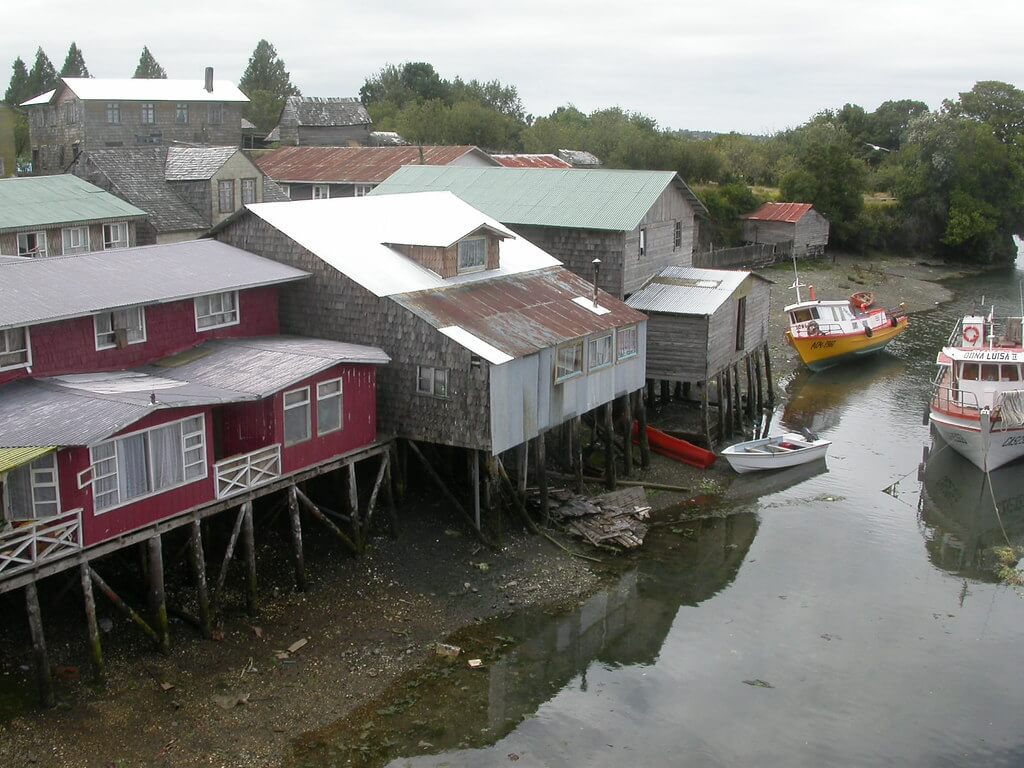
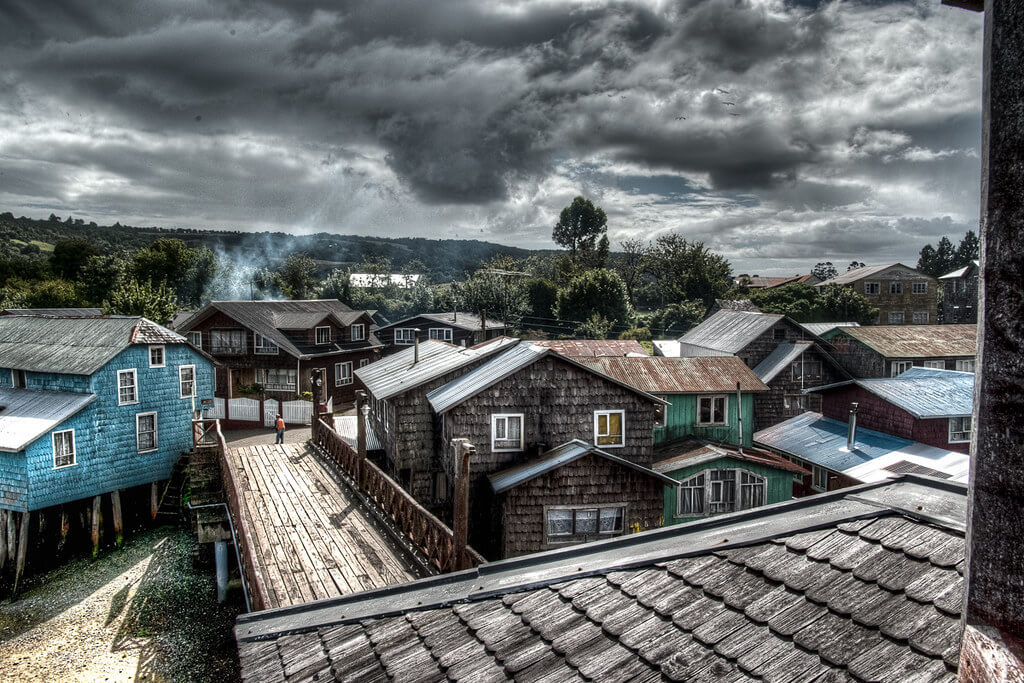
The iconic palafitos, or stilt houses, dot the coastlines of Castro, Chonchi, and other settlements. These structures, constructed on wooden stilts driven deep into the intertidal zone, accommodate the region's dramatic tidal variations—which can exceed 6 meters (20 feet)—while protecting inhabitants from coastal flooding. The palafitos are painted in vivid colors—deep reds, blues, yellows, and greens—creating a visual spectacle that has become synonymous with Chiloé's identity. Many palafitos house families on upper levels, while using the lower levels for boat storage and direct access to the sea for fishing.
The Churches of Chiloé
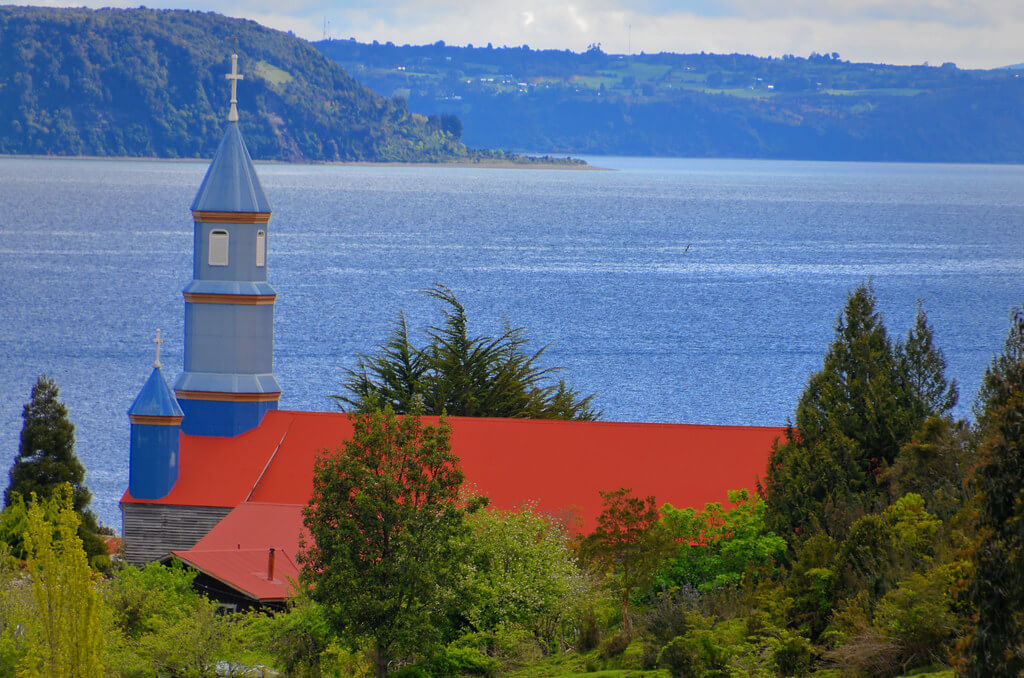
The architectural marvels known as the Churches of Chiloé have earned global recognition. Sixteen remarkable wooden churches scattered across the islands were inscribed as a UNESCO World Heritage Site in 2000, recognized for their outstanding universal value. These churches exemplify a distinctive architectural school that emerged from collaboration between Jesuit missionaries and Indigenous Chilote artisans, utilizing entirely native timbers including Fitzroya cupressoides (alerce), Nothofagus dombeyi (coihue), and other species.
The Church of San Francisco in Castro, with its imposing bell towers rising 42 meters (138 feet) and ornate neo-Gothic facade painted in vibrant orange and purple, stands as the most photographed example. The Church of Santa María de Loreto in Achao, constructed in 1730, is the oldest surviving church and features exceptional interior decoration. These historic structures continue to serve their original function, hosting regular services and annual religious festivals.
A Biodiversity Hotspot
The Chiloé Archipelago constitutes a genuine biodiversity hotspot of global significance, harboring remarkable flora and fauna found nowhere else on Earth.
The Valdivian Temperate Rainforest
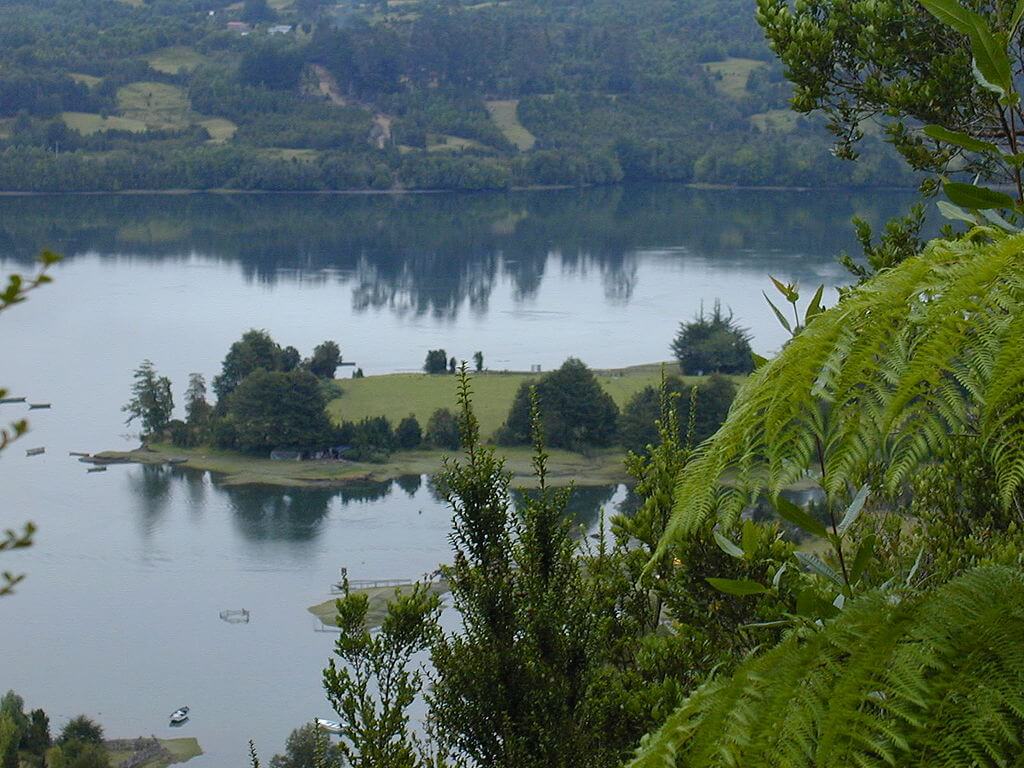
The original vegetation covering Chiloé belongs to the Valdivian temperate rainforest ecoregion, one of only five temperate rainforest systems in the world and the only one in South America. The western and southern portions of Chiloé Island remain largely cloaked in primary forest, featuring a dense, multi-layered canopy. The forest floor supports an extraordinary profusion of mosses, liverworts, lichens, and ferns that thrive in perpetually humid conditions.
Dominant tree species include Nothofagus dombeyi (coihue), reaching heights of 40 meters (131 feet); Luma apiculata (arrayán), recognizable by its cinnamon-colored bark; Gevuina avellana (Chilean hazelnut); and Drimys winteri (canelo), considered sacred in Mapuche tradition. The bamboo Chusquea quila (quila) forms dense thickets, while Chilean rhubarb (Gunnera tinctoria) produces enormous leaves up to 2 meters (6.6 feet) in diameter.
In poorly drained highland soils, two species of exceptional significance grow. Fitzroya cupressoides (alerce), a magnificent conifer endemic to southern Chile, ranks among the longest-lived tree species on Earth, with individuals documented to exceed 3,600 years in age. These giants can reach heights of 50 meters (164 feet) and have trunks exceeding 5 meters (16.4 feet) in diameter. The species is now protected under Chilean law. Tepualia stipularis (tepú) thrives in waterlogged, acidic soils, forming distinctive pure stands in poorly drained areas.
Endemic and Rare Fauna
Several species found on the islands occur nowhere else in the world or exist only in small, fragmented populations.
Darwin's Fox (Lycalopex fulvipes): Perhaps the most famous endemic mammal is Darwin's fox, named after Charles Darwin, who collected the first specimen on San Pedro Island off Chiloé's coast in December 1834. This small canid weighs only 1.8 to 3.95 kilograms (4.0 to 8.7 pounds) with darker pelage than related species. The species occurs in two populations: approximately 412 individuals on Chiloé Island and a smaller mainland population of roughly 227 individuals. Classified as Endangered by the IUCN, the species faces threats from habitat loss, disease transmission from domestic dogs, and vehicle strikes.
Southern Pudú (Pudu puda): The southern pudú represents one of the world's two smallest deer species, standing only 35 to 45 centimeters (14 to 18 inches) at the shoulder and weighing 7 to 13 kilograms (15 to 29 pounds). This diminutive cervid inhabits the dense understory of Valdivian temperate rainforest, with Chiloé supporting significant populations. The pudú faces population declines due to habitat fragmentation, though it adapts to disturbed habitats better than many rainforest specialists.
Avian Diversity: The Chucao tapaculo (Scelorchilus rubecula) is a ground-dwelling bird with a loud call that echoes through the forest. In Chilote folklore, the Chucao serves as an omen bird: if its call comes from the right side of a traveler, good fortune lies ahead; if from the left, danger awaits. The Magellanic woodpecker (Campephilus magellanicus), South America's largest woodpecker, requires mature forest with standing dead trees. Des Murs's wiretail (Sylviorthorhynchus desmursii) features elongated tail feathers twice the bird's body length. The green-backed firecrown (Sephanoides sephaniodes) pollinates numerous native plants.
Marine Wildlife
The waters surrounding Chiloé support extraordinary marine biodiversity. The Chilean dolphin (Cephalorhynchus eutropia), endemic to Chilean coastal waters, finds one of its strongholds in protected channels around Chiloé. The blue whale (Balaenoptera musculus), Earth's largest animal, migrates through waters around Chiloé, particularly in the Gulf of Corcovado, feeding on dense krill aggregations. Humpback whales (Megaptera novaeangliae) and the endangered southern right whale (Eubalaena australis) are also occasionally observed.
The South American sea lion (Otaria flavescens) establishes breeding colonies on rocky islands throughout the archipelago. The marine otter (Lontra felina), also known as the chungungo, is classified as Endangered and forages in rocky intertidal zones. The southern river otter (Lontra provocax) inhabits freshwater systems, including the Chepu River.
The Humboldt penguin (Spheniscus humboldti) and Magellanic penguin (Spheniscus magellanicus) both nest at the Puñihuil Islets, one of the few locations worldwide where these species nest together. Numerous albatrosses, petrels, and shearwaters utilize the waters around the archipelago as feeding grounds.
A Culinary Paradise
Chiloé's cultural richness manifests profoundly in its unique culinary traditions, shaped by the archipelago's marine abundance and agricultural practices over centuries of relative isolation.
The Iconic Curanto
The curanto stands as Chiloé's most emblematic dish, an elaborate feast cooked in a pit oven—a technique inherited from the Chono people. Traditional preparation involves heating stones until red-hot, lining a pit with these stones and nalca leaves (Gunnera tinctoria), then layering shellfish, including Mytilus chilensis (Chilean mussels) and Concholepas concholepas (loco); chunks of pork, chicken, and lamb; smoked sausages called longanizas; potato dumplings known as milcaos and chapaleles; and sealing with more nalca leaves and earth. After steaming for 2 hours, the result is a succulent feast where flavors meld. Curanto is invariably a communal event that reinforces social bonds through shared abundance.
Potato Diversity and Traditional Dishes
Chiloé harbors an extraordinary genetic diversity of potatoes, with more than 400 native varieties (Solanum tuberosum) cultivated by Chilote farmers. The archipelago is recognized as a center of potato domestication, where Indigenous peoples developed varieties adapted to local conditions over millennia. These heirloom potatoes display remarkable variation in size, shape, color, and flavor—from nutty to sweet to earthy. Conservation efforts maintain these varieties as a living genetic library of global importance.
Milcaos are thick pancakes made from raw and cooked potatoes, sometimes filled with chicharrones (pork cracklings), then fried until golden. Chapaleles are boiled potato dumplings traditionally served with curanto. Cazuela chilota, a hearty stew, combines meats with potatoes, squash, and vegetables. The sea provides abundant shellfish featured prominently in Chilote cuisine—machas (razor clams), piures (Pyura chilensis), cholgas (ribbed mussels), and almejas (clams).
An Ancient Past
The Chiloé Archipelago's history extends deep into prehistory. Archaeological discoveries at Monte Verde, less than 50 kilometers (31 miles) north of Chiloé Island, suggest the region may have been populated as early as 14,500 years before present, making it one of the oldest known human settlements in the Americas. On Chiloé itself, archaeological sites dating to approximately 6,000 years before present contain shell middens and evidence of maritime adaptation.
At the time of Spanish contact in 1540, the archipelago was inhabited by the Chonos, nomadic seafarers who navigated in traditional dalca boats, and the Huilliches, who practiced mixed horticulture and fishing. Spanish colonization began with the founding of Castro in 1567. Jesuit missionaries arrived in 1608, establishing a circular mission system that profoundly shaped Chiloé's cultural development. Rather than concentrating Indigenous populations, the Jesuits adapted to Chiloé's dispersed geography by establishing numerous small chapels connected by maritime mission circuits.
The resulting cultural synthesis blended Indigenous and European elements in distinctive ways. Traditional Huilliche beliefs merged with Catholic teachings, creating unique mythological traditions. Architectural styles combined Indigenous building techniques with European design principles. This cultural fusion created a distinctive Chilote identity that persists to this day.
Contemporary Challenges
The Chiloé Archipelago faces significant challenges in the twenty-first century as economic development pressures, climate change, and demographic shifts transform island life.
Habitat loss from the conversion of native forests to pasture and plantations threatens biodiversity. The expansion of industrial salmon aquaculture since the 1980s has generated environmental concerns, including nutrient pollution, algal blooms, and disease transmission to wild fish. A massive algal bloom in 2016 caused extensive die-offs of wild shellfish and devastating economic losses for artisanal fishermen, sparking debates about sustainable development.
Climate change poses multifaceted threats, including rising sea levels that endanger coastal communities and palafito architecture, increased storm intensity, and ocean warming that threatens marine ecosystems. Conservation efforts focus on protecting remaining primary forests, with Chiloé National Park protecting 43,057 hectares (106,411 acres) and the private Tantauco Park safeguarding 118,000 hectares (291,579 acres).
Maintaining Chilote cultural heritage amid globalization presents ongoing challenges. Young people increasingly migrate to cities, resulting in the loss of traditional knowledge. Efforts to preserve traditional crafts, mythology, and foodways through documentation, education programs, and cultural festivals help maintain island heritage.
Conclusion
The Chiloé Archipelago stands as a testament to the harmonious coexistence of nature's grandeur and human ingenuity maintained over millennia. From its distinctive cultural heritage—expressed through architectural marvels, vibrant folklore, and celebrated cuisine—to its remarkable biodiversity, which harbors species found nowhere else on Earth, this enchanting realm offers a genuinely unique experience.
Whether exploring ancient forests where Fitzroya cupressoides has stood for millennia, listening to stories of La Pincoya dancing on dawn beaches, tasting the flavors of hundreds of potato varieties, or witnessing the haunting beauty of wooden churches weathered silvery gray, visitors encounter a landscape that insists on the inseparability of nature and culture, past and future, place and identity. Chiloé promises to leave an indelible mark on all who visit, unveiling a world where the mystical and the natural converge in perfect harmony.
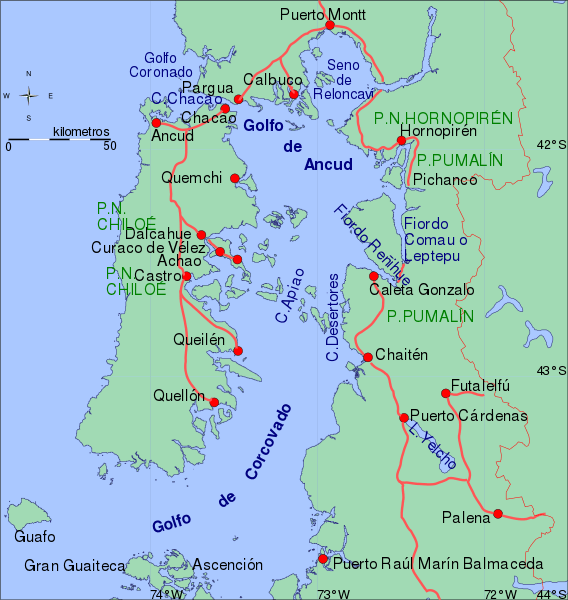
Map of Region de la Isla de Chiloé, Chile.