
The Baja California Desert: A Peninsular Realm of Aridity and Endemic Life
The Baja California Desert spans the Mexican states of Baja California Sur and Baja California Norte. It is situated on the western side of the Peninsular Ranges in the northern and central Baja California Peninsula. It forms a diverse geographical mosaic, showcasing biodiversity and resilience.
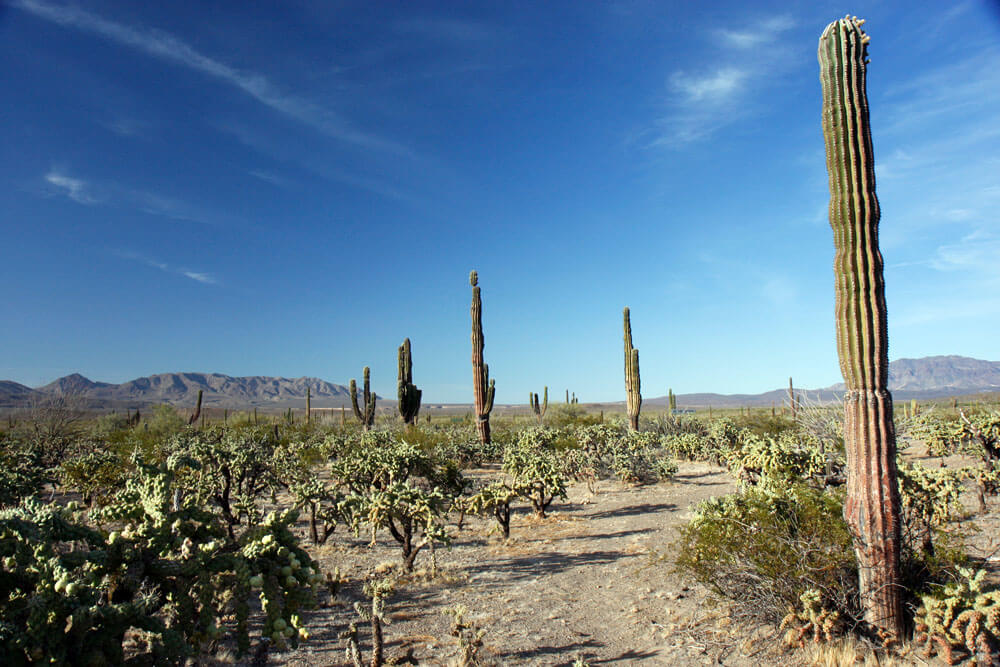
Where the Pacific Meets the Sands: Exploring Baja California's Desert Heart
Embraced by the Mexican states of Baja California Sur and Baja California Norte, the Baja California Desert unfolds not merely as a stark landscape but as a distinct and ecologically significant ecoregion, a testament to the remarkable resilience of life in arid conditions. Spanning approximately 77,700 square kilometers (30,000 square miles) along the western extent of the Baja California Peninsula, this arid marvel transcends the conventional perception of a desert, revealing itself as a complex geographical mosaic and a dynamic showcase of unique biodiversity and tenacious adaptation.
A Geographical Crossroads: Pacific Shores and Peninsular Heights
Nestled between the vast expanse of the Pacific Ocean to the west and cradled by the rugged peaks of the Peninsular Ranges to the east, the Baja California Desert showcases captivating geographical diversity. Elevations within the ecoregion fluctuate dramatically, giving rise to imposing mountain ranges with summits reaching 1,000 to 1,500 meters (3,000 to 5,000 feet), expansive plains situated at a median elevation of 300 to 600 meters (1,000 to 2,000 feet), and extensive systems of coastal dunes sculpted by the relentless Pacific winds. Its unique positioning, bordering the Sonoran Desert on the eastern slopes of the Peninsular Ranges, further enhances its distinct ecoregional identity, creating a zone of ecological overlap and potential species exchange.
A Climatic Ballet: Subtropical Dryness Tempered by the Pacific
In the intricate rhythmic dance of climate, the Baja California Desert experiences predominantly dry, primarily subtropical conditions, with a subtle tropical influence evident in its southernmost reaches. Despite the characteristically sparse rainfall that defines arid environments, this ecoregion benefits significantly from its proximity to the Pacific Ocean. The cool Pacific waters infuse a delicate but crucial humidity into the air, moderating the extreme temperature fluctuations often associated with deserts. This unique climatic interplay shapes an environment where life has ingeniously adapted to the arid embrace, utilizing coastal fog and occasional moisture to sustain itself.
A Floral Symphony of Xerophytes: Wonders of Desert Adaptation
The flora of the Baja California Desert orchestrates a remarkable symphony of xeric shrubs and cacti, testifying to nature's artistry in arid landscapes, with approximately 500 recorded species of vascular plants thriving within its bounds. Amidst the rocky, often volcanic soils that characterize the region, thick-stemmed trees and shrubs have evolved to conserve precious water, their forms often reflecting the challenges of their environment. The iconic and bizarre Boojum tree (Fouquieria columnaris), with its towering, candelabra-like form, stands as a sentinel across the landscape at elevations reaching up to 1,200 meters (3,900 feet), a unique endemic species that epitomizes the desert's singular botanical character. This is not merely a barren expanse; it is a living testament to the tenacity of plant life in the face of aridity.
A Faunal Composition of Resilience: Endemics, Raptors, and Coastal Spectacles
Wildlife takes center stage in this ecoregional drama, featuring a compelling cast of endemic and endangered species finely tuned to the often-harsh ecological conditions. Mammalian inhabitants, such as the San Quintín kangaroo rat (Dipodomys gravipes), a critically endangered endemic, and the agile Baja California rock squirrel (Otospermophilus atricapillus), have carved their specific niches within this arid realm. Avian wonders grace the skies above, with majestic raptors like the golden eagle (Aquila chrysaetos), the swift peregrine falcon (Falco peregrinus), the striking crested caracara (Caracara cheriway), the adaptable osprey (Pandion haliaetus), and the ground-dwelling burrowing owl (Athene cunicularia) adding a regal touch to the desert's fauna. Along the Pacific coast, the Ojo de Liebre Lagoon transforms into a spectacular winter refuge for millions of waterfowl, including various species of ducks, geese, and shorebirds, creating an awe-inspiring avian spectacle that highlights the interconnectedness of this desert with broader migratory patterns.
A Conservation Overture: Safeguarding a Unique Ecoregion
Preserving this unique ecoregional gem is recognized as a critical priority, leading to significant conservation efforts aimed at establishing havens for its remarkable biodiversity. Approximately 60% of the Baja California Desert falls under some form of protection, with the El Vizcaíno Biosphere Reserve standing as the heart of this conservation endeavor. As the largest protected area in all of Mexico, it serves as a vital sanctuary for the ecoregion's diverse and often endemic life forms. However, the ecoregion continues to face challenges, including the impacts of heavy cattle grazing in certain areas and unregulated hunting, which leave visible imprints on the landscape and emphasize the ongoing and crucial need for vigilant and adaptive conservation strategies to ensure the long-term health and integrity of this arid Eden.
Summary
The Baja California Desert ecoregion, which encompasses much of the Baja California Peninsula, is a unique and ecologically significant arid landscape shaped by its proximity to the Pacific Ocean and the rain shadow of the Peninsular Ranges. Characterized by a subtropical climate tempered by coastal influences, it supports a remarkable array of xeric-adapted flora, including the iconic Boojum tree, as well as a diverse fauna featuring endemic mammals and spectacular avian life. Conservation efforts, led by the El Vizcaíno Biosphere Reserve, aim to protect the unique biodiversity of this arid marvel; however, ongoing challenges necessitate continued vigilance to ensure the preservation of its delicate balance and ecological integrity.
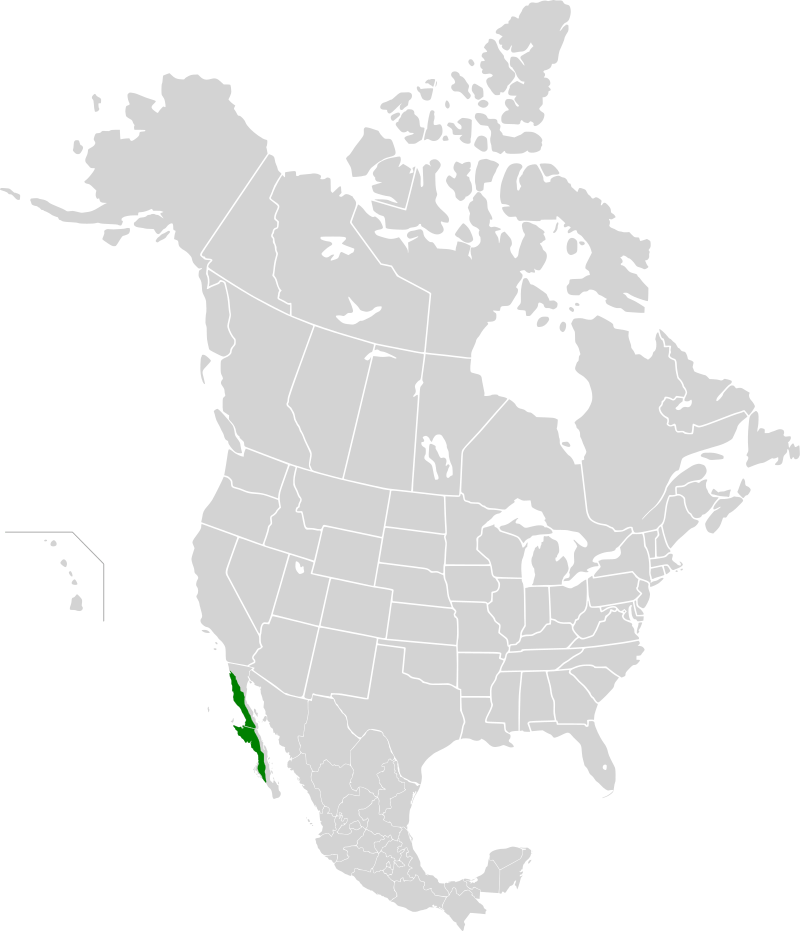
Map depicting the approximate area of the Baja California Desert ecoregion on the Baja California Peninsula (in green)