
The Sonoran Desert: Oasis of Resilience
The Sonoran Desert, Mexico's hottest desert, spans Sonora, Baja California, and Baja California Sur before extending into Arizona and California — a biodiverse desert whose Comcaac (Seri) inhabitants are the only people on Earth documented to harvest a grain crop directly from the sea.
The Sonoran Desert: Where a Desert People Learned to Harvest Grain From the Sea
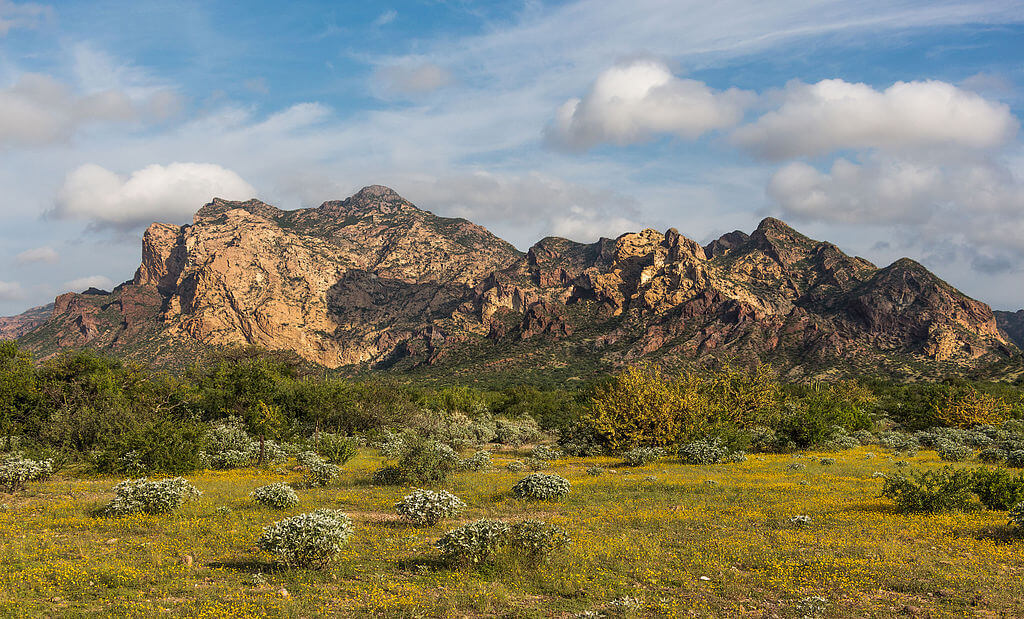
Spanning northwestern Mexico and the southwestern United States lies one of Earth's most biodiverse deserts, the Sonoran Desert. Known in Spanish as the Desierto de Sonora, and encompassing the more specific Desierto de Altar within its western reaches, this extraordinary ecosystem challenges every preconception about desert life. Here, towering saguaro and cardón cacti create forests in the sky, desert bighorn sheep navigate rocky outcrops, and brief winter rains transform barren landscapes into carpets of wildflowers. Covering about 260,000 sq km (100,000 sq mi) across four states and two countries, with most of it in Mexico's state of Sonora and the Baja California peninsula, the Sonoran Desert stands as a testament to life's remarkable ability to flourish in Earth's most demanding environments.
Geographic Extent and Boundaries
The Sonoran Desert sprawls across a vast territory that spans an international border and diverse landscapes. In Mexico, it dominates most of Sonora state and significant portions of Baja California and Baja California Sur; north of the border, it covers much of southwestern Arizona and extends into southeastern California's Imperial and Riverside counties.
The desert's boundaries are defined not by political lines but by elevation, climate, and vegetation patterns that create distinct ecological transitions. To the west, the Peninsular Ranges form a dramatic barrier separating the Sonoran Desert from California's chaparral woodlands and the cooler Baja California Desert, their rain shadow contributing directly to the Sonoran's aridity. To the north, elevation and temperature gradients create a natural boundary with the Mojave Desert and the Colorado Plateau deserts of northern Arizona, the hot Sonoran giving way to cooler, higher-elevation desert systems as elevation increases. To the east, the desert transitions into the pine-oak woodlands of the Sierra Madre Occidental and the sky-island ranges of southeastern Arizona, a boundary that shifts with elevation and creates complex gradients where desert species mingle with mountain flora. To the south, the Sonoran-Sinaloan transitional dry forest marks the desert's limit, gradually giving way to Mexico's tropical deciduous forests in Sinaloa state.
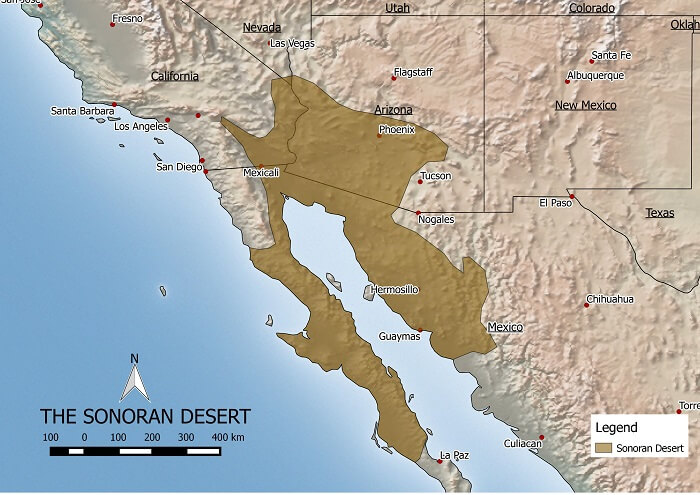
Map depicting the extent of the Sonoran Desert.
Topographical Diversity: From Sea Level to Mountain Peaks
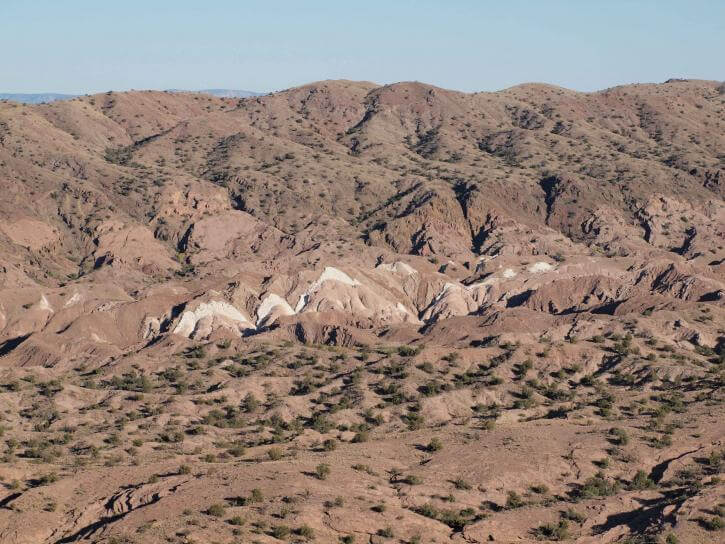
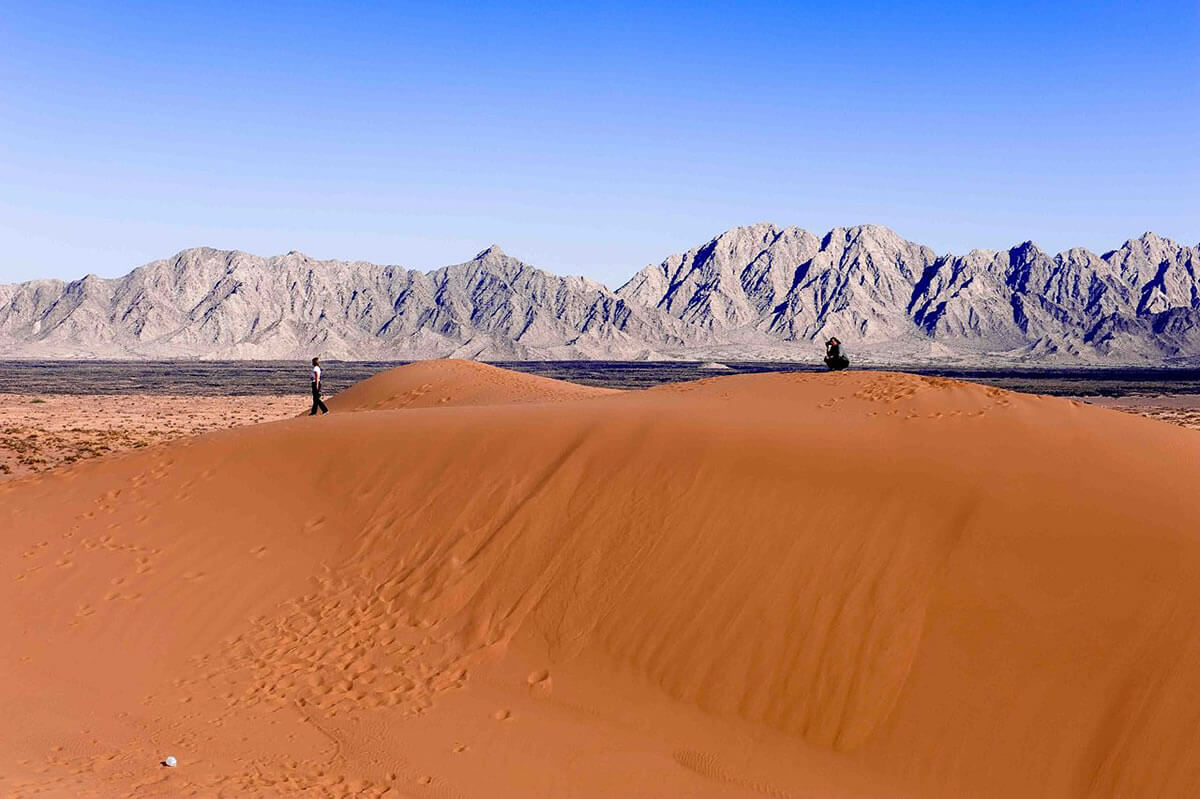
The Sonoran Desert's topography tells a story of geological complexity spanning millions of years, and this diversity creates the microhabitats that support the desert's exceptional biodiversity. The western regions, particularly around the Gulf of California, feature extensive flat plains and low-lying basins rarely exceeding 200 m (660 ft) above sea level, including the Desierto de Altar, where vast dunes and alkaline flats create some of North America's most austere landscapes. Classic basin-and-range topography dominates much of the central Sonoran Desert, with alternating mountain ranges and broad valleys that create a dramatic landscape of sharp ridges and expansive bajadas, or alluvial fans, producing distinct vegetative zones from creosote flats to oak-studded slopes. As the Sierra Madre Occidental rises in the east, elevations climb dramatically to between 1,000 and 2,000 m (3,280 and 6,560 ft), highlands that support different plant communities and serve as crucial wildlife corridors connecting desert and mountain ecosystems.
Climate: A Study in Extremes
The Sonoran Desert's climate defies simple categorization, and its vast extent creates significant regional variation, each supporting distinct biological communities. Unlike most deserts, which receive precipitation primarily in a single season, much of the Sonoran benefits from a bi-seasonal rainfall pattern: Pacific storm systems bring gentle, soaking winter rains between December and March, infrequent but often covering large areas and penetrating deeply into desert soils, while intense summer monsoon thunderstorms sweep northward from the Gulf of California between July and September, dropping significant rainfall in short bursts that trigger flash floods and spectacular wildflower displays.
This pattern varies considerably by region. The Arizona Upland, in the desert's northeastern reaches, receives the most reliable precipitation, 100-300 mm (4-12 in) annually, supporting the desert's most diverse plant communities and iconic saguaro forests. The Desierto de Altar, in the western Sonoran, represents one of North America's most arid regions, with some areas receiving less than 90 mm (3.5 in) of annual rainfall and experiencing drought periods lasting up to 30 months, while the Lower Colorado River Valley experiences extreme heat and minimal rainfall approaching conditions found in the Sahara. Summer temperatures across the desert routinely exceed 40°C (104°F), with ground temperatures reaching over 70°C (158°F), while winter nights can drop below freezing at higher elevations.
Flora: The Desert's Living Architecture
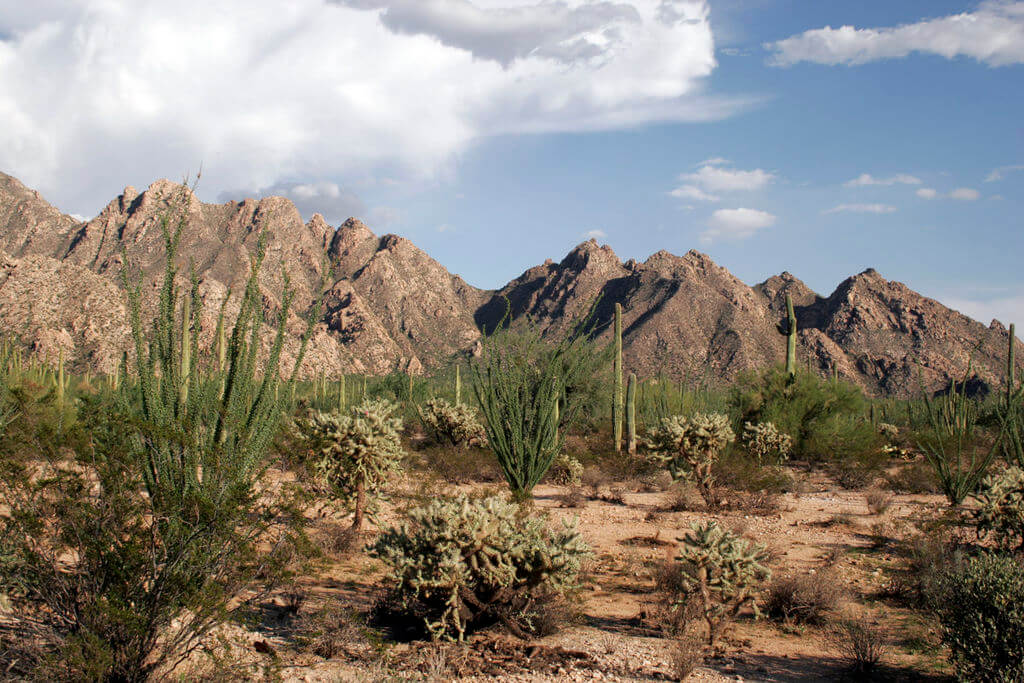
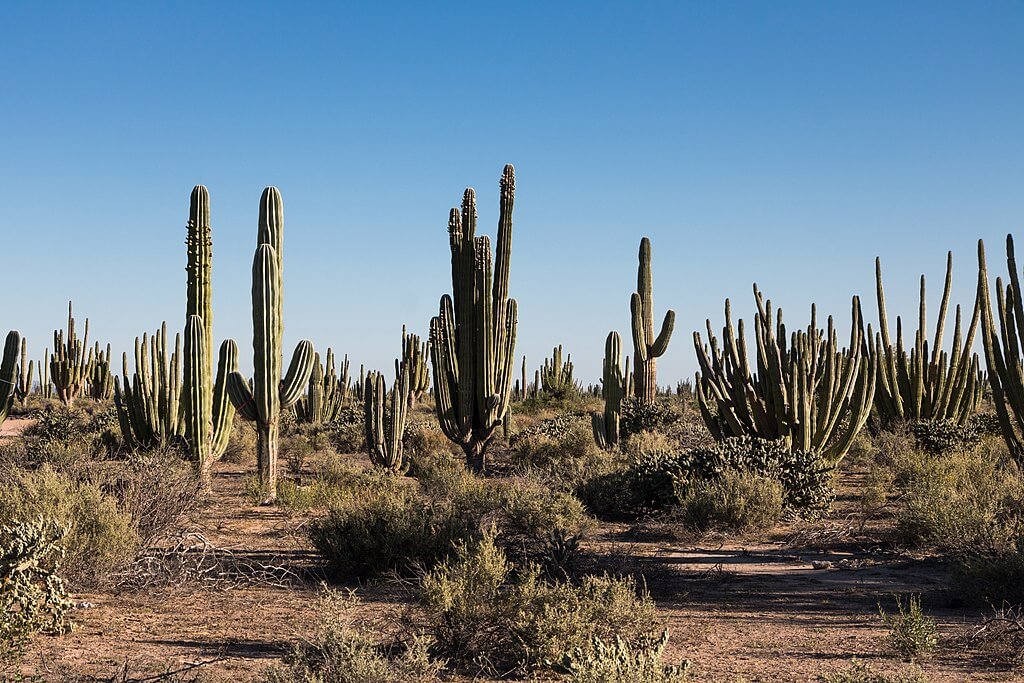
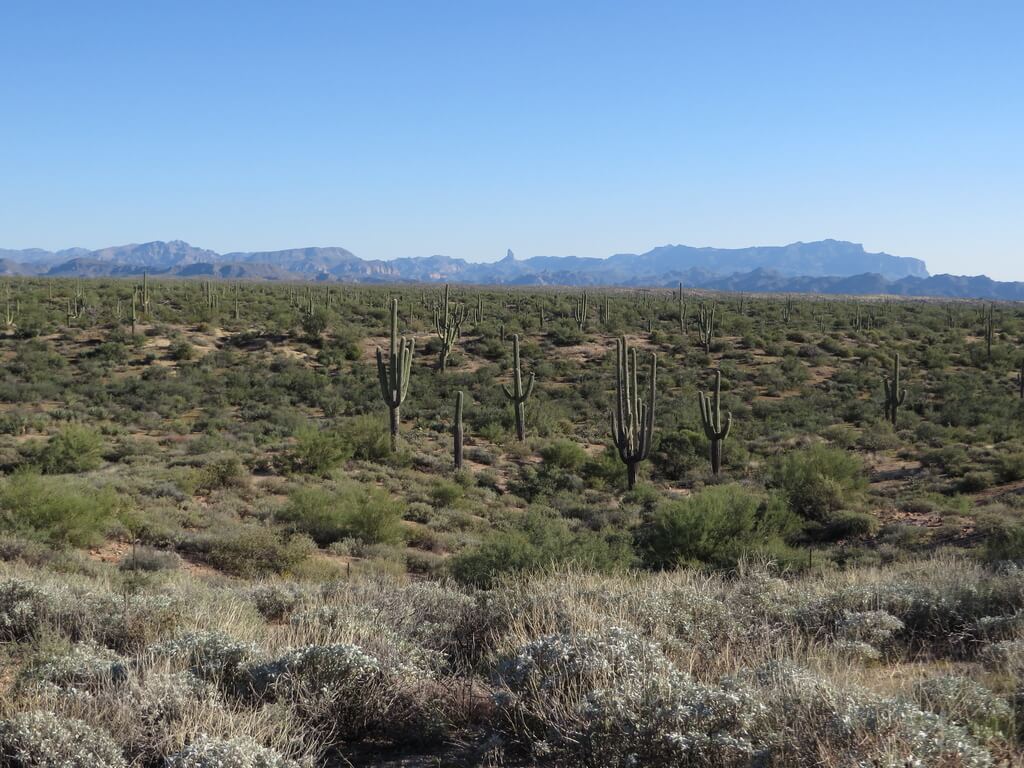
The Sonoran Desert supports over 2,000 plant species, more than any other desert in North America, a botanical richness reflecting the region's climatic complexity and topographical diversity. The saguaro (Carnegiea gigantea) is the desert's most famous resident, capable of living over 200 years and growing to 15 m (49 ft) tall, and functions as a keystone species providing nesting sites for desert birds throughout its range. In Mexico's portion of the desert, the cardón (Pachycereus pringlei), the world's tallest cactus species at up to 19 m (62 ft), plays a similar ecological role, particularly along the Gulf of California coast and the Baja California peninsula. The organ pipe cactus (Stenocereus thurberi) creates distinctive multi-stemmed silhouettes, particularly abundant near the border, while various cholla species, from the tree-like teddy bear cholla to the sprawling staghorn cholla, form impenetrable thickets sheltering small mammals and nesting birds, and several species of barrel cacti store water in their thick stems and produce brilliant seasonal flowers.
Among the desert's trees and shrubs, palo verde (Parkinsonia florida) photosynthesizes through its green bark and provides crucial shade; ironwood (Olneya tesota) can survive over 1,000 years and provides critical habitat structure in desert washes; ocotillo (Fouquieria splendens) produces spectacular red flower displays after rainfall that attract hummingbirds and other pollinators. The widespread creosote bush (Larrea tridentata) forms clonal colonies that may rank among Earth's oldest living organisms, some estimated at over 10,000 years old.
Following adequate winter or summer rains, the Sonoran Desert's wildflower displays rank among nature's most spectacular shows, as millions of seeds germinate simultaneously to create carpets of color visible from space: desert lupines paint purple swaths across bajadas, desert marigolds and brittlebush add golden highlights, ghost flowers bloom at night to attract sphinx moths, and desert sand verbena creates pink patches in sandy washes.
Fauna: Masters of Desert Survival
The Sonoran Desert's animal community demonstrates remarkable adaptations to extreme heat, water scarcity, and resource limitation. Among large mammals, desert bighorn sheep (Ovis canadensis mexicana) navigate rocky outcrops and can survive extended periods without drinking water, deriving moisture from their plant diet, while the endangered Sonoran pronghorn (Antilocapra americana sonoriensis) has evolved exceptional heat tolerance and can reach speeds of 95 km/h (59 mph) when fleeing predators. Mountain lions (Puma concolor) range as top predators across territories covering hundreds of square kilometers, and coyotes (Canis latrans) have proven highly adaptable, expanding their range and behavior in response to human development.
Among smaller and more specialized species, the kit fox (Vulpes macrotis) hunts nocturnally with oversized ears for heat dissipation, the ringtail (Bassariscus astutus) climbs agilely through rocky canyons hunting insects and small vertebrates, several species of kangaroo rat survive entirely without drinking water by concentrating their urine and producing dry feces, and the desert cottontail (Sylvilagus audubonii) feeds during cooler periods while resting in shade through the worst heat of the day. The desert hosts over 60 reptile species, including the Gila monster, desert tortoise, and numerous rattlesnakes, each having evolved sophisticated behavioral and physiological adaptations to regulate body temperature and water balance, while over 350 recorded bird species range from tiny hummingbirds that migrate thousands of kilometers to visit flowering cacti to massive turkey vultures soaring on thermal currents in search of carrion.
Ecological Relationships and Adaptations
The Sonoran Desert's high biodiversity stems from complex ecological relationships that have evolved over millions of years. Saguaro and cardón cacti depend on bats for pollination and birds for seed dispersal, receiving nectar, fruit, and nesting sites in return, and many other desert plants have evolved similarly specific relationships with particular pollinators. Desert organisms across the board have evolved remarkable water conservation mechanisms: plants develop extensive root systems, waxy coatings, and specialized metabolic pathways, while animals concentrate urine, minimize respiratory water loss, and shift to nocturnal activity to avoid heat stress, behavioral adaptations complemented by physiological ones ranging from specialized kidney function to counter-current heat exchange in blood vessels.
A Desert Culture Built on Land and Sea
The Sonoran Desert's Indigenous peoples, including the Tohono O'odham and Akimel O'odham of the desert's eastern reaches and the Comcaac (Seri) of the Sonoran coast, have called this region home for thousands of years, developing traditional ecological knowledge that includes a sophisticated understanding of desert resources, seasonal patterns, and sustainable harvesting practices; the Comcaac alone have been credited with detailed knowledge of over 400 desert plant species and their uses.
Among the most remarkable examples of this knowledge is a practice found nowhere else on Earth. For roughly 2,000 years, the Comcaac, who live along the Gulf of California coast near Tiburón Island in villages including Punta Chueca and El Desemboque, have harvested the seeds of eelgrass (Zostera marina), a seagrass growing in dense underwater meadows just offshore, as a staple grain. Known in the Comcaac language as xnois, the grain was traditionally gathered each April, when families waded into the shallows to collect floating, seed-bearing shoots, dried them on the beach, and threshed and winnowed the seeds by hand before grinding them into flour for bread, gruel, and a honey-and-sea-turtle-oil drink carried on long sea journeys. Researchers have identified this as the only known instance anywhere in the world of a grain harvested directly from the sea as a human food source. Eelgrass seed has since drawn renewed scientific interest for its high protein, fiber, and healthy fat content, along with the ecological value of the seagrass meadows themselves, which shelter sea turtles and fish while helping capture carbon along the coast. In recent years, Comcaac community members have worked to revive the tradition after decades of decline, teaching younger generations the harvesting and processing techniques passed down since well before European contact.
Conservation Challenges and Opportunities
The Sonoran Desert faces significant conservation challenges in the 21st century. Urban development, particularly around Phoenix and Tucson in Arizona and Hermosillo in Sonora, fragments habitat and introduces non-native species, while climate change threatens to shift precipitation patterns and increase temperature extremes beyond the tolerance of some species. Border security infrastructure also presents unique challenges, potentially disrupting wildlife movement patterns and fragmenting transboundary ecosystems that require close international cooperation between the United States and Mexico to maintain ecological connectivity.
The region benefits from extensive protected areas on both sides of the border. In Mexico, El Pinacate y Gran Desierto de Altar Biosphere Reserve, near the Sonoran coastal town of Puerto Peñasco, protects a dramatic volcanic and dune landscape recognized as a UNESCO World Heritage Site. In the United States, Saguaro National Park and Organ Pipe Cactus National Monument preserve critical saguaro and organ pipe cactus habitat in Arizona, along with numerous state parks and wilderness areas on both sides of the border that provide opportunities for scientific research and public education.
Conclusion: A Desert of Superlatives
The Sonoran Desert stands as one of Earth's most remarkable ecosystems, the hottest desert in Mexico, the most biodiverse desert in North America, and home to species and traditions found nowhere else, from the towering cardón and saguaro to the Comcaac's singular tradition of harvesting grain from the sea. Its landscapes range from austere dunes to forests of giant cacti, from seasonal wildflower displays that rival any garden to ecological and cultural relationships that have evolved over millennia. As human populations continue to grow in the region and climate change alters environmental conditions, the Sonoran Desert serves as both a natural laboratory for studying adaptation and resilience and a reminder that even in Earth's most challenging environments, life finds not just a way to survive, but to thrive in spectacular diversity.