
The Wixárika Route through Sacred Sites to Wirikuta (Tatehuarí Huajuyé): Mexico's Sacred Pilgrimage Path
In north-central Mexico, an ancient network of sacred pathways connects mountains, deserts, and valleys, linking the spiritual heart of the Wixárika culture to their sacred site. The Wixárika Route through Sacred Sites to Wirikuta is a major pre-Columbian pilgrimage route still used today.
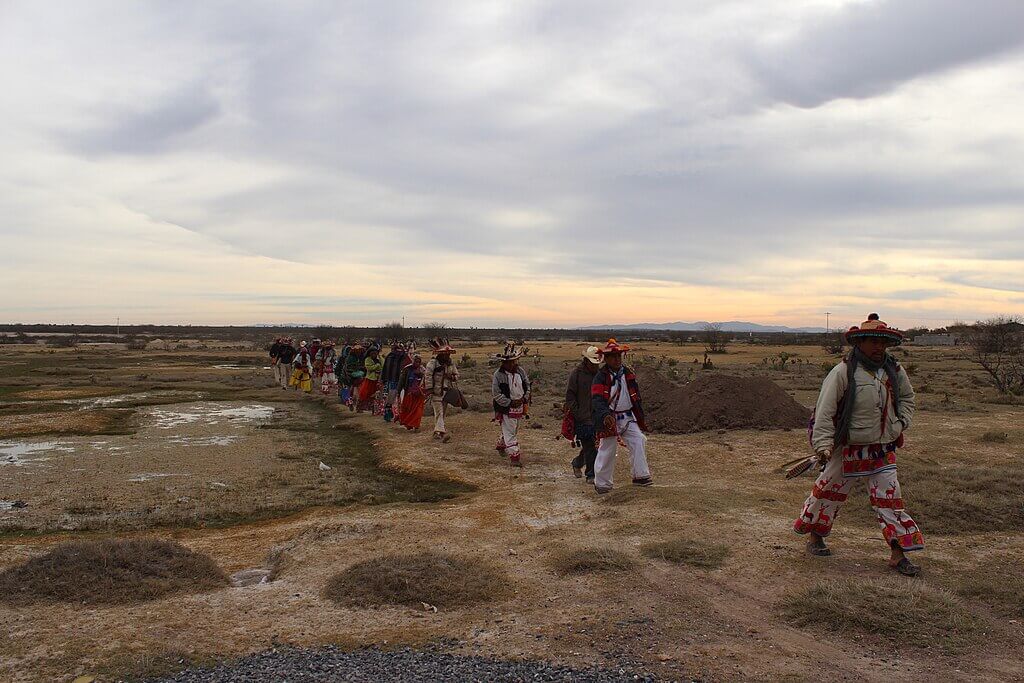
Tatehuarí Huajuyé: A Journey Through Five States on Mexico's Most Sacred Indigenous Trail
In the vast and varied landscapes of north-central Mexico, an ancient network of sacred pathways weaves through mountains, deserts, and valleys, connecting the spiritual heart of one of the Americas' most enduring Indigenous cultures to their most sacred destination. The Wixárika Route through Sacred Sites to Wirikuta, known in the Wixárika language as Tatehuarí Huajuyé (The Path of Our Grandfather Fire), represents one of the most significant pre-Columbian pilgrimage routes still actively used in the Americas. Recently inscribed as a UNESCO World Heritage Site, this sacred network spans over 500 kilometers (311 miles) across five Mexican states, encompassing 20 distinct sacred sites that form the spiritual and cultural backbone of Wixárika (Huichol) civilization. More than merely a trail, this route embodies a living cosmology where landscape, spirituality, agriculture, and community wellbeing converge in an unbroken tradition that has persevered for over a millennium.
Geographic Scope and Sacred Geography
The Wixárika Route through Sacred Sites to Wirikuta constitutes a serial UNESCO World Heritage Site composed of twenty distinct elements distributed across more than 500 kilometers (311 miles) of Mexico's north-central region. This network of paths stretches across five states: Nayarit, Jalisco, Zacatecas, Durango, and San Luis Potosí, creating what UNESCO describes as a "braid of trails" that connects sacred landscapes essential to the spiritual and cultural practices of the Wixárika Indigenous people.
The route begins in the Sierra Huichol, the mountainous homeland of the Wixárika people in the states of Nayarit and Jalisco, where elevations range from 1,000 to 2,300 meters (3,281 to 7,546 feet) above sea level. From these highland origins, the pilgrimage paths wind northeastward through diverse ecological zones, crossing the dramatic topographical transition from the Sierra Madre Occidental through intermediate highlands and ultimately reaching the Chihuahuan Desert.
The ultimate destination, Wirikuta, lies in the high desert of San Luis Potosí, between the Sierra Madre Oriental and the Zacatecas ranges, near Real de Catorce. This sacred desert, situated at an elevation of approximately 2,700 meters (8,858 feet), represents the spiritual center of Wixárika cosmology. In Wixárika cosmology, the world is believed to have been created in Wirikuta, making this destination not merely a pilgrimage site but the very birthplace of existence itself.
Cultural and Spiritual Significance
The Wixárika Route represents far more than a physical journey; it embodies a complex spiritual and cultural system that has maintained its integrity for over a thousand years. It is one of the most representative pre-Columbian routes still in use in the Americas, serving as a living testament to Indigenous resilience and cultural continuity.
The name Tatehuarí Huajuyé, meaning "The Path of Our Grandfather Fire," reflects the deep spiritual significance of this journey in Wixárika cosmology. Tatewari, the Grandfather Fire, represents one of the most important deities in the Wixárika pantheon, associated with shamanic power, purification, and the transmission of sacred knowledge. The pilgrimage route thus serves as a physical manifestation of the spiritual path that connects the Wixárika people to their most fundamental religious beliefs.
The annual, approximately one-month walk is part of the Wixárika ritual calendar, typically undertaken during the dry season between October and April. This timing aligns with the agricultural cycle, as the pilgrimage serves multiple purposes: spiritual purification, collection of sacred peyote (Lophophora williamsii) for ceremonial use, and renewal of the covenant between the people and their ancestral deities.
The route encompasses diverse sacred sites, each with specific ceremonial functions and mythological associations. These include natural springs where pilgrims purify themselves, caves that serve as portals to the underworld. In these mountain peaks, offerings are made to weather deities, and desert locations where sacred plants are collected. The journey follows ancient trade routes and ecological corridors that Indigenous peoples have used for millennia.
Ecological Diversity and Sacred Landscapes
The Wixárika Route traverses an extraordinary range of ecological zones, creating a unique corridor of biological and cultural diversity. The route crosses several ecological regions, each contributing to the complex environmental knowledge system that underpins Wixárika culture.
Beginning in the temperate forests of the Sierra Madre Occidental, the route passes through pine-oak forests dominated by species such as Pinus and Quercus, where elevations support cooler temperatures and higher precipitation. These mountain ecosystems provide essential resources for Wixárika communities, including medicinal plants, construction materials, and ceremonial items.
As the route descends toward the interior plateaus, it transitions through semi-arid shrublands and grasslands characteristic of the Mexican Plateau. These intermediate zones support a diversity of succulent species, including various Agave species that hold ceremonial significance and Opuntia cacti that provide both food and materials for traditional crafts.
The final approach to Wirikuta enters the Chihuahuan Desert ecosystem, one of the most biologically diverse desert regions in North America. This high-altitude desert supports unique assemblages of xerophytic plants, including the sacred peyote cactus (Lophophora williamsii), which grows exclusively in the limestone soils of this region. The desert environment also supports endemic species of Ferocactus, Echinocactus, and Mammillaria cacti, along with characteristic shrubs such as Larrea tridentata (creosote bush) and various Acacia species.
The ecological diversity along the route reflects the Wixárika understanding of landscape as a living entity with distinct spiritual and practical properties. Each ecosystem provides specific resources and serves particular ceremonial functions, creating an integrated system of environmental knowledge that has sustained Wixárika communities for generations.
Ritual Practices and Ceremonial Cycle
The pilgrimage to Wirikuta represents the culmination of a complex ceremonial cycle that integrates agricultural practices, seasonal observations, and spiritual beliefs. The route serves to maintain rituals linked to ancestral deities, agriculture, and community wellbeing, creating a comprehensive system of cultural practice that addresses all aspects of Wixárika life.
Preparation for the pilgrimage begins months in advance with ritual purification, fasting, and the selection of pilgrims who will undertake the sacred journey. The pilgrimage group, led by a mara'akáme (shaman), follows strict ceremonial protocols that govern behavior, diet, and interaction with the sacred landscape. Participants abstain from salt, sexual relations, and other activities considered potentially polluting, maintaining ritual purity throughout the journey.
Along the route, pilgrims perform specific ceremonies at each sacred site. These rituals include offerings of arrows decorated with feathers and beads, deposits of sacred objects in natural shrines, and prayers directed toward specific deities associated with each location. The ceremonies serve to maintain the spiritual balance between the human and natural worlds, ensuring continued fertility, rainfall, and community prosperity.
The collection of peyote in Wirikuta represents the spiritual and practical climax of the pilgrimage. This sacred cactus, known as híkuri in the Wixárika language, serves as a sacrament that facilitates communication with ancestral deities and provides visions that guide community decisions. The harvesting follows strict protocols that ensure sustainable collection while maintaining the spiritual potency of the plant.
Threats and Conservation Challenges
The Wixárika Route faces numerous challenges that threaten both its ecological integrity and cultural continuity. Mining concessions in the Wirikuta region pose perhaps the most significant threat to this sacred landscape. The desert's geology contains valuable mineral deposits, including silver and other metals, leading to pressure for mining development that would fundamentally alter the sacred character of the landscape.
Agricultural expansion and cattle ranching along portions of the route have led to habitat degradation and restricted access to traditional gathering areas. The conversion of natural landscapes to agricultural use eliminates native plant communities and disrupts the ecological relationships that support both wildlife and traditional Wixárika practices.
Urban development and infrastructure projects, including highway construction and tourism development, create additional pressures on the route's integrity. These developments not only alter the physical landscape but also introduce non-Indigenous cultural influences that can undermine traditional practices and beliefs.
Climate change presents long-term challenges to the ecosystems along the route. Altered precipitation patterns could affect the distribution of sacred plants, while temperature changes may shift ecological zones and disrupt the seasonal cycles that govern ceremonial timing. The peyote cactus, adapted to specific climatic conditions, may be particularly vulnerable to environmental changes.
Drug trafficking and associated violence in some regions along the route have created security concerns that can disrupt pilgrimage activities. These issues reflect broader social and economic challenges facing rural Mexico and Indigenous communities in particular.
Legal Protection and Indigenous Rights
The UNESCO World Heritage designation provides international recognition and support for protecting the Wixárika Route, but effective protection measures require coordination among multiple levels of government and respect for Indigenous rights. Mexico's legal framework includes constitutional recognition of Indigenous rights and specific legislation protecting sacred sites, but enforcement remains inconsistent.
The involvement of Wixárika communities in management decisions is essential for the route's protection. Indigenous knowledge systems provide a detailed understanding of ecological relationships and sustainable use practices that cannot be replicated through conventional conservation approaches. The integration of traditional ecological knowledge with scientific research offers the most promising approach to long-term conservation.
Legal challenges to mining concessions in Wirikuta have achieved some success, with Mexican courts recognizing the constitutional rights of Indigenous peoples to maintain their cultural practices. However, ongoing legal battles demonstrate the need for stronger and more consistent protection mechanisms.
International support through UNESCO and other organizations provides additional leverage for protection efforts, but ultimate success depends on national and local implementation of protective measures that respect Indigenous sovereignty and traditional management systems.
Cultural Continuity and Contemporary Challenges
The Wixárika Route represents a remarkable example of cultural continuity in the face of historical and contemporary pressures. Despite centuries of colonization, modernization, and cultural suppression, the Wixárika people have maintained their pilgrimage traditions and associated cultural practices with extraordinary tenacity.
Contemporary Wixárika communities face the challenge of maintaining traditional practices while adapting to modern economic and social conditions. Young people increasingly migrate to urban areas for education and employment, potentially disrupting the intergenerational transmission of cultural knowledge. The pilgrimage tradition serves as a crucial mechanism for maintaining cultural identity and ensuring that traditional knowledge is passed down to new generations.
The integration of modern transportation and communication technologies into pilgrimage logistics demonstrates the adaptive capacity of Wixárika culture. While maintaining the essential spiritual and ceremonial elements of the journey, communities have incorporated practical adaptations that make participation more accessible while preserving the route's sacred character.
Educational initiatives that document and share Wixárika cultural knowledge contribute to both cultural preservation and broader understanding of Indigenous worldviews. These efforts help build support for the protection of the route while ensuring that traditional knowledge is preserved for future generations.
Global Significance and Cultural Heritage
The inscription of the Wixárika Route as a UNESCO World Heritage Site recognizes its universal value as an outstanding example of living cultural heritage. The route illustrates the traditional beliefs of the Wixárika (Huichol) people and demonstrates the sophisticated integration of spiritual beliefs, ecological knowledge, and social organization that characterizes Indigenous cultures throughout the Americas.
The route's significance extends beyond its cultural value to include important contributions to biodiversity conservation and sustainable resource management. The traditional ecological knowledge embedded in Wixárika practices offers insights into sustainable relationships between human communities and natural ecosystems that are increasingly relevant in the context of global environmental challenges.
The Wixárika Route also represents an important example of the resilience of Indigenous cultures and the potential for traditional knowledge systems to contribute to contemporary conservation and cultural preservation efforts. The successful inscription of this site demonstrates the growing recognition of Indigenous rights and the value of traditional cultural practices.
Tourism and Economic Opportunities
The UNESCO designation creates opportunities for sustainable tourism development that could provide economic benefits to Wixárika communities while supporting conservation of the route. Cultural tourism focused on Indigenous traditions and sacred landscapes offers the potential for community-based economic development that aligns with traditional values and practices.
However, tourism development must be carefully managed to prevent negative impacts on the route's sacred character and ecological integrity. The spiritual significance of the pilgrimage requires that any tourism activities respect the ceremonial nature of the sites and avoid commercializing sacred practices.
Community-controlled tourism initiatives offer the most promising approach, allowing Wixárika communities to maintain authority over access to sacred sites while providing opportunities for cultural exchange and economic development. These initiatives can also serve educational functions, building broader understanding and support for Indigenous rights and cultural preservation.
Scientific Research and Documentation
The Wixárika Route provides exceptional opportunities for interdisciplinary research that integrates anthropological, ecological, and archaeological perspectives. Long-term studies of the route can contribute to an understanding of cultural landscape management, traditional ecological knowledge, and the relationships between spiritual beliefs and environmental practices.
Collaborative research approaches that involve Wixárika communities as partners rather than subjects offer the most ethical and productive framework for scientific investigation. These partnerships can ensure that research contributes to community goals while respecting traditional knowledge and cultural protocols.
Documentation of traditional practices, ecological knowledge, and ceremonial cycles provides important resources for cultural preservation and educational initiatives. Digital technologies offer new possibilities for recording and sharing this knowledge while maintaining appropriate levels of access and cultural sensitivity.
Archaeological research along the route has the potential to illuminate the deep history of Indigenous occupation and the evolution of pilgrimage traditions over time. These investigations can contribute to an understanding of pre-Columbian trade networks, settlement patterns, and cultural exchange systems.
Future Prospects and Sustainability
The long-term sustainability of the Wixárika Route depends on the successful integration of cultural preservation, environmental protection, and community development goals. This integration requires ongoing collaboration among Indigenous communities, government agencies, conservation organizations, and international support networks.
Adaptive management approaches that can respond to changing environmental and social conditions while maintaining the route's essential character offer the most promising framework for long-term sustainability. These approaches must be flexible enough to accommodate both traditional practices and contemporary challenges while preserving the spiritual and cultural integrity of the pilgrimage.
The development of successor generations of Wixárika cultural leaders and environmental stewards is crucial for the route's future. Educational initiatives that combine traditional knowledge transmission with contemporary skills and perspectives can help ensure that young people remain connected to their cultural heritage while preparing them to address contemporary challenges.
Conclusion
The Wixárika Route through Sacred Sites to Wirikuta stands as one of the world's most remarkable examples of living cultural heritage, representing an unbroken tradition that has connected Indigenous communities to their sacred landscapes for over a millennium. The UNESCO World Heritage designation recognizes not only the exceptional value of this pilgrimage route but also the extraordinary resilience of the Wixárika people in maintaining their spiritual and cultural traditions despite centuries of external pressures.
This sacred pathway through Mexico's diverse landscapes embodies profound principles of ecological stewardship, spiritual practice, and community organization that offer valuable insights for contemporary society. The route demonstrates how traditional knowledge systems can provide sophisticated frameworks for sustainable resource management while maintaining deep spiritual connections to the natural world.
The challenges facing the Wixárika Route reflect broader issues confronting Indigenous communities worldwide: the tension between cultural preservation and economic development, the impacts of environmental degradation and climate change, and the need for legal frameworks that protect Indigenous rights while facilitating cultural continuity.
The successful protection and management of this World Heritage Site will require unprecedented collaboration among diverse stakeholders, innovative approaches to cultural landscape conservation, and sustained commitment to Indigenous rights and self-determination. The route's future depends not only on formal protection measures but also on the continued vitality of Wixárika culture and the transmission of traditional knowledge to future generations.
As humanity faces increasing environmental and cultural challenges, the wisdom embedded in the Wixárika Route becomes ever more relevant. This ancient pathway reminds us of the deep connections between spiritual practice, ecological knowledge, and community wellbeing that Indigenous peoples have maintained for millennia. In protecting and honoring this sacred route, we preserve not only an irreplaceable cultural treasure but also a model for sustainable relationships between human communities and the natural world that sustains us all.