
Costa Rica's Magnificent Mountain Ranges: Volcanic Giants and Biodiversity Hotspots
Costa Rica's four mountain ranges — Guanacaste, Tilarán, Central, and Talamanca — form the backbone of the country's biodiversity and climate, and their Monteverde cloud forests were also home to the golden toad, one of the first documented species extinctions attributed to climate change.
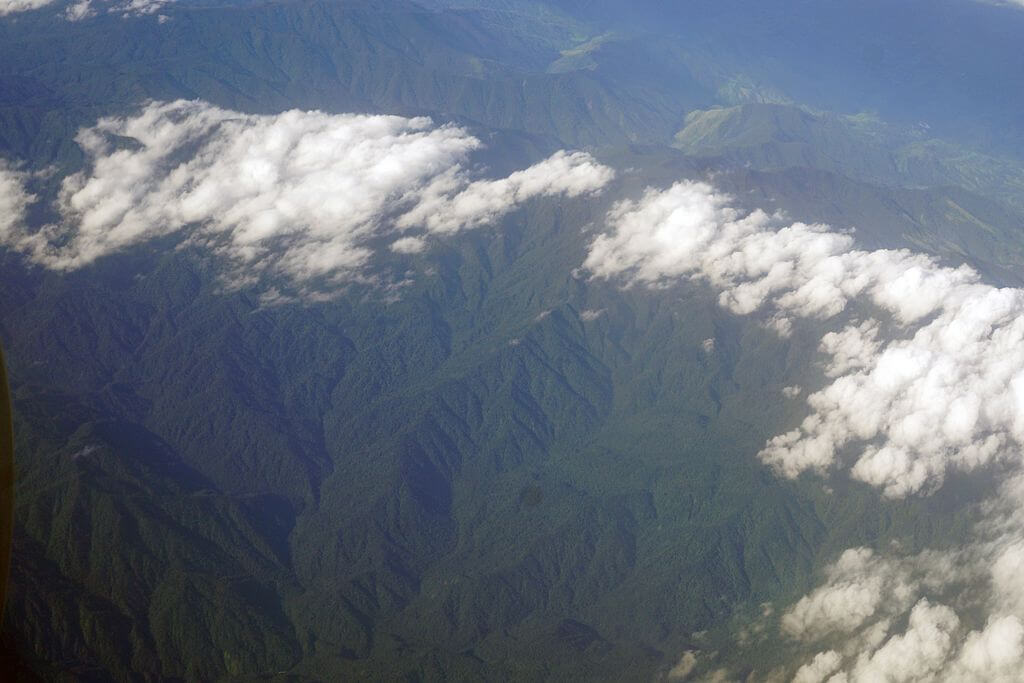

Costa Rica's Mountains: Four Ranges, One Golden Toad Lost to Climate Change
Costa Rica, though small in size, has one of the most remarkable and geologically active mountain systems in Central America. This nation, spanning just 51,100 square kilometers (19,730 square miles), is traversed by multiple mountain ranges that form part of the Central American Volcanic Arc, creating a dramatic landscape of active volcanoes, cloud forests, and alpine ecosystems. These mountain ranges not only define Costa Rica's topography but also serve as the backbone of its legendary biodiversity, climate regulation, and cultural identity. From the towering volcanic peaks that pierce the clouds to the mist-shrouded cloud forests that harbor countless endemic species, Costa Rica's mountains represent some of the most biodiverse and geologically active landscapes on Earth.
The Cordillera de Guanacaste: Northwestern Volcanic Chain
The Cordillera de Guanacaste extends approximately 110 kilometers (68 miles) through northwestern Costa Rica, forming part of the Central America Volcanic Arc. This mountain range represents the southern continuation of Nicaragua's volcanic highlands and includes some of Costa Rica's most active and historically significant volcanoes. The cordillera runs roughly parallel to the Pacific coast, creating a natural barrier that influences regional climate patterns and serves as a continental divide.
The range features a series of volcanic peaks and massifs, with elevations ranging from 500 meters (1,640 feet) in the foothills to over 1,900 meters (6,234 feet) at the highest summits. The mountains are geologically young, with most formations dating to the Pleistocene epoch, and several volcanoes remain active today. The volcanic nature of these mountains has created fertile soils that support diverse ecosystems and a range of agricultural activities.
The Cordillera de Guanacaste experiences distinct wet and dry seasons, with the Pacific slope receiving significantly less rainfall than the Caribbean-facing slopes of other Costa Rican mountain ranges. Annual precipitation varies from 1,200 millimeters (47 inches) in the driest areas to over 3,000 millimeters (118 inches) in higher elevations and windward slopes. This climatic variation supports a diverse range of ecosystems, from tropical dry forests at lower elevations to cloud forests near the summits. The dry forests of Guanacaste are particularly significant as they represent one of the most threatened ecosystems in Central America, characterized by deciduous trees that shed their leaves during the dry season, creating dramatic seasonal changes in the landscape's appearance.
The Cordillera de Tilarán: Central Volcanic Highlands
The Cordillera de Tilarán occupies the central portion of Costa Rica's volcanic spine, extending approximately 80 kilometers (50 miles) from the Cordillera de Guanacaste in the northwest to the Cordillera Central in the southeast. This range serves as a crucial link in Costa Rica's continental divide and contains some of the country's most important watersheds, including the sources of rivers that flow to both the Pacific Ocean and the Caribbean Sea.
The range reaches its highest elevation at about 1,842 meters (6,043 feet) and features a series of volcanic peaks, crater lakes, and extensive cloud forest. The mountains form a natural barrier that strongly influences local weather patterns, with the Caribbean-facing slopes receiving far more precipitation than the Pacific slopes, creating distinct microclimates over short distances.
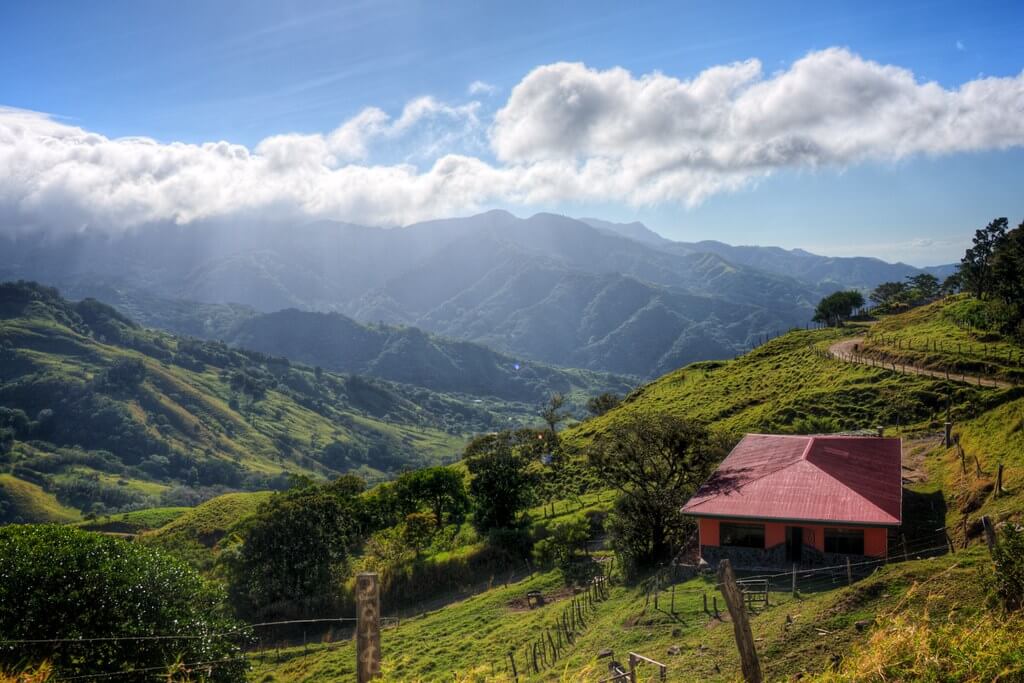
One of the Cordillera de Tilarán's most significant features is the Monteverde Cloud Forest Complex, which includes several protected areas, including the Monteverde Cloud Forest Reserve and Children's Eternal Rainforest. These cloud forests exist at elevations between 1,200 and 1,800 meters (3,937 and 5,906 feet), where persistent cloud cover creates unique conditions supporting extraordinary biodiversity, high humidity, frequent fog, and cooler temperatures that rarely exceed 20°C (68°F). These conditions support epiphytic plants, including hundreds of orchid species, bromeliads, and mosses, creating a three-dimensional garden in the forest canopy. The region is home to iconic species, including the resplendent quetzal (Pharomachrus mocinno) and three-wattled bellbird (Procnias tricarunculatus), along with numerous endemic amphibians and insects.
Monteverde is also home to one of conservation science's most sobering case studies. The golden toad (Incilius periglenes), a small, vividly orange amphibian found nowhere else on Earth, was once so abundant in the cloud forest here that researchers could count hundreds during a single breeding aggregation. Its population collapsed with startling speed between 1987 and 1989, and despite intensive searching, researchers have not confirmed any since; the species is now considered extinct. Researchers point to a combination of factors, including the chytrid fungus and altered cloud-forest moisture patterns linked to a changing climate, and the golden toad's disappearance remains one of the earliest and most widely cited examples of a species extinction connected to climate change, a sobering counterpoint to the biodiversity that still thrives elsewhere in these same forests.
The Cordillera Central: The Heart of Costa Rica
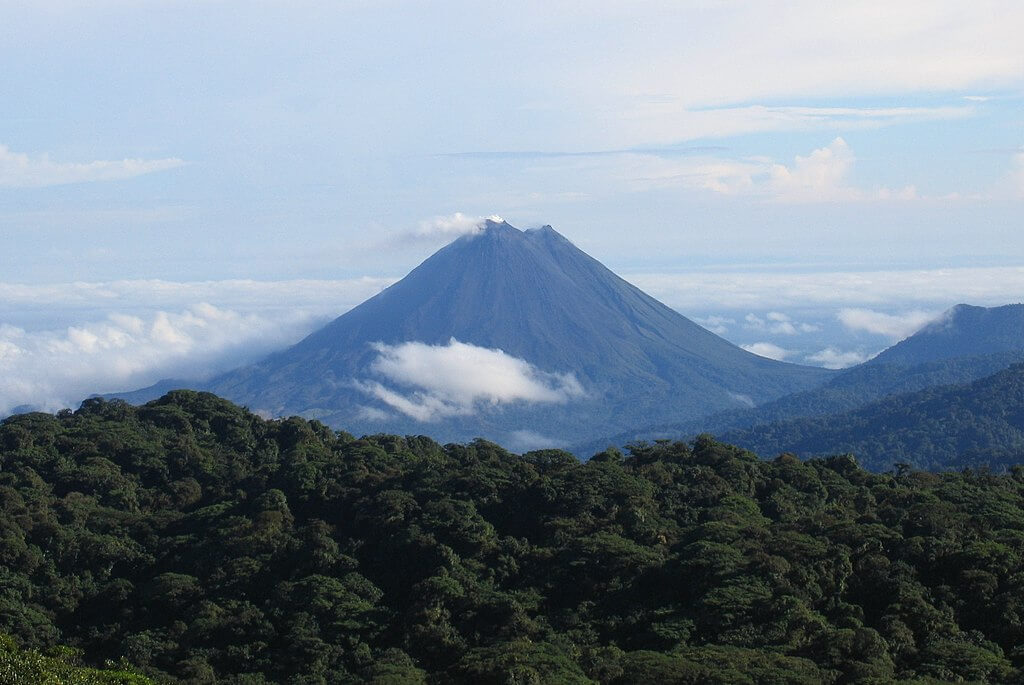
The Cordillera Central is Costa Rica's most prominent and geologically active mountain range, extending about 80 kilometers (50 miles) through the country's center. This range contains four major volcanic massifs, Poás, Barva, Irazú, and Turrialba, with the latter two being among the most active volcanoes in Central America. The cordillera reaches its highest point at Irazú Volcano, which rises to 3,432 meters (11,260 feet) above sea level.
The range serves as the primary continental divide for central Costa Rica, with rivers flowing north to the Caribbean Sea and south to the Pacific Ocean. The volcanic activity has created a complex topography of peaks, craters, crater lakes, and extensive lava fields that continue to shape the landscape. Because these volcanoes are close to Costa Rica's Central Valley, where most of the population lives, the range is especially important for both geological monitoring and tourism.
The Cordillera Central, along with the Cordillera de Talamanca to the south, frames Costa Rica's Central Valley (Valle Central), home to approximately 60% of the country's population, including the capital city of San José. This valley, situated at elevations between 800 and 1,500 meters (2,625 and 4,921 feet), enjoys a temperate climate year-round due to its altitude and protection from the surrounding mountains. The Central Valley's volcanic soils are among the most fertile in Central America, supporting intensive agriculture, including world-renowned coffee plantations, while the surrounding mountains provide crucial water resources, with numerous rivers originating in high-altitude watersheds and flowing through the valley to both coasts.
The Cordillera de Talamanca: Costa Rica's Highest Range
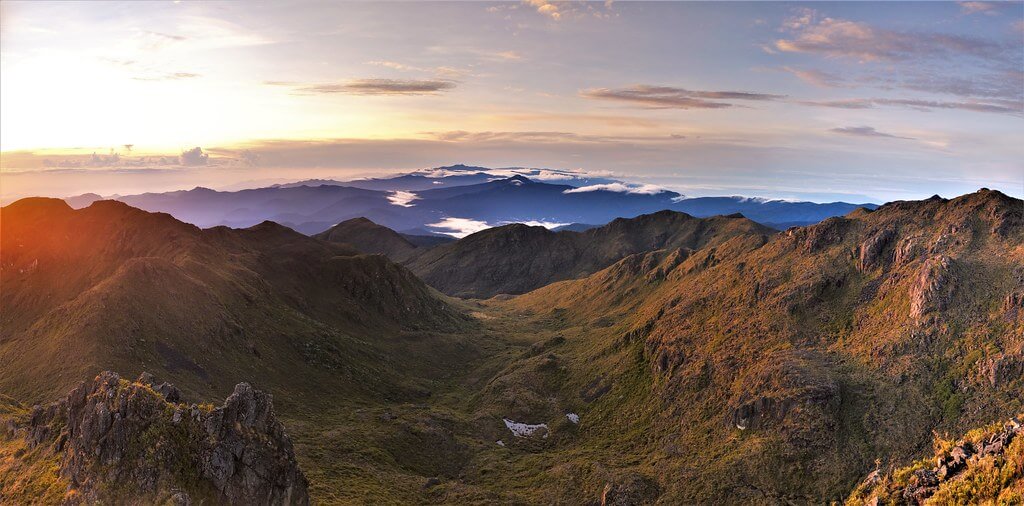
The Cordillera de Talamanca represents Costa Rica's most extensive and highest mountain range, stretching approximately 300 kilometers (186 miles) from central Costa Rica into western Panama. Unlike the other mountain ranges in Costa Rica, the Talamanca range is primarily non-volcanic in origin, consisting of uplifted sedimentary and igneous rocks that date back millions of years. This geological difference creates distinct landscapes and ecosystems compared to the volcanic ranges to the north.
The range reaches its highest point at Cerro Chirripó, which at 3,819 meters (12,530 feet) is the highest peak in Costa Rica and the second-highest in Central America after Guatemala's Volcán Tajumulco. The Talamanca range is characterized by its rugged terrain, deep valleys, glacial cirques from past ice ages, and extensive cloud forest and páramo ecosystems at higher elevations.
Above 3,000 meters (9,843 feet), the Cordillera de Talamanca supports Costa Rica's only páramo ecosystem, a high-altitude tropical grassland similar to those found in the Andes. The páramo is characterized by harsh conditions, including frequent temperature fluctuations, strong winds, high solar radiation, and regular frost; despite these challenges, it supports specialized plant communities, including endemic species found nowhere else in Central America. The ecosystem also serves as a crucial water source for much of southern Costa Rica, acting as a natural sponge that captures moisture from clouds and gradually releases it into the surrounding watersheds. However, it remains particularly vulnerable to climate change.
Much of the Cordillera de Talamanca is protected within Chirripó National Park and La Amistad International Park, the latter a UNESCO World Heritage Site shared between Costa Rica and Panama. These protected areas encompass over 400,000 hectares (988,000 acres) and represent one of the largest continuous forest blocks in Central America, protecting ecosystems from lowland rainforests to high-altitude páramos and serving as crucial habitat for endangered species including jaguars (Panthera onca), pumas (Puma concolor), Baird's tapirs (Tapirus bairdii), and harpy eagles (Harpia harpyja). The region also supports significant Indigenous populations, including the Bribri and Cabécar peoples, who maintain traditional lifestyles and possess deep knowledge of mountain ecosystems.
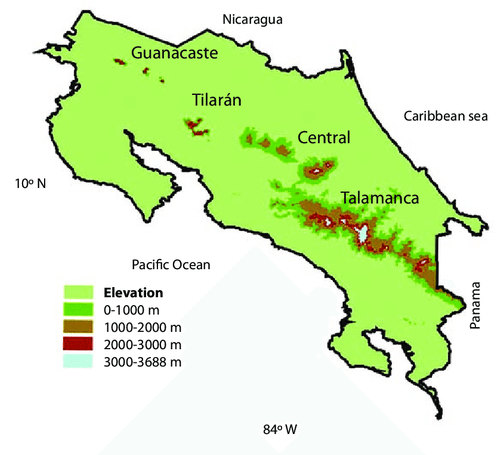
Map depicting Costa Rica's main mountain ranges: Guanacaste, Tilarán, Central, and Talamanca.
Major Volcanic Peaks and Their Characteristics
Irazú Volcano stands as Costa Rica's highest volcano at 3,432 meters (11,260 feet) and is located just 54 kilometers (34 miles) from San José. The volcano has been active throughout recorded history, with its most recent major eruption occurring from 1963 to 1965. Irazú features multiple craters, including the main crater, which contains a striking green-colored crater lake; on clear days, both the Pacific Ocean and Caribbean Sea are visible from the summit, making it one of the few places on Earth where both oceans can be seen simultaneously.
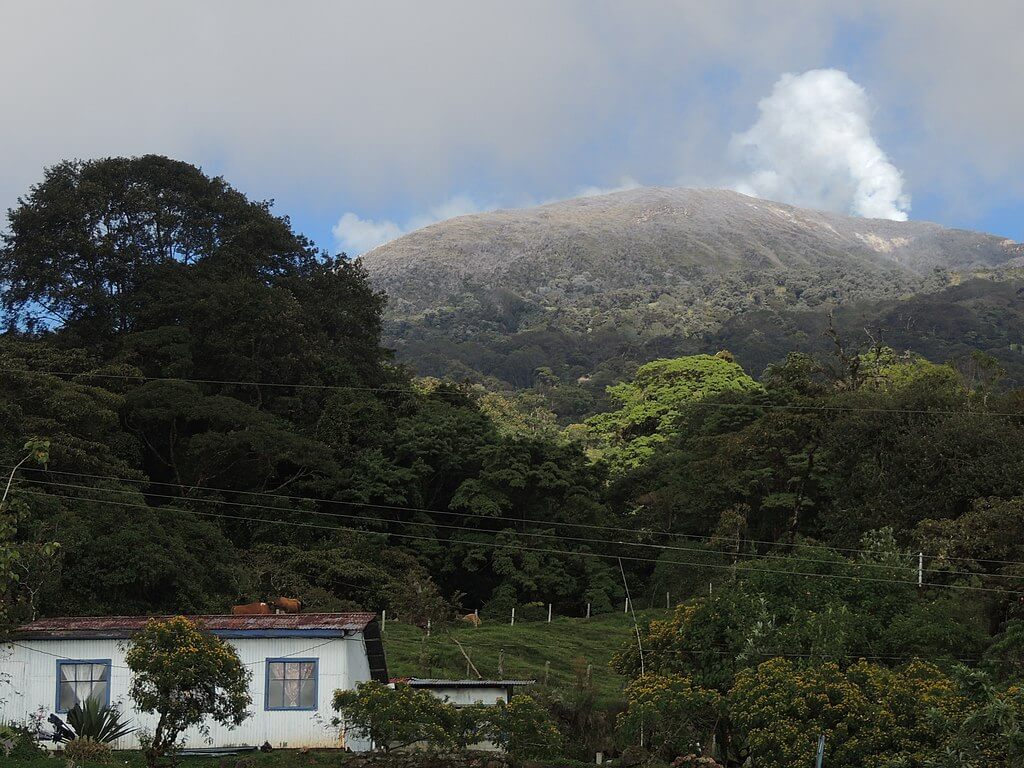
Turrialba Volcano, which reaches 3,340 meters (10,958 feet), has been Costa Rica's most active volcano in recent years, with significant eruptive activity resuming in 2010 after decades of dormancy. The volcano poses ongoing challenges for nearby communities and agriculture because frequent ash emissions affect air quality and crop production in the surrounding areas.
Poás Volcano, at 2,708 meters (8,885 feet), is one of Costa Rica's most visited volcanoes due to its accessibility and spectacular crater lake. The main crater measures nearly 1.5 kilometers (0.9 miles) in diameter and contains one of the world's most acidic crater lakes; the volcano has exhibited increased activity in recent years, with periods of volcanic unrest that have occasionally necessitated the closure of the national park to visitors.
Rincón de la Vieja, rising to 1,916 meters (6,286 feet) in the Cordillera de Guanacaste, is an active volcanic complex with multiple peaks, crater lakes, hot springs, and fumaroles, notable for its diverse volcanic features and the extensive protected area surrounding it. Barva Volcano, at 2,896 meters (9,501 feet), is considered dormant and is notable for its well-preserved crater and the cloud forests that cover its slopes, accessible through Braulio Carrillo National Park.
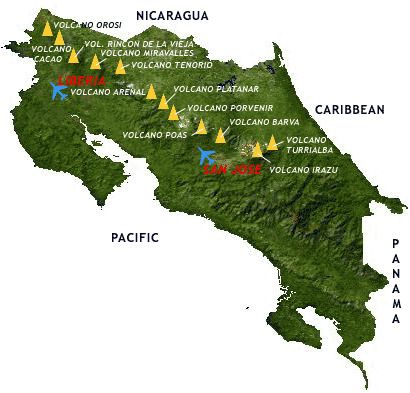
Map of active and inactive volcanoes throughout the Cordillera Volcánica Central in Costa Rica.
Non-Volcanic Peaks of the Talamanca Range
Beyond Chirripó, the Talamanca massif contains several other notable non-volcanic summits. Cerro Ventisqueros, at 3,812 meters (12,507 feet), is Costa Rica's second-highest peak; its name, meaning "glacial winds," references both the harsh conditions near its summit and the cirques and moraines that testify to past glacial activity. Cerro Crestones, at 3,760 meters (12,336 feet), rounds out the highest points of the Chirripó massif, its rocky, exposed summit rising above the tree line to support specialized high-altitude plant communities, while Cerro de la Muerte and Cerro Buena Vista, both exceeding 3,300 m (10,800 ft), and the lower Cerro Chompipe at 2,594 meters (8,511 feet) complete the range's roster of significant peaks.
Climate Patterns and Altitudinal Zonation
Costa Rica's mountains create distinct altitudinal climate zones that support different ecosystems and agricultural activities. The lowlands (0-800 meters/0-2,625 feet) experience hot, humid tropical conditions with temperatures averaging 26-28°C (79-82°F) year-round. The premontane zone (800-1,500 meters/2,625-4,921 feet) enjoys more temperate conditions with temperatures ranging from 18-24°C (64-75°F), making it ideal for coffee cultivation and human settlement. The montane zone (1,500-2,500 meters/4,921-8,202 feet) experiences cooler temperatures averaging 12-18°C (54-64°F). It supports cloud forest ecosystems, while above 2,500 meters (8,202 feet), the alpine zone features cold temperatures that can drop below freezing, especially at night, and supports specialized high-altitude plant communities.
Costa Rica's mountains also strongly influence precipitation patterns, with the Caribbean slopes receiving 3,000-6,000 millimeters (118-236 inches) of annual rainfall, while some Pacific slopes receive as little as 1,200 millimeters (47 inches). The country experiences distinct wet (May to November) and dry (December to April) seasons, although the timing and intensity vary with elevation and geographic location, as moist air masses are forced upward against the mountains, cooling and releasing their moisture as rain or fog, an effect particularly pronounced on the Caribbean-facing slopes that intercept moisture-laden trade winds year-round.
Geological History and Formation
Costa Rica's volcanic mountains are part of the Central America Volcanic Arc, formed by the subduction of the Cocos Plate beneath the Caribbean Plate. This ongoing tectonic process has created a chain of volcanoes extending from Guatemala to Panama, with Costa Rica containing some of the arc's most active segments; volcanic activity began about 20 million years ago, and the current configuration of volcanic ranges developed over the past 5 million years.
The Cordillera de Talamanca formed through a different geological process known as the Talamanca Orogeny, involving the collision and uplift of oceanic terranes and sedimentary rocks. This process created the non-volcanic mountains that characterize the southern portion of Costa Rica, representing some of the oldest rocks in the country and resulting in a diverse array of rock types, including limestone, sandstone, igneous intrusions, and metamorphic rocks that contribute to the region's extraordinary biodiversity by creating varied soil types, drainage patterns, and microhabitats.
Water Resources and Watersheds
Costa Rica's mountain ranges form the continental divide, with rivers flowing to both the Pacific Ocean and the Caribbean Sea from high-altitude watersheds. The mountains capture moisture from trade winds and seasonal precipitation, storing it in cloud forests, wetlands, and underground aquifers before gradually releasing it through river systems, including the Reventazón, Sarapiquí, and San Juan rivers flowing to the Caribbean, and the Tárcoles, Grande de Térraba, and Sierpe rivers flowing to the Pacific.
Costa Rica generates over 75% of its electricity from hydroelectric plants, most of which depend on rivers originating in the mountain ranges, including major facilities on the Reventazón River system, which originates near Irazú Volcano. The reliability of hydroelectric power depends on maintaining healthy mountain watersheds that can capture and store precipitation effectively, making climate change and deforestation significant threats to both watershed function and national energy security.
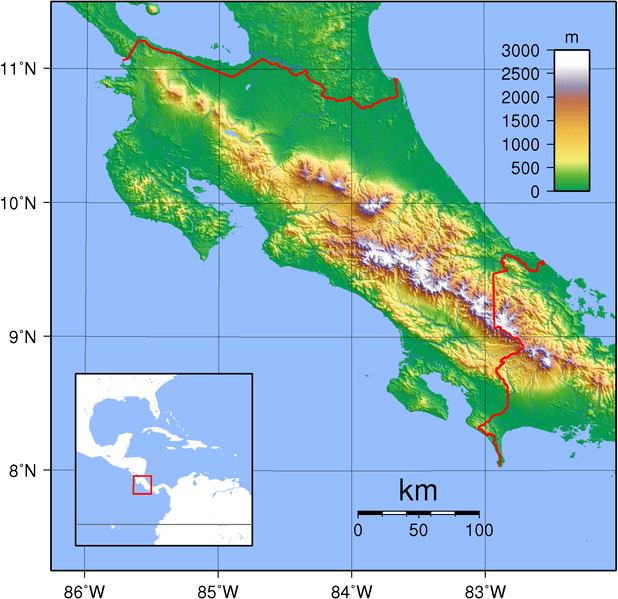
Topographic map of Costa Rica.
Conservation, Culture, and the Path Forward
Costa Rica has established an extensive system of national parks and protected areas that cover much of its mountainous regions, including Chirripó National Park, Irazú Volcano National Park, Poás Volcano National Park, Braulio Carrillo National Park, and sections of La Amistad International Park. These protected areas face numerous challenges, including limited funding, illegal hunting and logging, agricultural encroachment, and the impacts of climate change, which is already causing upward shifts in vegetation zones that threaten high-altitude species with limited dispersal options; the small glacial features on Chirripó, though modest in scale, are disappearing due to warming temperatures, echoing the same climate pressures implicated in the golden toad's extinction.
Costa Rica's mountains have been home to Indigenous peoples for thousands of years, with groups such as the Bribri and Cabécar maintaining traditional lifestyles in the Talamanca region and possessing detailed knowledge of sustainable resource management that has evolved over generations. The mountains also attract hundreds of thousands of visitors annually through adventure tourism and ecotourism, volcano viewing, cloud forest hiking, bird watching, canopy tours, and summit climbing, while supporting important agricultural activities, particularly the coffee cultivation for which Costa Rica is world-renowned, grown at elevations between 800 and 1,600 meters (2,625 and 5,249 feet) in the country's fertile volcanic soils.
Balancing these pressures with conservation remains an ongoing challenge, but Costa Rica's payment-for-ecosystem-services programs, which compensate landowners for maintaining forest cover and watershed functions, have shown real success and serve as a model for other countries navigating the same tension between development and preservation. La Amistad International Park, a transboundary reserve shared with Panama, likewise offers a working template for the international cooperation that climate adaptation across mountain ecosystems will increasingly require.
Conclusion
Costa Rica's mountain ranges represent an extraordinary natural heritage that extends far beyond their impressive physical dimensions. From the active volcanic craters that remind us of Earth's dynamic processes to the cloud forests that harbor countless endemic species, and from the golden toad's cautionary tale to the resplendent quetzal's continued flourishing in the same forests, Costa Rica's mountains embody the complex interactions between geological processes, climate systems, and biological evolution. Their continued protection is not just about preserving scenic landscapes, but about maintaining the water supply, climate regulation, and biodiversity that Costa Rica's future prosperity depends on.