Latest Entries

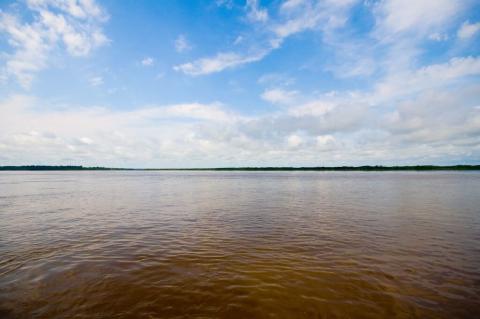
The Fortress of the Immaculate Conception: Nicaragua's Sentinel on the San Juan River

The Fortress of the Immaculate Conception, built by the Spanish between 1673 and 1675 in El Castillo village on a bend of the San Juan River, is one of Nicaragua's most important colonial landmarks. It gained fame through Rafaela Herrera's heroic 1762 defense against a British attack and witnessed Horatio Nelson's 1780 campaign. Now a museum within the Indio-Maíz Biosphere Reserve, it mixes military history, colonial architecture, and rainforest, accessible by boat along the historic river route used by pirates, colonists, and British navies.

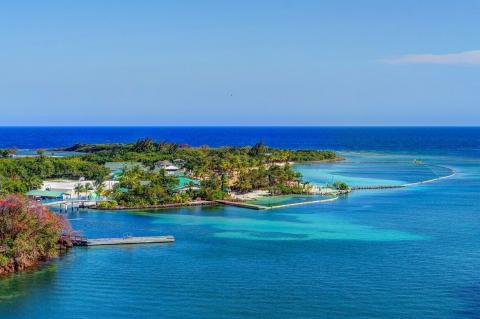
Chile's Islands and Archipelagos: From Pacific Outposts to Patagonian Wilderness

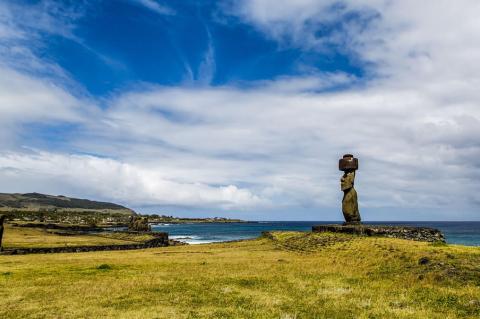
Chile's islands and archipelagos stretch from remote Easter Island with its iconic moai statues to the pristine wilderness of Tierra del Fuego, encompassing diverse ecosystems that harbor endemic species, UNESCO sites, and Indigenous communities. These Pacific territories include the Robinson Crusoe-inspiring Juan Fernández Islands, the culturally rich Chiloé Archipelago with its distinctive wooden churches, and critical wildlife refuges supporting penguins, fur seals, and unique flora across one of the world's most extensive coastlines.

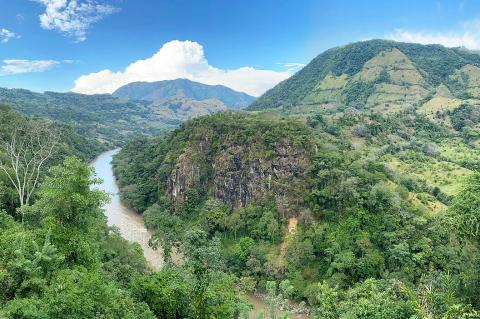
Argentina's Islands and Archipelagos: A Geographic and Cultural Journey

Argentina's islands and archipelagos span from the windswept Tierra del Fuego in the south to the subtropical Paraná Delta in the north, encompassing diverse ecosystems, rich cultural heritage, and significant wildlife refuges. These maritime territories include South America's largest island, thousands of river delta islets, glacial lake islands, and disputed territories such as the Malvinas, reflecting Argentina's complex geographical identity and the challenges it faces in conservation.

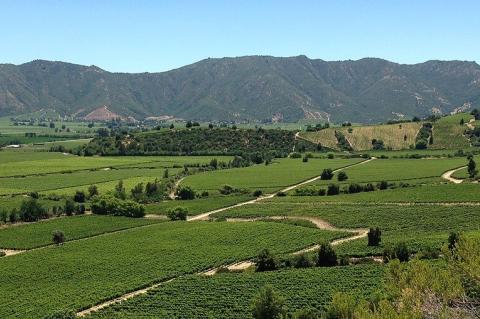
The Peru-Chile Trench: South America's Deepest Frontier and the Bolivian Orocline

Along South America's western coast lies one of Earth's most spectacular geological features. The Peru-Chile Trench represents the deepest oceanic depression in the South Pacific and serves as the active collision zone where the Nazca Plate slides beneath the South American continent. This submarine canyon, intertwined with the dramatic coastal bend known as the Bolivian Orocline, tells a story of planetary-scale forces that have sculpted the Andes Mountains and continue to shape one of the world's most geologically active regions.

The Middle America Trench: Where Ocean Floors Collide and Continents Rise

The Middle America Trench represents one of Earth's most dynamic subduction zones, where massive tectonic plates converge in a process that has shaped the region's landscape for millions of years. This extensive underwater canyon naturally divides into two distinct segments: the northern Acapulco Trench following Mexico's curved coastline, and the southern Guatemala Trench extending in a more linear fashion toward Costa Rica.

The Petén Basin and Maya Forest: Where Ancient Civilizations Meet Living Wilderness

In the verdant heart of Central America, where the borders of Guatemala, Mexico, and Belize converge in a tapestry of emerald green, lies one of the world's most extraordinary convergences of natural wonder and human achievement. Here, beneath canopies that have witnessed the rise and fall of empires, the Petén Basin and its encompassing Maya Forest represent far more than geographical features—they embody a living testament to the intricate dance between civilization and wilderness that has unfolded across millennia.

The Yucatán Peninsula: A Living Testament to Time

Suspended between the azure waters of the Gulf of Mexico and the Caribbean Sea, the Yucatán Peninsula emerges as one of Earth's most extraordinary geological and cultural theaters. This vast limestone platform extends its ancient arms across three Mexican states—Campeche, Quintana Roo, and Yucatán—while reaching southward into the heart of Belize and Guatemala. Here, in this remarkable convergence of land and sea, the very foundations of the Earth tell stories that span from cosmic catastrophe to human civilization, from primordial forests to sacred cenotes.

The Gulf of Mexico: Mexico's Marine Frontier and the Western Atlantic's Hidden Sea

In the warm waters between the Yucatán Peninsula and the Florida Keys lies one of the world's most economically and ecologically significant ocean basins. The Gulf of Mexico encompasses 1.6 million square kilometers of ocean that has shaped the destiny of nations, supported extraordinary biodiversity, and fueled the energy needs of North America for over a century. For Mexico, it symbolizes sovereignty, economic prosperity, and environmental challenges that define the country's relationship with marine resources.

Río Bravo del Norte: The Great River That Unites and Divides Two Nations

In Colorado's San Juan Mountains, where streams surge from melting snow, one of North America's most culturally and politically significant waterways begins. Known as the Rio Grande in the United States and Río Bravo del Norte in Mexico, it flows from alpine tundra to a tropical delta, serving as a border. For Mexico, the Río Bravo represents far more than a geographic boundary—it embodies centuries of cultural identity, economic development, and environmental adaptation in some of North America's most challenging landscapes.

The Guaraní Aquifer System: South America's Hidden Ocean and the Future of Freshwater Security

Deep beneath four South American nations lies the Guaraní Aquifer System (GAS), one of Earth's most remarkable geological treasures. Spanning 1.2 million square kilometers of Argentina, Brazil, Paraguay, and Uruguay, it creates an underground hydrological empire rivaling the Mediterranean Sea. Named after the Indigenous Guaraní people, this aquifer system represents far more than a simple water source—it embodies the interconnected destiny of four nations and serves as a critical bulwark against regional water insecurity in an era of climate uncertainty.