
Valdivian Temperate Forests: A Unique South American Ecoregion
The Valdivian temperate forests are a vital ecoregion in the Southern Cone of South America, primarily on Chile's west coast with a small extension into Argentina. Renowned for its biodiversity and unique ecological characteristics, the forests are home to many endemic flora and fauna.
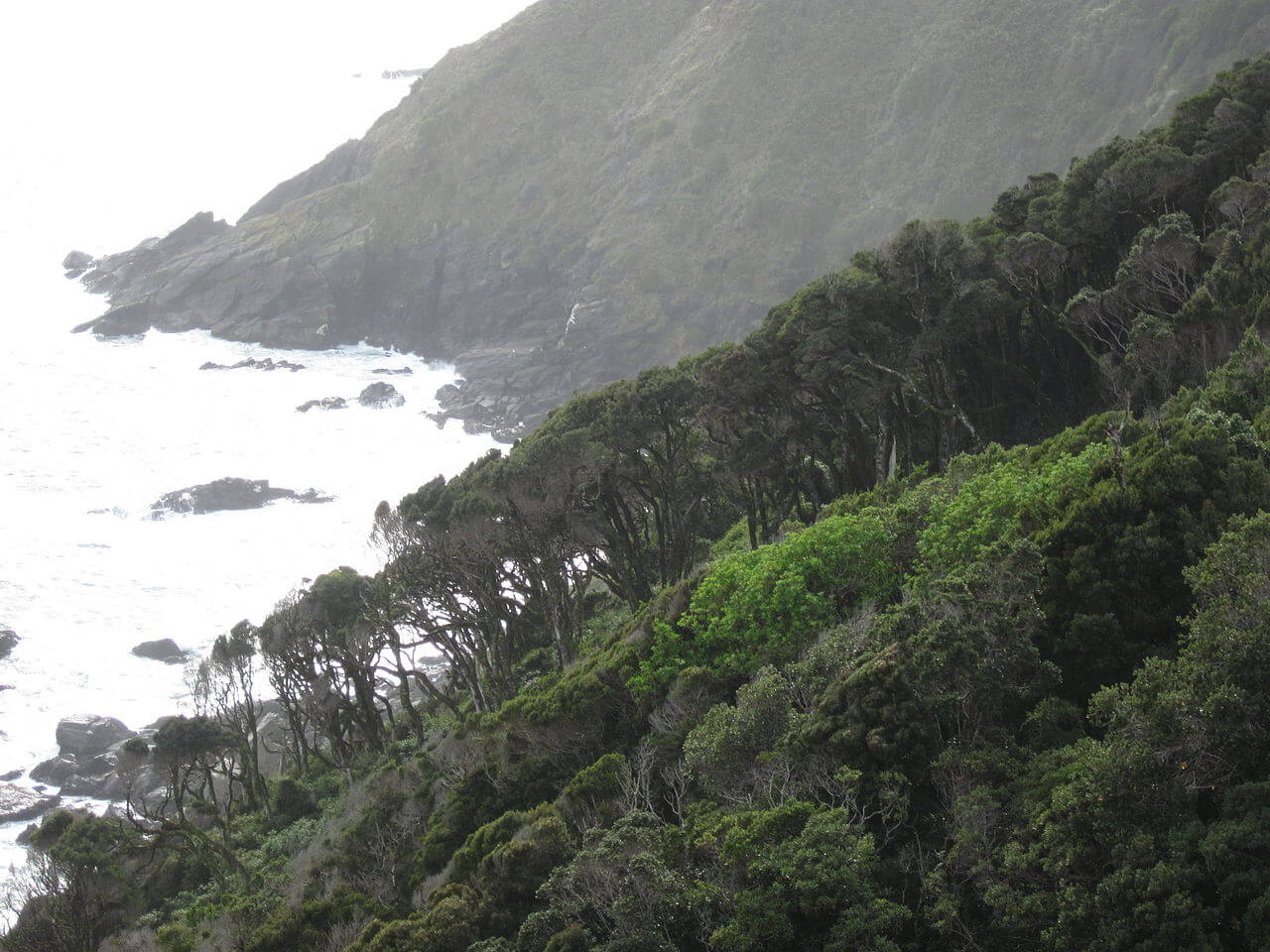
The Valdivian Rainforests: Guardians of Biodiversity and Ecological Balance
The Valdivian temperate forests, or Selva Valdiviana, are a distinctive and vital ecoregion located in the Southern Cone of South America, primarily on Chile's west coast, with a small extension into Argentina. This ecoregion spans a narrow continental strip between the western slope of the Andes and the Pacific Ocean and is part of the Neotropical ecozone. Renowned for its biodiversity and unique ecological characteristics, the Valdivian temperate forests are a treasure trove of flora and fauna, many of which are endemic to the region.
Geographic and Climatic Features
The Valdivian temperate forests, part of the more prominent Andean Patagonian Forest (Bosque Andino Patagónico), occupy a relatively narrow coastal strip from roughly 37° to 48° south latitude. During the last ice age, the Patagonian Ice Sheet and other glaciers significantly shaped the region's geography, carving numerous lakes in the central part of the ecoregion and creating fjords in the south.
The westerlies strongly influence the forests, bringing moisture-laden air that condenses as it rises over the Andes and produces significant rainfall. The northward-flowing Humboldt Current also creates humid and foggy conditions near the coast. These climatic factors support a lush, temperate rainforest environment, with summer temperatures averaging 16.5°C (62°F) and winter temperatures dropping below 7°C (45°F).
A Note on "Patagonia"
Because it stretches so far south, the Valdivian temperate forests ecoregion is sometimes loosely described as Patagonian, but this isn't quite accurate for the region as a whole. Patagonia is conventionally understood to begin further south, at the Río Colorado (around 39°S) on the Argentine side and somewhere around Puerto Montt and the Los Lagos region (roughly 41.5°S) on the Chilean side. The ecoregion's northern reaches, including Araucanía, Los Ríos, and Valdivia itself, the city that gives the ecoregion its name, fall within what is more accurately called southern Chile or the Chilean Lake District, not Patagonia. Only the ecoregion's southern portion, extending into the Los Lagos and Aysén regions, genuinely overlaps with Chilean Patagonia as it's typically defined.
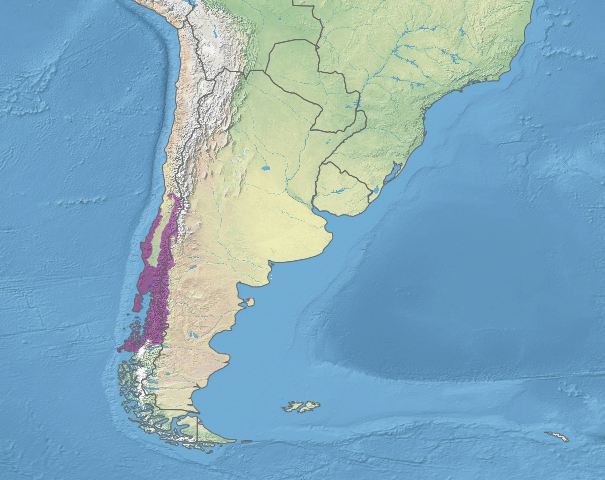
Map depicting the location of the Valdivian temperate forests (in purple)
Flora
The Valdivian temperate forests are characterized by their lush, dense vegetation. The flora is highly diverse, with an estimated 700-800 species of vascular plants. Evergreen angiosperm trees dominate the forests, including southern beech (Nothofagus spp.), arrayan (Luma apiculata), and ulmo (Eucryphia cordifolia). Conifers such as alerce (Fitzroya cupressoides), which can live for thousands of years, also play a significant role in the forest canopy.
The understory is rich in ferns, mosses, and bamboo, creating a thick, almost impenetrable layer that supports a wide variety of plant and animal life. Notable understory species include the Chilean rhubarb (Gunnera tinctoria) and various species of Chusquea bamboo. These diverse plant communities support a complex ecosystem with intricate ecological interactions.
Fauna
The fauna of the Valdivian temperate forests is as diverse and unique as its flora. The region has high endemism, with many species found nowhere else in the world. Key mammal species include the monito del monte (Dromiciops gliroides), an ancient marsupial considered a living fossil; the southern pudú (Pudu pudu), the world's smallest deer; and the kodkod (Leopardus guigna), a small wild cat.
Birdlife in the Valdivian forests is abundant and varied, with many endemic species. Notable examples include the green-backed firecrown (Sephanoides sephaniodes), Chile's most widespread hummingbird and a key pollinator of the forest's flowering understory; the Magellanic woodpecker (Campephilus magellanicus), South America's largest woodpecker; and the chucao tapaculo (Scelorchilus rubecula), a secretive, loud-voiced forest-floor specialist. Amphibians are also well represented, including Darwin's frog (Rhinoderma darwinii), whose males famously carry developing tadpoles in their vocal sac until they emerge as fully formed froglets, and the critically endangered Vanzolini's spiny-chest frog (Alsodes vanzolinii), highlighting the region's unique herpetofauna.
Ecological Importance
The Valdivian temperate forests are critical for maintaining regional biodiversity and ecological balance. These forests are vital habitats for numerous endemic species and play essential roles in carbon sequestration and climate regulation. They also support ecosystem services, including water regulation, soil stabilization, and providing resources for Indigenous communities.
Forests act as a natural barrier against soil erosion, especially in mountainous regions where heavy rainfall can trigger landslides. Diverse plant life contributes to soil fertility by decomposing organic matter, creating a rich, nutrient-dense environment that supports various plant and animal species.
Conservation and Threats
Despite their ecological importance, the Valdivian temperate forests face significant threats. Logging for commercial timber and firewood, agricultural expansion, and urban development have led to habitat loss and fragmentation. Invasive species also threaten the native flora and fauna, disrupting ecological balances and outcompeting endemic species.
National parks and reserves protect approximately 25% of the Valdivian temperate forests ecoregion to combat these threats. In Argentina, protected areas include Los Alerces National Park, Los Arrayanes National Park, Lago Puelo National Park, Lanín National Park, and Nahuel Huapí National Park. In Chile, protected areas include Alerce Andino National Park, Alerce Costero National Park, Bosque de Fray Jorge National Park, Chiloé National Park, Huerquehue National Park, Pumalín Douglas Tompkins National Park, Puyehue National Park, Queulat National Park, Vicente Pérez Rosales National Park, and Villarrica National Park.
Conservation efforts involve collaboration between local communities, governments, and international organizations. Initiatives include habitat restoration projects, sustainable forestry practices, and ecotourism promotion to generate income while preserving natural resources.
Cultural Significance
The Valdivian temperate forests hold cultural significance for the Indigenous Mapuche people, who have lived in harmony with the land for centuries. The forests provide medicinal plants, food resources, and materials for traditional crafts. The Mapuche's deep connection to the land is reflected in their cultural practices, stories, and rituals, many of which are intertwined with the forests' natural cycles and biodiversity.
Efforts to preserve the Valdivian temperate forests also focus on protecting Indigenous rights and knowledge. Integrating traditional ecological knowledge with modern conservation practices strengthens preservation efforts and helps maintain the region's cultural heritage.
Conclusion
The Valdivian temperate forests are a unique and vital ecoregion rich in biodiversity and ecological significance. Their intricate web of flora and fauna, along with distinctive geographic and climatic conditions, makes them an essential part of the South American landscape. Continued conservation efforts are crucial to preserving this remarkable natural heritage for future generations and ensuring that the forests thrive as a sanctuary for endemic species and a source of ecological balance.