
Morro Moreno National Park: A Fog Oasis on Chile's Desert Coast
Morro Moreno National Park, established in 2010 on the southern tip of the Mejillones Peninsula, protects a coastal fog oasis in the Atacama Desert, home to cacti found nowhere else and a shoreline that Indigenous fishers and sailors have used for centuries.
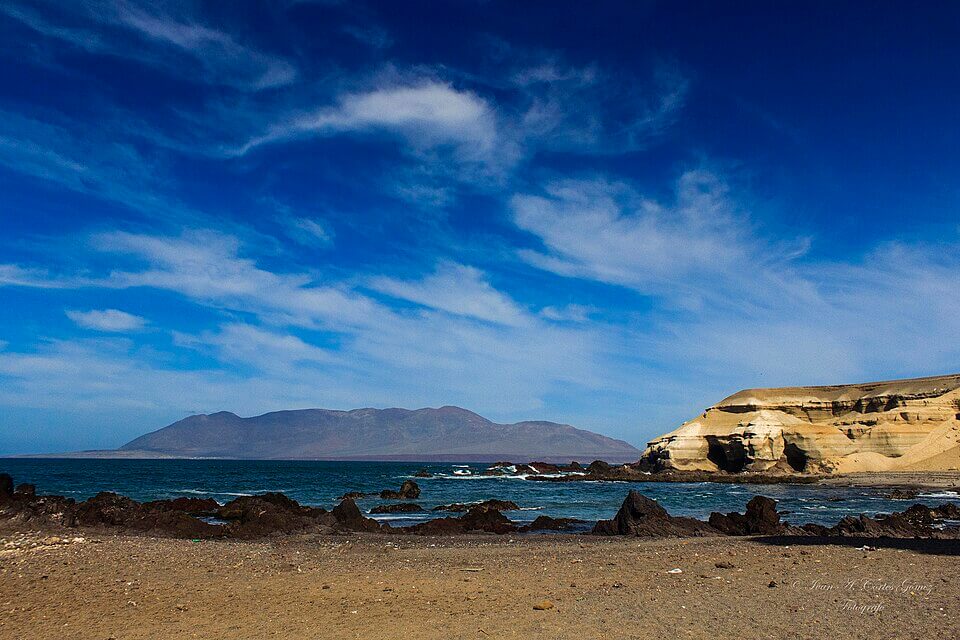
Morro Moreno National Park: Endemic Cacti, a Sailors' Landmark, and a Peak That Catches the Fog
Morro Moreno National Park occupies the southern end of the Mejillones Peninsula, in the Coastal Range of Chile's Antofagasta Region, in the communes of Antofagasta and Mejillones. It covers about 7,300 hectares (about 18,100 acres) and lies roughly an hour's drive, about 65 km (40 mi), from the city of Antofagasta, near the Cerro Moreno airport. The peninsula is wider than it is long, reaching only about 20 km (12 mi) into the Pacific from an isthmus about 40 km (25 mi) wide, and the Tropic of Capricorn crosses its southern part. In the driest desert on Earth, the massif at the park's heart is where coastal fog, known as camanchaca, sustains an island of life.
A Park Twenty-Five Years in the Making
The case for protecting Morro Moreno was made long before the park existed. In 1985, researchers from the Universidad Austral de Chile surveyed the area and concluded that its vegetation, wildlife, and scenery merited inclusion in the national protected-area system; in 2003, the national environment commission listed the Mejillones Peninsula as a priority site for biodiversity conservation. A decree published in the Diario Oficial on April 15, 2010 created the park, noting that the area held a diversity of environments and scenic and archaeological features unique in Chile and was poorly represented in the national system. It became Chile's 35th national park, and that year CONAF published a field guide to its biodiversity with academics from the Universidad de Antofagasta.
The Fog Oasis
Moist air from the cold Pacific, driven by the Humboldt Current, drifts inland as camanchaca and condenses on the upper slopes of Morro Moreno, creating what ecologists call a fog oasis. The park protects about 90 plant species, many of them endemic, in a landscape within the same coastal desert described in our Atacama Desert article and closely related to the fog-zone communities of Pan de Azúcar and Llanos de Challe to the south. Similar fog-fed lomas communities extend north into Peru, where they are described in our Peru's Desert Coast article.
Cacti Found Nowhere Else
The park's most distinctive plant is Eulychnia morromorenoensis, a tree-like columnar cactus 2 to 7 m (6.5 to 23 ft) high with a short trunk branched near the base, known locally as copao. It is endemic to the coastal hills of the southern Mejillones Peninsula, a range that today coincides with the national park, where it forms dense stands. The park also protects Copiapoa atacamensis, a round, clumping cactus endemic to the coastal desert of the Antofagasta Region, from Morro Moreno south to the Quebrada Botija, where a large adult population occurs at Morro Moreno, where the summit catches abundant fog. A third columnar cactus, Eulychnia iquiquensis, also grows here, its branches often draped in lichens that feed on the fog. These cacti depend on camanchaca, and Chilean botanists warn that climate-change-driven declines in coastal fog threaten Copiapoa populations along this coast, which illegal collectors also target.
Wildlife on Land and at Sea
Herds of guanaco (Lama guanicoe) roam the slopes, and the chilla fox (Lycalopex griseus) and the Darwin's leaf-eared mouse (Phyllotis darwini) are among the few mammals that live in the desert scrub. The coast supports a rich seabird community that includes the Humboldt penguin (Spheniscus humboldti), and the peninsula's cold, nutrient-rich waters, fed by one of the main coastal upwelling centers of northern Chile, shelter South American sea lions (Otaria flavescens), the marine otter or chungungo (Lontra felina), and several species of whales and dolphins.
A Landmark for Sailors and Fishers
Morro Moreno has marked this coast for centuries. Coastal fishing peoples settled the headland's shores and slopes, leaving camps and burial sites at places such as Caleta Abtao, Bahía Errázuriz, Los Canastos, and La Aguada, an "aguada" being a freshwater seep that drew people and animals to the otherwise dry shore, and they hunted guanaco on its flanks. Spanish and English mariners knew the massif as a landmark: reports from the 16th century describe English privateer voyages, including those of Francis Drake and Thomas Cavendish, stopping here and meeting Indigenous seafarers, and a 1610 colonial map marks Morro Moreno as the point where the Governorate of Chile began, making it a kind of northern frontier marker of the Kingdom of Chile. Sailors reportedly called it the "morro Moreno of the mariners."
Industry at the Doorstep
The peninsula that shelters the park is also one of northern Chile's industrial centers. On the Bay of Mejillones, a few kilometers to the north, thermoelectric plants, fish-processing companies, and acid-transfer facilities line the shore, and environmental studies describe the bay as one of the country's main centers of industrial development and its main coastal upwelling zone. Conservation planners have proposed a multiple-use coastal marine protected area for the peninsula, and a zoning study using the MARXAN software has identified priority sites for marine protection, but the park itself protects only the land at the peninsula's southern tip.
Visiting the Park
CONAF describes three routes up Morro Moreno, which offers wide views over the coastal desert and the Pacific, and the park has normally been open Wednesday through Sunday. In late August 2026, however, CONAF closed the park and the nearby La Chimba National Reserve after recent rains damaged infrastructure, trails, and access roads, with crews assessing the damage and planning repairs. No reopening date had been announced when this article was written, so visitors should check CONAF's official channels before planning a trip.
Conclusion
Morro Moreno is a small park with large stakes: a fog-fed refuge where cacti found nowhere else survive in the middle of the world's driest desert, beside a coast of ancient fishing camps and industrial bays. Its future depends on maintaining the camanchaca that sustains it, protecting its endemic plants from collectors, and extending the same care to the surrounding waters.