
Mesoamerica: The Birthplace of Great Civilizations
Mesoamerica, the cultural region stretching from south-central Mexico to northern Costa Rica, gave rise to some of the pre-Columbian world's most sophisticated societies — the Olmec, Teotihuacan, the Maya, and the Aztec among them — united across centuries and languages by shared agriculture, architecture, calendrical science, and a ritual ballgame played nowhere else on Earth.
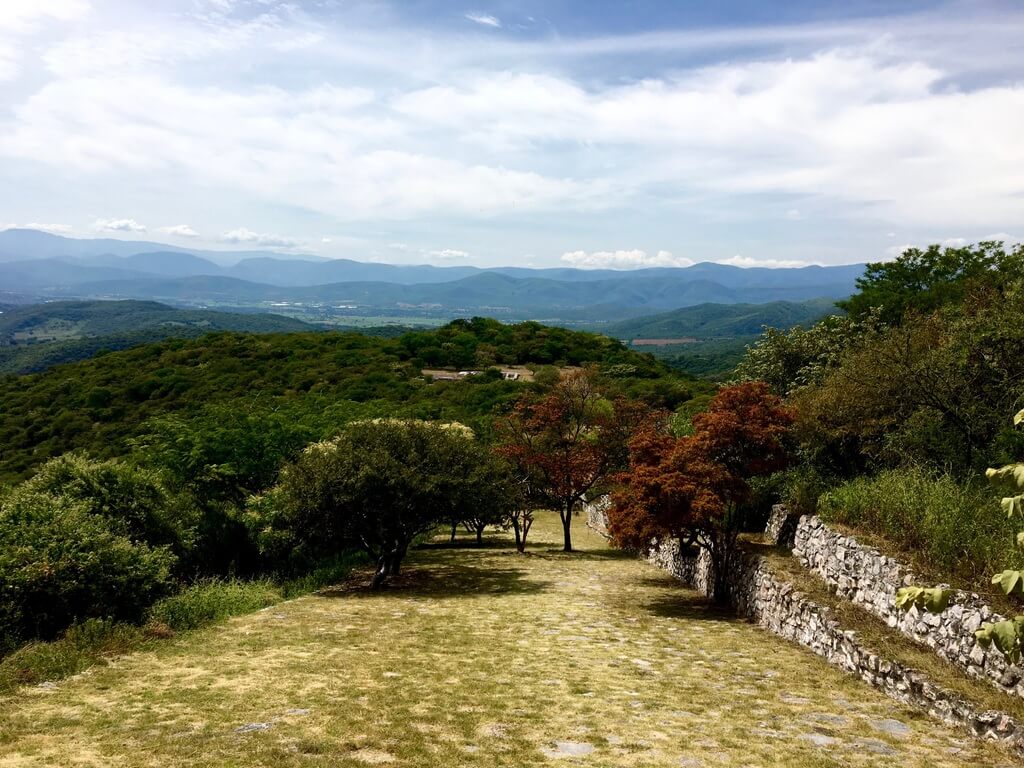
Mesoamerica: Maize, Ballgames, and the Rise of a Civilization
Mesoamerica, a historical and cultural region bridging North and South America, has long been a center of human civilization, innovation, and cultural exchange. The term "Mesoamerica," meaning "Middle America" in Greek, refers to a vast area stretching from south-central Mexico to northern Costa Rica. Home to some of the most advanced pre-Columbian societies, this region features a variety of landscapes and climates that played a crucial role in shaping ancient civilizations. From the towering pyramids of the Maya to the sprawling urban centers of the Aztecs, Mesoamerica remains an enduring testament to human ingenuity and cultural richness.
Ecological Diversity and Topographic Zones
Mesoamerica is characterized by a complex and varied geography that influenced settlement patterns, agriculture, and cultural development. The region is typically divided into two primary ecological zones: the lowlands and the highlands. The lowlands, ranging from sea level to 1,000 m (3,280 ft), include tropical rainforests, coastal plains, and river valleys. Areas such as the humid lowlands of Veracruz and the Petén Basin of Guatemala supported large populations thanks to their fertile soils and abundant water sources, while the semi-arid regions of northern Yucatán required extensive water management systems to sustain their inhabitants.
The highlands, located between 1,000 and 2,000 m (3,280 and 6,560 ft), encompass the mountainous regions of central and western Mexico, the Guatemalan highlands, and the state of Chiapas. These areas provided fertile volcanic soils ideal for agriculture, making them home to some of the most influential civilizations in Mesoamerican history, and valuable natural resources such as obsidian further contributed to the development of trade networks and urban centers. The diversity of Mesoamerica's landscapes led to a wide range of agricultural techniques, architectural styles, and economic systems that defined the civilizations flourishing within it.
Historical Chronology of Mesoamerica
The development of Mesoamerican societies is traditionally divided into several key periods, each marked by significant cultural and technological advancement. The earliest, the Paleo-Indian period, predates 8000 BCE and is characterized by hunter-gatherer groups migrating across the region in search of food and resources, adapting over time to a deep knowledge of local flora and fauna.
The Archaic period, spanning 8000 to 2000 BCE, marked a crucial transition from nomadic lifestyles to settled agricultural communities. During this time, the domestication of staple crops such as maize, beans, and squash laid the foundation for complex societies. One innovation from this period proved especially consequential: nixtamalization, the practice of soaking and cooking maize kernels in an alkaline solution, typically limewater, before grinding them. Developed independently in Mesoamerica millennia before its biochemical basis was understood, this process unlocks niacin and essential amino acids that would otherwise remain nutritionally inaccessible in maize; without it, a maize-dependent diet on the scale Mesoamerican civilizations eventually reached likely would have led to widespread malnutrition. As agricultural productivity increased, early villages emerged, leading to social hierarchies and specialized labor.
The Preclassic or Formative period, lasting from 2000 BCE to 250 CE, saw the rise of the first major civilizations. The Olmec, often regarded as the "mother culture" of Mesoamerica, developed complex political and religious institutions alongside distinctive artistic traditions. The Classic period, spanning 250 to 900 CE, witnessed the height of urbanization, trade, and intellectual achievement, as powerful city-states such as Teotihuacan, Tikal, and Monte Albán flourished, showcasing impressive architectural feats, advanced writing systems, and sophisticated calendrical knowledge.
The Postclassic period, lasting from 900 to 1521 CE, was marked by political fragmentation, increased militarization, and the expansion of long-distance trade networks. New centers of power, including the Toltec capital of Tula and the Aztec capital of Tenochtitlán, emerged as dominant forces in the region. The arrival of the Spanish in the early 16th century ended Indigenous rule, but Mesoamerican cultural traditions persisted despite colonial suppression.
Major Civilizations of Mesoamerica
Mesoamerica was home to a diverse array of civilizations, each contributing to the region's cultural, artistic, and technological legacy. Among the earliest and most influential were the Olmec, who emerged around 1500 BCE along the Gulf Coast of present-day Mexico and developed the first major urban centers, such as San Lorenzo and La Venta. They are best known for their colossal stone heads, intricately carved jade figurines, early writing systems, and the foundations of Mesoamerican religious and artistic tradition, an influence that persisted for centuries and shaped the civilizations that followed.
Teotihuacan, one of the largest and most sophisticated cities of the pre-Columbian Americas, flourished between the first and seventh centuries CE. Located in the central highlands of Mexico, it became a powerful economic, political, and religious center; its organized grid layout, monumental pyramids, including the Pyramid of the Sun and the Pyramid of the Moon, and expansive trade networks established it as a dominant force in Mesoamerica. Despite its eventual decline, its architectural style and religious iconography continued to inspire later cultures.
The Maya civilization, which emerged in the Preclassic period and reached its height between 250 and 900 CE, occupied a vast territory covering southeastern Mexico, Guatemala, Belize, Honduras, and El Salvador. Renowned for their complex hieroglyphic writing, advanced mathematical and astronomical knowledge, and monumental architecture, the Maya built impressive cities such as Tikal, Palenque, Copán, and Chichén Itzá. They developed intricate calendrical systems and an elaborate religious pantheon reflecting a deep understanding of time and the cosmos. The civilization experienced political fragmentation during the Postclassic period, but Maya culture and traditions persisted, influencing later societies and continuing to thrive today.
During the 10th and 12th centuries, the Toltecs rose to prominence in central Mexico, establishing their capital at Tula. Renowned for their militaristic society, monumental architecture, and artistic achievements, including the famous warrior columns of Tula, the Toltecs were considered cultural predecessors to the Aztecs, who revered them as great builders and rulers, and their influence extended across Mesoamerica, particularly in artistic and religious practice.
The Aztec Empire emerged as the dominant power in central Mexico during the 15th century. Their capital, Tenochtitlán, was an engineering marvel, built on an island in Lake Texcoco with an intricate system of canals, causeways, and chinampa agriculture, and by the time of Spanish contact it held an estimated 200,000 to 300,000 inhabitants, making it larger than most cities in contemporary Europe, including Paris or London. The Aztecs developed a highly structured society with a strong military, an elaborate tribute-collection system, and a complex pantheon that emphasized ritual human sacrifice. Their expansionist policies allowed them to control much of Mesoamerica until the Spanish conquest led by Hernán Cortés in 1521.
Another significant civilization, the Purépecha (or Tarascan) Empire, flourished in western Mexico during the late Postclassic period. Unlike other Mesoamerican civilizations, the Purépecha developed distinct cultural and military traditions, particularly in metalworking, and successfully resisted Aztec expansion while maintaining a highly organized state with their capital at Tzintzuntzan. Their unique artistic and technological contributions set them apart from their neighbors, demonstrating the diversity within Mesoamerican cultures.
Each civilization played a critical role in shaping Mesoamerica's cultural, technological, and political landscape. Their architectural achievements, religious practices, and artistic legacies continue to be studied and admired, revealing the depth and complexity of the region's ancient societies.
Mesoamerica as a Cultural Area
Mesoamerica is often described as a "cultural area" due to the shared traditions and institutions that connected its diverse societies, despite variations in language and political organization. Agriculture played a fundamental role in unifying the region, with maize, beans, squash, and chili peppers serving as staple crops that supported large populations and complex economies, their nutritional viability underpinned by the nixtamalization process described above. Architectural developments also reflected these commonalities, as monumental pyramids, ball courts, and palace complexes became defining features of urban centers, symbolizing religious, political, and social structures.
Few shared institutions illustrate Mesoamerican cultural unity as vividly as the ballgame, played in some form by nearly every civilization in the region for well over 3,000 years, making it among the oldest team sports known anywhere in the world. Played on a masonry court, typically a long, narrow alley flanked by sloped or vertical walls, players struck a solid rubber ball using their hips, forearms, or a wooden implement, depending on the era and region, without using their hands or feet. The game carried deep cosmological significance, often reenacting mythological contests between gods or ancestral heroes, and in some contexts, particularly among the Maya and later the Aztecs, could culminate in the ritual sacrifice of players from the losing side, though the game was equally often played for recreation, gambling, or political negotiation between rival cities. Ball courts, ranging from modest village-sized courts to the enormous Great Ball Court at Chichén Itzá, appear at nearly every major Mesoamerican archaeological site, a physical record of just how widely this single institution was shared across a region otherwise divided by language, geography, and political rivalry.
Writing and record-keeping systems emerged across multiple civilizations, with the Maya developing the most advanced hieroglyphic script. Codices, painted on bark paper or animal hides, recorded historical events, myths, and genealogies, preserving knowledge across generations. Mesoamerican societies also shared a sophisticated understanding of time, expressed through intricate calendrical and astronomical systems; ritual and solar cycles were combined to create calendars that guided agricultural practices, religious ceremonies, and political decisions.
Religious beliefs across Mesoamerica were largely polytheistic, centered on deities associated with agriculture, fertility, war, and the cosmos, and ritual sacrifice, particularly among the Aztecs, played a significant role in maintaining divine favor and cosmic balance. Trade networks further linked the region, allowing for the widespread exchange of goods such as obsidian, jade, cacao, and textiles, fostering economic interdependence and facilitating the diffusion of artistic, technological, and ideological innovations.
Despite shifts in political power and external influences, these shared cultural traits created a distinct Mesoamerican identity that endured for centuries. The legacies of these ancient traditions remain evident in contemporary Indigenous communities, demonstrating the lasting impact of Mesoamerican civilization.
Legacy and Cultural Continuity
The impact of Mesoamerican civilizations continues to be felt today. Indigenous languages such as Nahuatl, Maya, and Mixtec are still spoken by millions, and traditional crafts, religious ceremonies, and agricultural practices remain integral to local communities. The ruins of ancient cities, adorned with intricate carvings and towering pyramids, serve as a reminder of the region's rich history, and archaeological discoveries and ongoing research continue to shed light on the complexity and resilience of Mesoamerican societies.
Conclusion
Mesoamerica is not merely a geographic region but a testament to the ingenuity, diversity, and historical significance of its ancient civilizations. From the Olmec's early cultural innovations, through the ballcourts and calendars shared across a thousand miles and dozens of languages, to the grandeur of the Aztec Empire, the region's contributions to art, science, architecture, and governance continue to inspire scholars and enthusiasts worldwide. The blending of past and present in Mesoamerica ensures that its cultural heritage remains alive, connecting modern descendants with their ancestors' extraordinary achievements.